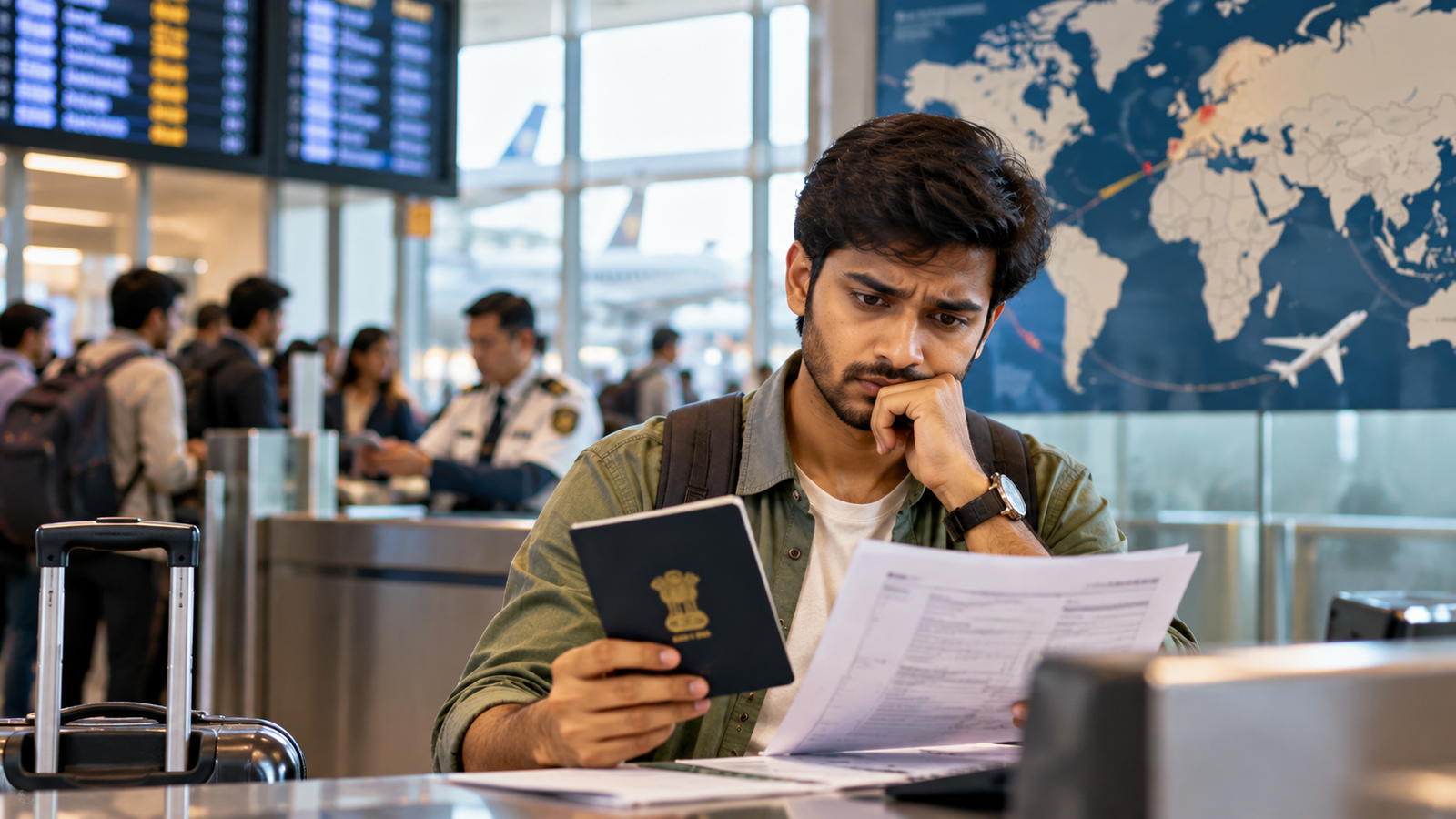
If your visa was refused recently, you’re far from alone. Indians now send more visa applications abroad than almost any other nationality, and the refusal letters have kept pace. A decade ago most rejections were blamed on “weak passports”. That’s not really the story anymore. Most refusals now come down to how an application reads to a tired visa officer with ten minutes and a stack of files.
This piece covers where Indian passport holders are getting rejected most, the paperwork mistakes behind most of those refusals, and what you can do once the letter arrives. If you’re still picking a destination, start with our complete visa and destination guide for Indian travelers in 2026, then come back here before you apply.
Why Visa Refusals for Indians Are Rising
Two things are happening together. Application volumes have exploded since 2023, driven by a growing middle class, cheaper flights and a wave of first-time international travelers. At the same time, several countries have tightened rules on overstays, fake documents and “tourists” who are really job hunting.
More applications plus stricter scrutiny means more refusals, even when the overall refusal rate hasn’t changed much. A few patterns show up again and again:
- First-time travelers with a blank passport get more scrutiny than people who have travelled before.
- Young, single applicants with modest incomes are flagged as higher overstay risks.
- Agent-prepared files with templated cover letters and dummy bookings are easy for officers to spot.
- Student and visitor routes are being watched closely because they’re the most common path to overstaying.
The Countries Rejecting Indian Applicants More Often
1. Schengen Countries (Especially the Smaller Ones)
Schengen is the biggest source of refusals for Indians simply because so many people apply. Across the zone, roughly one in six Indian applications has been refused in recent years. Non-refundable fees on those refusals added up to well over ₹100 crore in 2024 alone.
The rate isn’t the same everywhere, though. Big consulates like France, Germany and Italy handle huge volumes and tend to be fairly predictable. Smaller members such as Malta, Slovenia, Estonia and Belgium have posted much higher refusal rates for Indians. Many people apply there because appointments are easier to get, and that is often what gets them refused.
The main trigger: applying through a country that isn’t your main destination. If most of your nights are in Italy, apply to Italy. Officers check this, and “appointment shopping” is one of the fastest ways to get a refusal under the “purpose not justified” box.
2. Canada
Canada has become one of the toughest places for Indian visitors and students since 2023. Diplomatic tension, a cap on international study permits and a political push to cut temporary residents have all pushed refusals up sharply.
Visitor visa refusals now routinely cite two reasons: the officer isn’t satisfied you’ll leave at the end of your stay, and your “family ties in Canada and India” look unbalanced. Parents visiting children who live in Canada, and young applicants with no travel history, are hit hardest.
3. United States
US B1/B2 refusals under Section 214(b) are the classic Indian rejection. The law presumes every visitor is an intending immigrant until they prove otherwise. Since 2025, longer wait times, tighter interview waiver rules and expanded social media checks have added more layers.
The interview is short, often under three minutes. Many refusals happen because applicants give memorised, vague answers or can’t explain their own trip plans in plain terms.
4. United Kingdom
The UK approves most Indian visitor visas, but the refusals it does issue are detailed and often painful. The officer will quote your own documents back at you. Common reasons include unexplained cash deposits, salaries that don’t match bank credits, and trip costs that look too large compared with your income.
5. Australia
Australia replaced its old “Genuine Temporary Entrant” test with a Genuine Student requirement in 2024, and student visa refusals for Indians climbed quickly after that. Visitor visas are also being refused more often when applicants have relatives in Australia but weak employment proof back home.
6. UAE and Other Gulf Destinations
Dubai used to feel like a guaranteed approval. Not anymore. Since 2024, the UAE has asked for confirmed hotel bookings, return tickets and proof of funds much more strictly. Applicants who look like they’re job hunting on a tourist visa, particularly young men travelling alone, are seeing more refusals than before.
Quick Comparison: Where Refusals Hurt the Most
| Country / Region | Main Refusal Reason for Indians | Formal Appeal? |
|---|---|---|
| Schengen | Purpose unclear, wrong consulate, weak funds | Yes, to the issuing country |
| Canada | Doubt about return, weak home ties | No appeal; judicial review possible |
| USA | Section 214(b), intent to immigrate | No; reapply |
| UK | Financial inconsistencies | No appeal for visitors; reapply |
| Australia | Genuine Student / genuine visitor doubts | Limited, mostly onshore |
| UAE | Suspected job seeking, missing bookings | No; reapply |
The Documentation Errors Behind Most Refusals
Here’s the uncomfortable truth: most refusals are self-inflicted. Officers rarely reject a clean, consistent file. What they reject is a file that doesn’t add up.
Bank Statements That Tell the Wrong Story
- Sudden large deposits a few weeks before applying. Officers read this as borrowed money, and they’re usually right.
- Balance with no history. ₹5 lakh sitting in an account is less convincing than ₹1.5 lakh with steady salary credits for six months.
- Salary that doesn’t match. If your payslip says ₹85,000 but the bank shows ₹62,000, explain the deductions or expect questions.
Mismatched Dates and Details
Your leave letter says 10 days. Your itinerary says 14. Your insurance covers 12. Small inconsistencies like these make an officer doubt everything else in the file. Check that every date, name spelling and passport number matches across all documents.
Dummy Tickets and Fake Bookings
Some consulates accept flight reservations without payment. That’s fine. What isn’t fine is a hotel booking that was cancelled the day after it was made. Several embassies verify bookings, and a cancelled or fake one can lead to a refusal and sometimes a ban.
Hiding a Previous Refusal
This is the big one. Every major visa form asks about past refusals, and the data is shared between countries more than people realise, especially among the US, UK, Canada, Australia and New Zealand. Not declaring an old refusal can be treated as misrepresentation, which can mean a multi-year ban. A declared refusal with a short explanation is almost never the problem. A hidden one is.
Weak Proof of Ties to India
Officers want a reason you’ll come back. Good evidence includes:
- An employer letter confirming approved leave and your return date
- ITRs for the last two or three years
- Property documents, a business registration or GST certificate
- Proof of family responsibilities, such as dependents at home
Also make sure you’re applying for the right type of visa in the first place. Many travelers confuse entry routes, and our explainer on visa-on-arrival vs e-visa vs visa-free travel for Indians clears up what each option actually requires.
Generic Cover Letters
If your cover letter could belong to anyone, it helps no one. Write it yourself. Say why you’re going, what you’ll do each day, who’s paying and why you’ll return. Keep it to one page.
What to Do After a Visa Refusal: Your Appeal Options
A refusal isn’t the end of the road, but reacting in a panic usually makes things worse. Read the refusal letter slowly first. It tells you exactly what the officer didn’t believe.
Schengen: You Can Formally Appeal
Schengen refusals come on a standard form with the reasons ticked. You have the right to appeal to the country that refused you. Deadlines vary by country, usually somewhere between 15 days and two months, and the letter will state yours.
Appeals take time, often several weeks or more. If your trip dates are fixed, a fresh, corrected application to the right consulate is often faster than an appeal.
United States: Reapply, Don’t Appeal
There’s no appeal against a 214(b) refusal. You can reapply at any time, but reapplying with the same profile usually gets the same answer. Wait until something meaningful has changed: a new job, a salary increase, other international trips or a clearer purpose.
A 221(g) refusal is different. It means your case needs more documents or administrative processing, and it is often resolved without a new application.
Canada: Get Your GCMS Notes
Canadian visitor visa refusals can’t be appealed in the usual sense. You can challenge a decision through judicial review at the Federal Court, but it’s expensive and rarely worth it for a tourist trip.
The smarter move is to request your GCMS notes, the officer’s internal notes on your file. They show the actual reasoning, which is often more specific than the refusal letter. Fix those exact points, then reapply.
United Kingdom: Reapply With a Stronger File
UK visitor visas carry no right of appeal. The only formal route is judicial review, which is rarely practical. Since UK refusal letters are detailed, address each point directly in your next application and include a short note explaining what has changed.
Australia: Check Your Review Rights
Applicants inside Australia may be able to seek review at the Administrative Review Tribunal, which replaced the AAT in 2024. Most offshore visitor refusals don’t come with review rights, so reapplying with better evidence is the usual path.
How to Reapply Without Getting Refused Again
- Fix the stated reason first. Don’t just add more paper. Answer the specific doubt.
- Declare the previous refusal honestly, with a one-line explanation of what’s different now.
- Let your bank balance settle. Two or three months of normal activity looks far better than a fresh top-up.
- Build travel history with easier destinations first. A couple of stamps from Thailand, Singapore or Sri Lanka genuinely help.
- Skip the “guaranteed approval” agent. If a consultant promises a visa, walk away.
The Bottom Line
Indian passport holders aren’t being rejected because of their nationality alone. They’re being rejected because of files that raise more questions than they answer. Schengen’s smaller consulates, Canada, the US and Australia are the toughest right now, but the same fixes work everywhere: consistent documents, honest declarations and clear proof that you’ll come home.
If you’ve been refused recently and want to keep travelling while you rebuild your profile, look at destinations with simpler entry rules. Our list of the cheapest countries to travel from India in 2026 is a good place to start, and several of them are visa-free or e-visa friendly for Indians.
Treat every application like it will be read by someone looking for a reason to say no. Give them nothing to find, and your odds improve a lot.