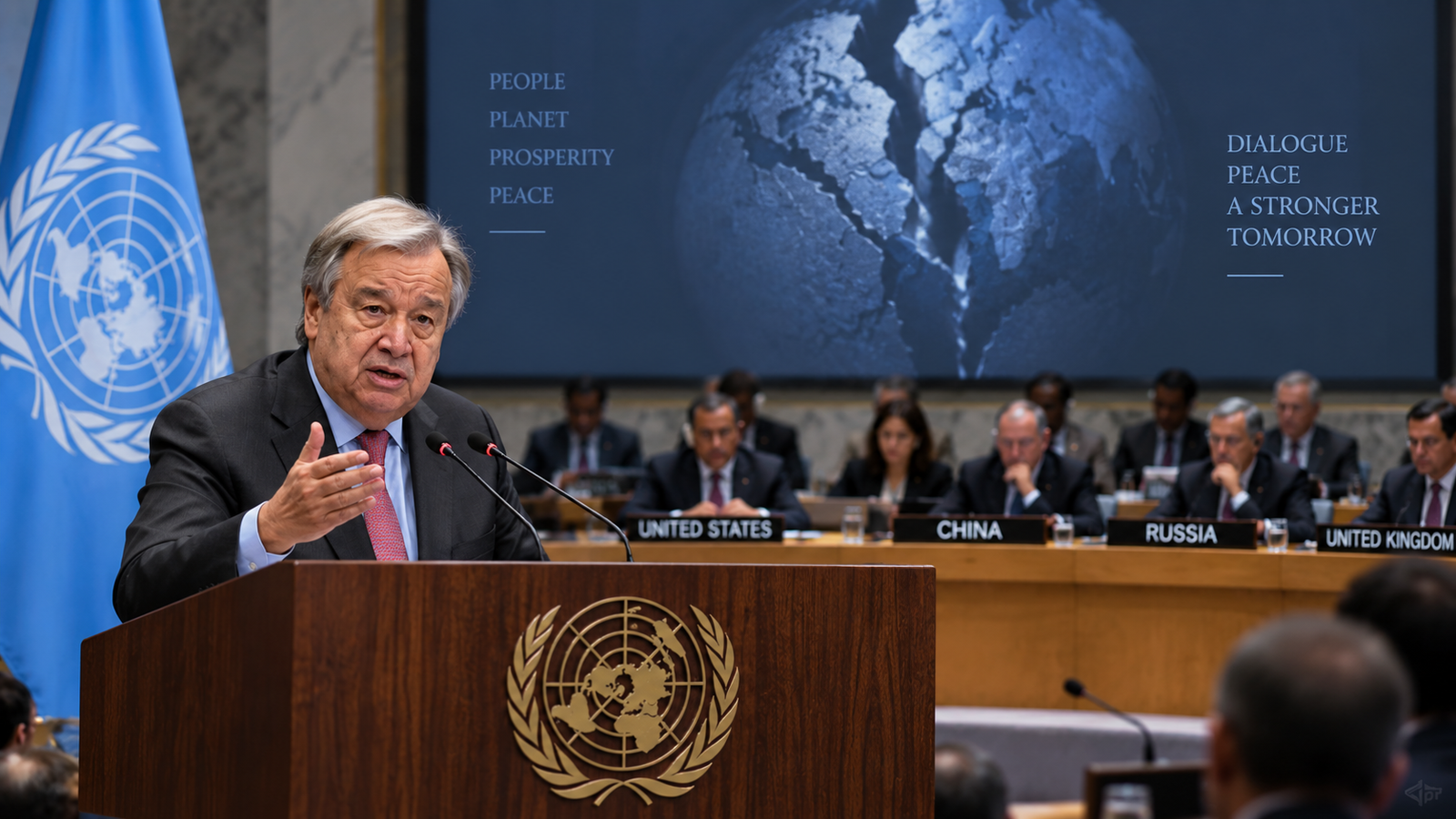
UN Secretary-General Antonio Guterres has issued one of his sharpest warnings yet, telling world leaders that the Security Council is being pulled apart by geopolitical rivalries at the exact moment the planet needs it to function. Speaking as the annual UN General Assembly high-level week gets underway in New York, Guterres said the world is stuck in a dangerous drift, and the very body designed to prevent it, the Security Council, is too divided to respond.
His message was blunt. The Council is not just slow. It is, in his words, increasingly unable to act on the crises it was built to manage.
Guterres puts the blame squarely on great-power rivalry
Guterres framed the problem as a story of trust breaking down between the permanent five, the United States, Russia, China, France and the United Kingdom. Those five countries hold veto power. When any one of them says no, the Council cannot pass a binding resolution. And right now, according to the Secretary-General, they are saying no to each other on almost everything that matters.
He listed the fault lines with unusual directness. Russia and the West are locked in confrontation over Ukraine. The United States and China are talking past each other on Taiwan, the South China Sea and trade. Western capitals and much of the Global South are drifting apart over Gaza, Sudan and how the rules should apply. That, he argued, is why resolutions get watered down, vetoed or shelved before they even reach a vote.
“Divisions are deepening. Trust is eroding,” Guterres said, warning that a Council that cannot agree is a Council that cannot protect civilians.
A body designed for a different century
The Security Council was built in 1945 for a world that no longer exists. Its permanent membership reflects the winners of the Second World War, not today’s balance of power. India, Brazil, South Africa, Nigeria and a long list of others have argued for years that the current structure is outdated and unfair. Guterres echoed that view, saying reform is no longer optional.
He pushed again for expanded permanent and non-permanent seats, especially for Africa, which has no permanent representation despite hosting more than half of the Council’s active peace and security agenda. Without reform, he warned, the Council will keep losing legitimacy in the eyes of the very regions its decisions affect most.
The problem is that reform itself requires the agreement of the same permanent members who benefit from the status quo. That is the loop the UN has been stuck in for two decades.
Real-world fallout: from Ukraine to Sudan
The consequences of Council paralysis are not abstract. Ukraine remains at war with no UN-brokered ceasefire in sight. In Gaza, humanitarian resolutions have been vetoed or diluted repeatedly since 2023, and aid access is still being negotiated crisis by crisis. Sudan’s civil war, now well into its third year, has displaced more than 10 million people, yet the Council has failed to impose meaningful arms restrictions on the parties fueling it.
Guterres pointed to Haiti as another case where a fragmented Council response has left a security mission underfunded and undermanned. He also flagged the Sahel, where coup-affected states have effectively walked out of Western-led security frameworks with limited pushback from the UN.
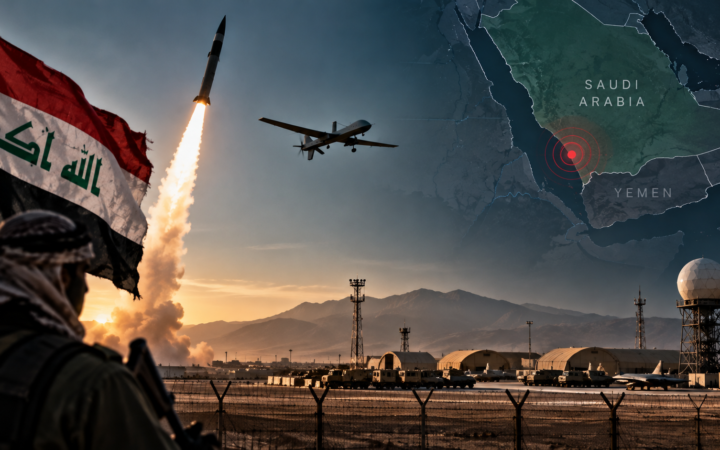
Regional flashpoints are widening the strain. Just last week, cross-border strikes in the Gulf pulled attention back to a region that has been simmering for months. Readers following that story can catch up on the latest escalation in our earlier report on the Houthi missile and drone attack on a Saudi military base, which showed how quickly local conflicts spill into wider geopolitical friction.
The veto question, again
Every time the Council is accused of failing, the conversation returns to one word: veto. Since the war in Ukraine began, Russia has used its veto more than a dozen times on Ukraine-related resolutions alone. The United States has used its veto multiple times on Gaza. China has blocked action on Myanmar. Each veto adds fuel to the argument that the tool itself is broken.
France and the UK have publicly said they will not use the veto against resolutions targeting mass atrocities, and a group of more than 100 states has backed a General Assembly rule requiring any veto to be explained in public within ten working days. Guterres called for that norm to be strengthened, saying transparency alone will not fix the problem, but silence certainly will not either. The full text of his remarks is available on the Office of the Secretary-General’s website for anyone who wants to read the speech in full.
Why this General Assembly matters
This year’s high-level week is being read as a stress test. Leaders from over 150 countries are in New York, and many are openly frustrated. Several Global South delegations have said privately that if the Council cannot deliver on Gaza, Sudan and Ukraine, they will start routing more security debates through the General Assembly, where no country holds a veto, and through regional blocs like the African Union and ASEAN.
That shift is already happening. The General Assembly has passed a string of emergency resolutions since 2022 that would once have moved through the Council. They are not binding, but they carry political weight and put on-record pressure on states that block Council action.
What comes next
Guterres closed with a familiar plea and a fresh warning. Multilateralism, he said, is not dead, but it is on life support. If the Council’s permanent members do not find a way to cooperate on at least the largest crises, other institutions will fill the vacuum, and not always in ways that respect the UN Charter.
Whether the P5 hear him this year is another matter. The public messaging out of Washington, Moscow and Beijing in the run-up to the Assembly has been anything but conciliatory. For a Secretary-General who has spent nearly a decade urging unity, the trend line is uncomfortable, and he is no longer trying to hide it.