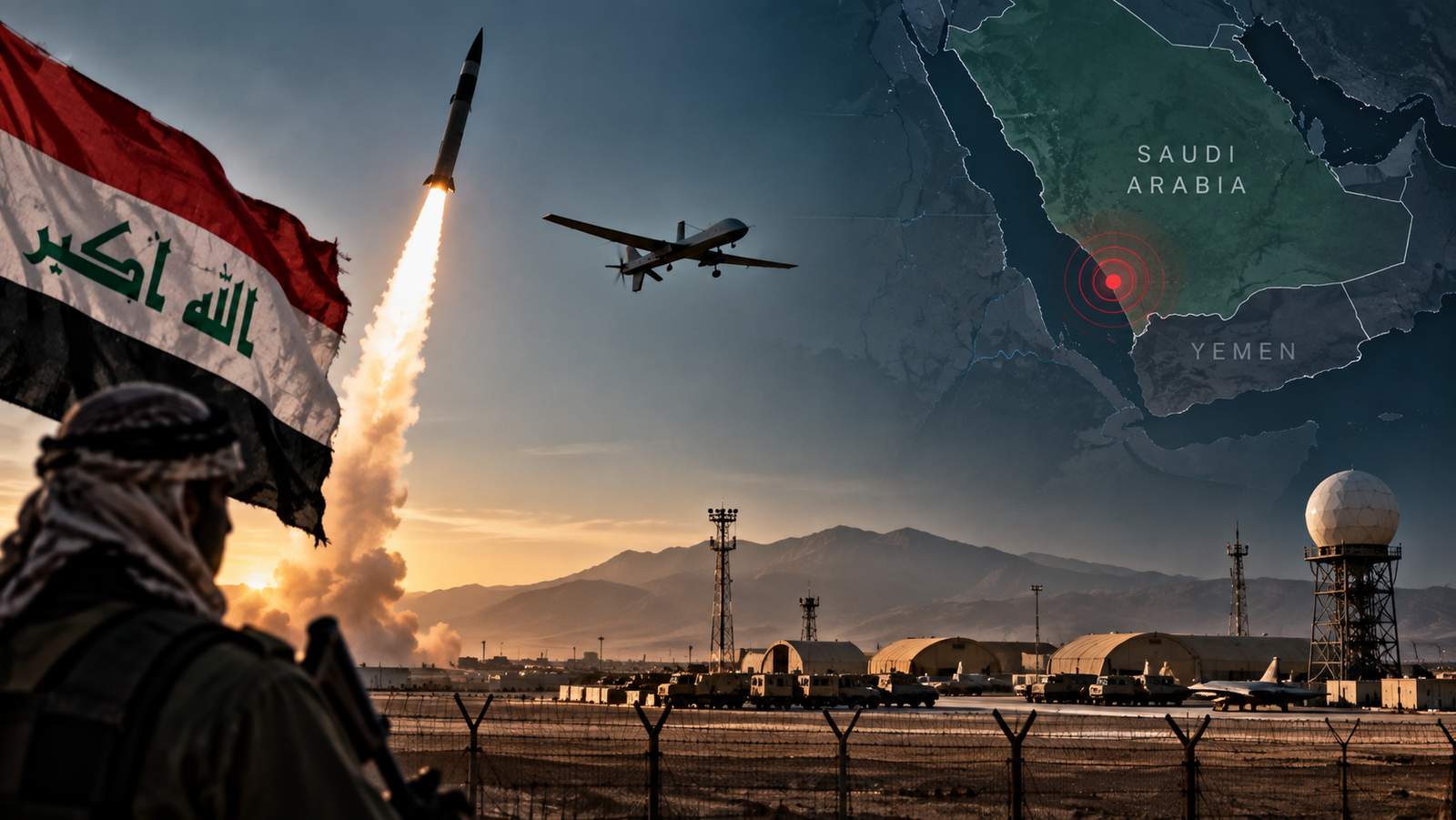
Yemen’s Houthi movement has claimed responsibility for a fresh ballistic missile and drone attack on a Saudi military base, marking one of the boldest cross-border strikes in months and pulling the Gulf back into the shadow of a wider regional conflict. The announcement, delivered through the group’s own media channels, has once again put Riyadh, Washington, and the broader international community on edge as fears grow that the fragile calm along the Yemeni-Saudi frontier is collapsing.
What the Houthis Are Saying About the Attack
In a televised statement, Houthi military spokesperson Yahya Saree said the group targeted a Saudi military base using a combination of ballistic missiles and armed drones. According to Saree, the operation was carried out in what he described as a “successful, precise, and coordinated” manner, with the group claiming the strike hit its intended targets.
The Houthis did not immediately release verifiable evidence of the damage, and Saudi authorities have so far offered a limited response. That gap between claim and confirmation is nothing new. Over the past several years, the Iran-aligned group has routinely announced attacks on Saudi soil that Riyadh either downplays, denies, or reports as intercepted by its air-defense systems.
Still, even a claim of this scale carries weight. It signals that the Houthis retain both the capability and the political appetite to strike deep into Saudi territory, despite years of Saudi-led coalition airstrikes and a UN-brokered truce that was meant to freeze the fighting.
Why This Strike Matters Now
The timing of the attack is what makes it especially alarming. Regional tensions have been simmering for months, with the Houthis openly linking their military operations to the ongoing conflict in Gaza and repeated confrontations in the Red Sea. The group has been targeting commercial shipping lanes, disrupting global trade routes, and drawing responses from the United States and United Kingdom.
A direct strike on Saudi Arabia, however, is a different escalation entirely. Riyadh has spent the last two years quietly working to de-escalate the Yemen war, engaging in back-channel talks with Houthi leaders and even exploring a normalization pathway that would end its costly military campaign. This latest attack risks undoing much of that diplomatic groundwork.
Analysts say the strike could be a message aimed as much at Washington and Tel Aviv as at Riyadh. By demonstrating long-range strike capability, the Houthis are reminding regional powers that Yemen remains a live front in the wider Middle East conflict.
Saudi Arabia’s Response So Far
Saudi officials have not confirmed the extent of any damage from the reported attack. The kingdom’s air-defense forces, which rely heavily on U.S.-supplied Patriot systems, typically issue statements when interceptions occur. As of publication, no such official statement had been released detailing the outcome of the alleged missile and drone salvo.
Historically, Riyadh has downplayed successful Houthi strikes to avoid signaling vulnerability. But behind the scenes, Saudi defense planners are almost certainly reviewing radar tracks, damage assessments, and intelligence chatter to determine what actually got through. The kingdom’s silence should not be read as calm; it is often the loudest sign of concern.
The reported target — a military base rather than a civilian site — suggests the Houthis are calibrating their attacks. Hitting a base allows the group to project strength without triggering the kind of civilian casualty backlash that could erode diplomatic support from countries like Oman and Iraq, which have quietly helped mediate previous Houthi-Saudi discussions.
The Iran Factor
No conversation about Houthi capabilities is complete without addressing Iran. Western intelligence agencies have long argued that Tehran supplies the group with the components, technical know-how, and drone designs needed to launch these kinds of strikes. Iran denies direct involvement, but the pattern of Houthi weaponry — from the Quds-series cruise missiles to the Shahed-family drones — tells its own story.
Any escalation on the Yemen-Saudi front inevitably drags Iran into the frame, especially at a moment when Tehran is already juggling pressure from the Israel-Hezbollah conflict, sanctions negotiations, and internal political shifts. For more context on the broader regional dynamics, the Reuters Middle East desk has been tracking the interlocking crises in near real time.
Global Reaction and Oil Market Jitters
Markets react quickly to news like this. Even before official confirmation, oil futures ticked upward on early reports of the strike, reflecting long-standing investor anxiety about Gulf supply disruptions. Saudi Arabia remains one of the world’s largest oil producers, and any perceived threat to its infrastructure — even a military base — can move prices.
Shipping insurers, already stretched thin by the Red Sea attacks, are also watching closely. If the Houthis are willing to hit Saudi soil directly, the calculus around insuring vessels near Yemeni waters shifts again, driving up freight costs and squeezing global supply chains that have only just started to stabilize.
What Comes Next
The immediate question is whether Saudi Arabia will respond militarily or continue to prioritize diplomacy. A hard retaliation could shatter the truce that has held, however imperfectly, since 2022. A muted response, on the other hand, may embolden the Houthis to strike again.
There is also the human cost to consider. Yemen remains one of the world’s worst humanitarian disasters, with millions displaced and food insecurity at crisis levels. Every escalation deepens that suffering. Coverage of humanitarian, geopolitical, and market stories often intersects, and readers looking for wider context can find related reporting on the Must Read Digest homepage.
The Bigger Picture
This strike is not an isolated event. It is a signal — to Saudi Arabia, to the United States, to Israel, and to the wider Arab world — that the Houthis are not sidelined actors. They are shaping the tempo of the Middle East conflict on their own terms, using missiles and drones as both weapons and messages.
Whether Riyadh chooses to respond with force, diplomacy, or careful silence will help define the next chapter of the Yemen war. For now, the region is watching, oil traders are recalculating, and diplomats are quietly reopening channels that many had hoped would no longer be needed.
One thing is clear: the fragile balance in the Gulf just got a little more fragile.