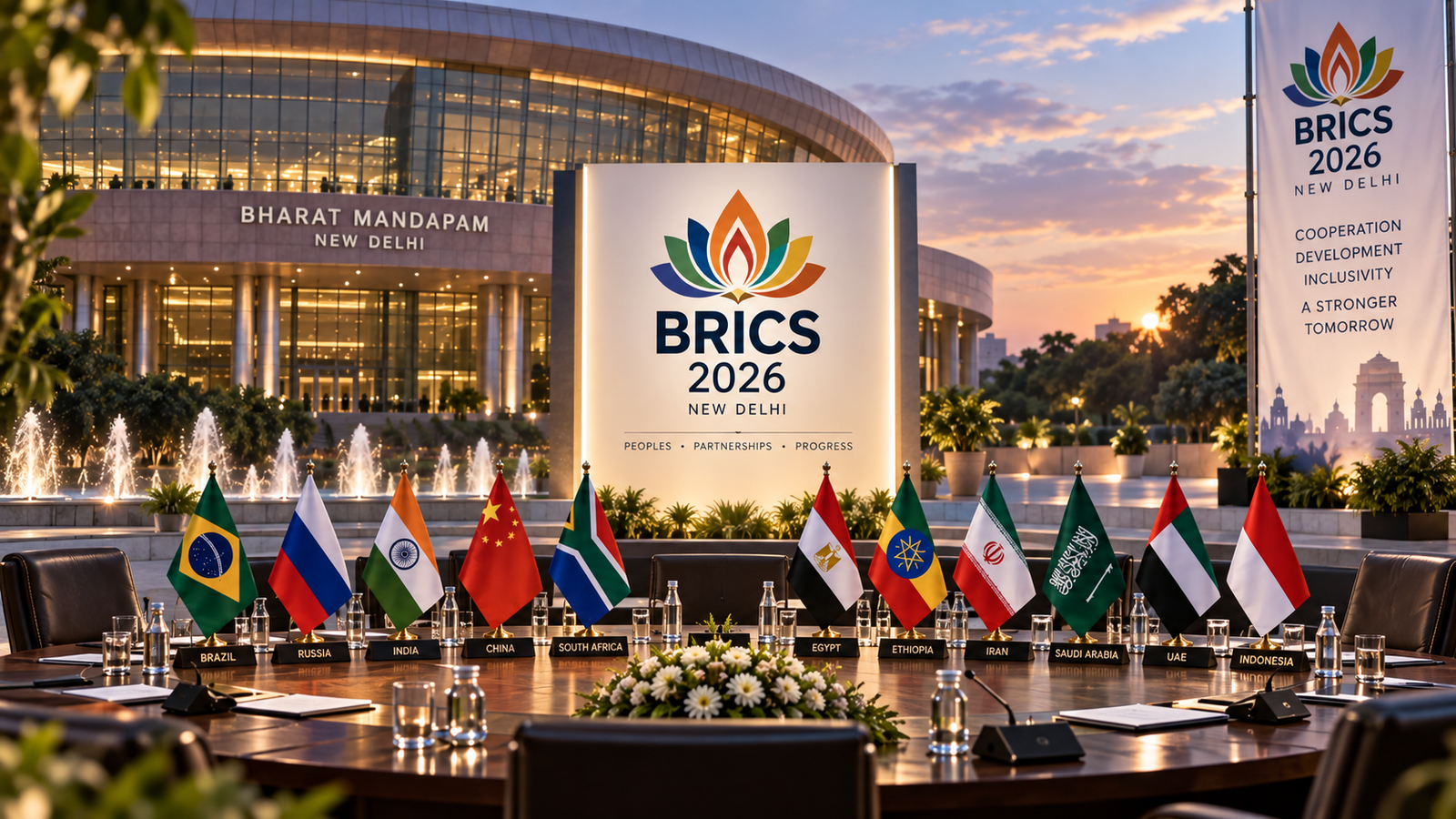
Delhi is officially the center of the diplomatic universe this week. The BRICS Summit 2026 opened in the Indian capital on Thursday and runs through Saturday, September 13, pulling in heads of state, foreign ministers, business delegations, and roughly every foreign correspondent with a valid visa. If you have been trying to follow the headlines and still cannot quite figure out what the fuss is about, here is a plain-English breakdown of the summit, who is there, what is on the table, and why India cares so much about getting this one right.
So, what exactly is the BRICS Summit?
BRICS started in 2009 as a loose economic club of Brazil, Russia, India, and China. South Africa joined a year later, and the group has since expanded to include the UAE, Iran, Egypt, Ethiopia, and Indonesia, with more countries knocking on the door as partner states. The annual summit is where the leaders of these countries sit down, sign joint declarations, and try to agree on where the bloc is heading next.
The 2026 edition is India’s turn to host, and Prime Minister Narendra Modi has been treating it like a national showcase. The venue is the sprawling Bharat Mandapam complex in central Delhi, the same site that hosted the G20 in 2023. If it feels like deja vu, that is because the government has clearly leaned on the same playbook: shut streets, deploy paramilitary units, install fresh signage on every flyover, and paint over anything that looks even mildly unfinished.
Who is actually in Delhi
Russian President Vladimir Putin landed Wednesday night, and his arrival essentially set the tone for the security clampdown across the capital. Brazil’s Lula da Silva touched down early Thursday, and Iran’s president, Egypt’s Sisi, Indonesia’s Prabowo, and the UAE’s crown prince are all in the building. China has sent Premier Li Qiang in place of Xi Jinping, a switch that diplomats have been quietly parsing all week. South Africa’s Cyril Ramaphosa flew in overnight.
The other big story is who is watching from the outside. Malaysia, Nigeria, Vietnam, Cuba, and Belarus are attending as invited partner countries, and Turkey has once again shown up hoping to make the shortlist for full membership. For a deeper look at the security theater and the Putin-Modi bilateral that kicked off the week, see our earlier report on how the BRICS Summit turned Delhi into a fortress.
What is on the agenda
India has framed the summit around a fairly ambitious theme: “BRICS at a Crossroads: Building a Fair, Inclusive, and Resilient Global Order.” Behind the diplomatic wording, there are five threads that actually matter.
1. Trade in local currencies
This is the headline everyone wants. BRICS has been inching toward settling more cross-border trade in rupees, yuan, real, and rand instead of dollars. Do not expect a full-blown BRICS currency to be unveiled in Delhi — that has been overblown in the press for years — but you will almost certainly see a new framework for bilateral currency swaps and a formal push to expand the New Development Bank’s local-currency lending.
2. The expansion question
BRICS grew faster than it could digest. Officials from multiple member states have privately admitted the bloc needs to slow down and decide what “membership” actually means before letting more countries in. India, in particular, has been careful not to let the group become too crowded or too openly anti-Western.
3. Climate finance and the Global South
Delhi wants BRICS to speak with a single voice ahead of the next UN climate meeting, pushing rich nations for the climate finance they promised and largely failed to deliver. Expect strong language on adaptation funding and technology transfer in the final declaration.
4. Technology and AI cooperation
India is pitching a BRICS-wide framework on artificial intelligence, semiconductor supply chains, and digital public infrastructure. The pitch draws heavily on India’s own success with UPI and Aadhaar, and Delhi is clearly hoping to export that model.
5. Ukraine, Gaza, and the awkward silences
With Putin in the room, expect the Ukraine language in the joint declaration to be carefully vague. Gaza will get more direct treatment, largely because most member states have been openly critical of Israel’s conduct. India will try to be the adult in the room and keep the wording measured, as it did at the G20.
Why India is going all in
For Modi, the summit is not just about the bloc. It is a chance to remind the world that India can host Putin and still be on the phone with Washington the next morning. That balancing act is India’s actual foreign policy, and BRICS is where it is most visible.
There is also a domestic dividend. A visible, well-run BRICS Summit lets the government project competence at a moment when the economy is under pressure, and it gives Indian companies a shot at fresh deals with Russian, Emirati, and Egyptian counterparts. The Ministry of External Affairs published the full program and side-event list on the MEA’s official website, and it reads like a trade fair as much as a diplomatic gathering.
What to watch on Saturday
The final day will bring the joint communique — the document everyone will pick apart for signals on trade, currency, and Ukraine. Watch three things in particular: whether the text names the dollar directly, whether Turkey gets any formal opening on membership, and whether the New Development Bank announces new local-currency loan commitments.
Whatever the declaration says, the optics are already locked in. For three days, half the leaders of the Global South are camped in Delhi, and India is the one setting the table. That, more than any single line in the communique, is the story of BRICS 2026.