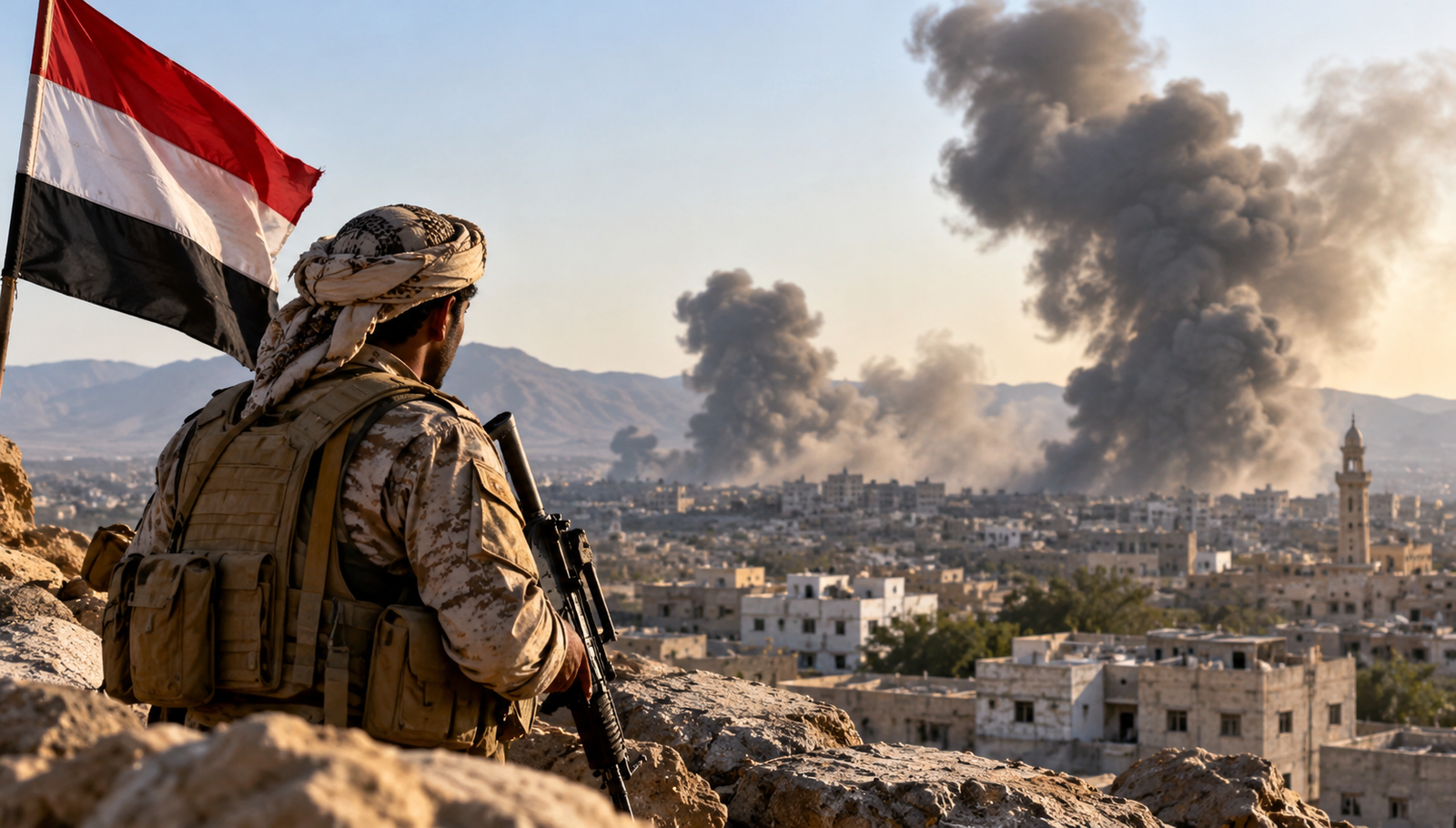
Yemen’s internationally recognised government says its forces have “neutralised” 1,860 Houthi fighters since launching a nationwide counter-offensive less than a week ago. If the figure holds up, it would make this the bloodiest stretch of fighting the country has seen since the UN-brokered truce of 2022.
The army’s spokesperson posted the number on social media early on Thursday, October 8. The post said troops had carried out 2,103 “precise targeting operations” against Houthi positions on several fronts. None of it has been independently verified, and the Houthis have not released casualty figures of their own.
What the Yemeni Army Is Claiming
The new number comes only days after an earlier update. At the start of the week the army said it had neutralised 1,747 Houthi fighters in 1,122 operations and destroyed or disabled 364 military vehicles. So the government is reporting 113 more fighters taken out in a couple of days.
“Neutralised” is a convenient word for a military spokesperson. It can mean killed, wounded or captured, and the army hasn’t said how the 1,860 breaks down. Both sides in Yemen have a long record of inflating enemy losses and playing down their own, so these figures are best read as a signal of intent rather than a body count.
The fronts where fighting is heaviest
According to the government, its operations are spread across several governorates:
- Saada, the Houthi heartland on the Saudi border
- Al-Jawf and Marib, including the long-contested Raghwan front
- Hodeidah and the western Red Sea coast
- Taiz, where the Houthis recently cut the main supply road linking the city to Aden
Inside Operation “Dawn of Yemen”
Rashad al-Alimi, who chairs Yemen’s Presidential Leadership Council, announced the “Dawn of Yemen” operation on Sunday. His stated goal is ambitious: to retake every piece of territory held by the Iran-backed Houthis, including the capital, Sanaa, which the group has controlled since 2014.
That is a tall order. The Houthis have held Sanaa and most of Yemen’s populated northwest for more than a decade, and they survived years of Saudi-led air strikes after 2015 without losing their grip on the capital. What’s different this time is the sense in Aden and Riyadh that the Houthis overreached during the summer and left themselves exposed.
The battle for the Red Sea coast
The coast is where the stakes are highest. In September, Houthi forces swept down the western shoreline and took the port city of Mocha, along with roughly 150km of Red Sea coastline. That put them uncomfortably close to the Bab al-Mandeb Strait, the narrow chokepoint at the mouth of the Red Sea that carries a large share of the world’s shipping and energy traffic.
Government forces now say they have pushed back into the Dhubab district near the strait and retaken Mocha. With trade through the Strait of Hormuz already rattled by US-Iran tensions, control of Bab al-Mandeb has turned a long-running civil war into a problem for global shipping too.
Saudi-Led Coalition Steps Up Air Strikes
Saudi Arabia is backing the offensive from the air. The Saudi-led coalition says it has destroyed 82 Houthi military targets, including command centres, communication systems and weapons depots. Among them, it says, were 11 ballistic missile storage sites built into the mountains of Saada.
Coalition spokesperson Major-General Turki al-Maliki has said the kingdom will keep supporting government forces on the ground. That backing matters: without Saudi air power, government ground units have often struggled to hold territory.
Houthis Hit Back at Saudi Airports
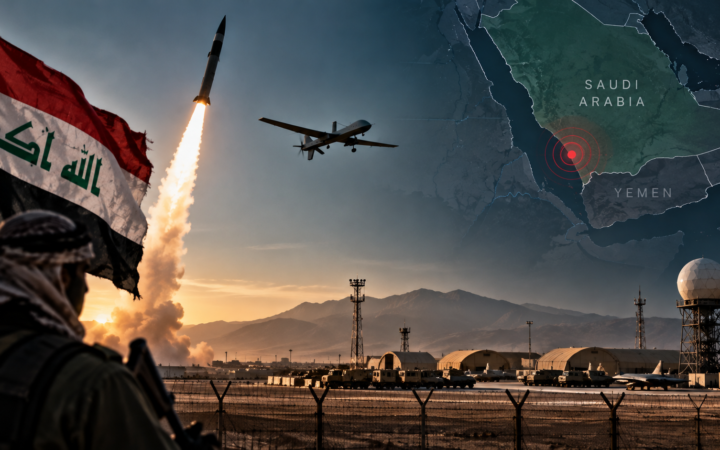
The Houthis haven’t sat still. On October 7 and 8 they launched drone and missile attacks on Saudi civilian airports. A strike on King Khalid International Airport in Riyadh killed one person and wounded eight, and an attack on Abha International Airport killed two and wounded 28.
Hitting the Saudi capital is a deliberate message. The group is showing it can still reach deep into the kingdom, which raises the cost of Riyadh’s involvement at the exact moment the government needs it most. Our earlier report on the Houthi missile and drone strike on a Saudi military base showed how quickly this cross-border tit-for-tat has escalated.
How Yemen Got Here
Yemen enjoyed relative calm after the 2022 truce, even though no formal peace deal ever followed. That calm fell apart in July 2026, when the truce collapsed and fighting picked up across the country. The Houthis then launched their own large-scale push in September, which delivered the coastal gains that alarmed Aden and Riyadh.
For a closer look at how the frontlines have shifted, Al Jazeera’s battlefield explainer lays out the latest territorial changes front by front.
The human cost
Behind the military numbers is a familiar story for Yemen’s civilians. More than 100,000 people have been displaced since the truce broke down in July. Millions of Yemenis already relied on aid to eat before this round of fighting. Renewed battles around ports like Hodeidah and Mocha threaten the very supply lines that food and fuel come through.
What to Watch Next
A few questions will decide whether “Dawn of Yemen” turns into a real shift or another stalled campaign:
- Can the government hold the coast? Retaking Mocha is one thing. Keeping it against Houthi counter-attacks is another.
- How far will Saudi Arabia go? More strikes on Riyadh and Abha could either harden Saudi resolve or push it to look for an exit.
- Does Iran step in? The Houthis’ drone and missile arsenal relies heavily on Iranian support, and Tehran has little reason to let its ally lose ground near Bab al-Mandeb.
- Will the numbers be verified? Until independent monitors or journalists can reach the front lines, the 1,860 figure stays a government claim.
For now, the government is betting that momentum, Saudi air cover and a stretched Houthi force give it its best shot in years at changing the map. The Houthis are betting that strikes on Saudi soil will make that support too expensive to keep. Yemen’s civilians are caught in the middle again, waiting to see which bet pays off.