Picking a crypto exchange in India feels simple until you remember what happened in July 2024. WazirX, one of the biggest names in the country, lost roughly $230 million in a single hack, and millions of users watched their balances freeze for over a year. Nobody who went through that thinks of an exchange as “just an app” anymore.
If you’re still getting your bearings on the rules, start with our complete guide to crypto in India: legal status, tax, and how to invest. This piece zooms in on one decision: where you actually park your money, and the checks worth running before you hit “deposit.”
We’ll cover the four platforms Indians talk about most (CoinDCX, WazirX, Mudrex, and Kraken) and then give you a safety checklist you can apply to any exchange, including ones that don’t exist yet.
Why the Exchange Matters More Than the Coin
Most people spend hours choosing between Bitcoin and Solana, then five minutes choosing where to buy them. That’s backwards.
When your coins sit on an exchange, you don’t really hold them. You hold a promise from the exchange that it holds them for you. If that company gets hacked, freezes withdrawals, or runs into trouble with regulators, your “portfolio” becomes a claim in a queue.
So the real question isn’t “which exchange has the lowest fee?” It’s “which exchange am I comfortable owing me money?”
The Safety-First Framework: 7 Checks Before You Deposit
Run every platform through these seven checks. None of them takes more than a few minutes.
1. Is it registered with FIU-IND?
Since March 2023, crypto platforms serving Indian users must register with the Financial Intelligence Unit (FIU-IND) under the anti-money-laundering law. In late 2023, FIU issued notices to several offshore exchanges that were operating without registration, and their websites were later blocked.
Registration doesn’t mean the government guarantees your money. It does mean the platform is on the regulator’s radar, files reports, and can be held accountable here. An unregistered exchange is a hard no.
2. What’s its hack and incident history?
Every exchange is a target. What matters is how they respond. Ask:
- Has it ever been breached?
- Were user funds touched, or did the company absorb the loss?
- How fast did it communicate, and how long were withdrawals paused?
3. Does it publish proof of reserves?
Proof of reserves is an exchange showing, ideally through a third-party audit or on-chain wallet addresses, that it holds at least as much crypto as its users are owed. A one-off screenshot counts for little. Regular, verifiable reports count for a lot.
4. How does custody work?
Find out what share of funds sits in cold storage (offline) versus hot wallets (online, used for daily withdrawals). Also check whether a regulated custodian is involved. Most big hacks hit hot wallets or multi-signature setups that were poorly managed.
5. Can you withdraw freely to your own wallet?
Some apps let you buy crypto but make it hard, slow, or expensive to move it out. If you can’t withdraw to a wallet you control, you’re renting exposure, not owning an asset.
6. Is tax handled cleanly?
Indian exchanges deduct 1% TDS on sales and give you downloadable trade reports. Offshore platforms usually don’t, which leaves the paperwork (and the risk of a mismatch with your AIS) on you.
7. Can you reach a human?
Test support before you deposit a big amount. Raise a small query. If it takes a week to get a copy-paste reply, imagine how things will go when there’s a real problem.
CoinDCX: The Big Local Player
CoinDCX is among the largest Indian exchanges by user count and is registered with FIU-IND. It offers spot trading, INR deposits over UPI and bank transfer, futures, and a simpler “buy” mode for beginners.
What’s good:
- Deep INR liquidity, so large orders don’t move the price much
- Automatic TDS deduction and clean tax reports
- Wide coin selection
What to watch:
- In July 2025, CoinDCX lost about $44 million from an internal operational account in a hack. The company said customer funds weren’t affected and covered the loss from its own treasury.
That response is the right kind of response. But it’s also a reminder that even the biggest local name has had a serious breach. Keep that in mind when you decide how much to leave on the platform.
WazirX: The Comeback Story
WazirX was once the default crypto app for Indians. Then came the July 2024 hack, in which attackers drained a multi-signature wallet holding a large chunk of user funds.
What followed was messy. Withdrawals froze, the company’s parent, Zettai, went through a restructuring process in a Singapore court, and users were offered a partial recovery plan with the rest tied to future recoveries. After court approval, the platform restarted trading in late 2025.
What’s good:
- FIU-registered and familiar interface
- Now under intense public scrutiny, which can push better security practices
What to watch:
- Trust is still being rebuilt, and some users haven’t been made whole
- Liquidity on some pairs is thinner than it used to be
If you use WazirX today, treat it as a place to trade, not a place to store.
Mudrex: Built for Hands-Off Investors
Mudrex, a Bengaluru-based, Y Combinator-backed platform, targets people who’d rather invest steadily than trade all day. It’s registered with FIU-IND and is known for crypto SIPs and “coin sets,” which are baskets of coins you can buy in one go.
What’s good:
- Beginner-friendly, with SIPs that reduce timing risk
- INR deposits and in-app tax handling
- No major public hack on record
What to watch:
- Smaller than CoinDCX, so check liquidity on less popular coins
- Baskets are convenient, but know exactly what’s inside each one
Kraken: The Global Heavyweight With an Indian Catch
Kraken, founded in 2011 in the US, has one of the strongest security reputations in the industry. It pioneered regular proof-of-reserves audits and has never lost customer funds to a hack. That’s why many Indian investors look at it.
The catch: Kraken was among the offshore exchanges that received FIU-IND notices in late 2023, and at our last check it was not on India’s registered list. Using an unregistered platform puts you in a grey zone:
- Your access can be cut off at any time if the site or app gets blocked
- No automatic TDS, so you must calculate and deposit it yourself
- Funding usually means international transfers, which bring LRS reporting and TCS
Kraken’s security is excellent. Its Indian regulatory status is the problem. Check the current FIU list before you send it a single rupee.
Quick Comparison
| Exchange | FIU-registered | Major hack | INR deposits | Best for |
|---|---|---|---|---|
| CoinDCX | Yes | 2025 (company absorbed loss) | Yes | Active traders |
| WazirX | Yes | 2024 (users hit) | Yes | Cautious, small trades |
| Mudrex | Yes | None public | Yes | SIP and long-term investors |
| Kraken | Not at last check | None affecting users | Not directly | Experienced users who accept the risk |
Status as of September 2026. Registrations and features change, so verify before depositing.
Don’t Forget the Tax Side
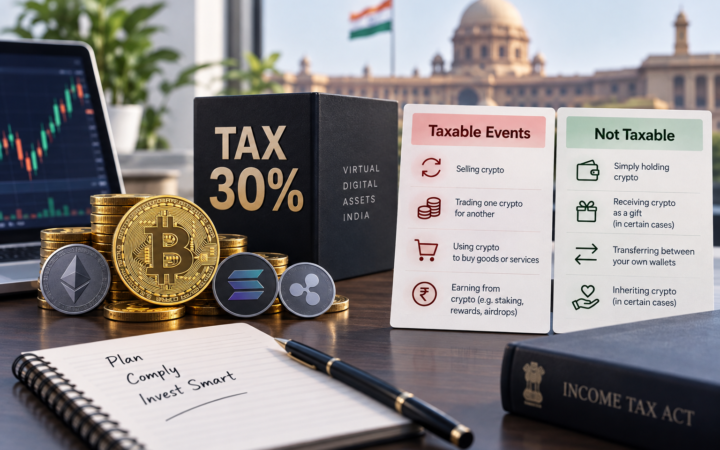
Whichever exchange you pick, the tax rules stay the same. Profits are taxed at a flat 30%, losses can’t be set off against other income, and 1% TDS applies on sales above the threshold. Moving coins between platforms, swapping one token for another, or spending crypto can all trigger tax.
Our breakdown of every taxable crypto event under India’s 30% regime walks through the situations people usually miss.
Red Flags That Should Stop You Cold
Walk away if you see any of these:
- Guaranteed returns or “risk-free” staking yields
- An exchange you found through a Telegram tip or a WhatsApp group
- No FIU registration and no clear company address
- Withdrawal limits that suddenly appear after you deposit
- Pressure to deposit fast for a “limited” bonus
- Support that only exists as a chatbot
How to Deposit Smartly
Even with a solid exchange, a few habits cut your risk sharply:
- Start small. Deposit a test amount, buy, and withdraw before going bigger.
- Turn on app-based 2FA, not SMS. SIM-swap fraud is real.
- Whitelist withdrawal addresses so only your own wallets can receive funds.
- Split across two exchanges if you hold a meaningful amount.
- Move long-term holdings off the exchange.
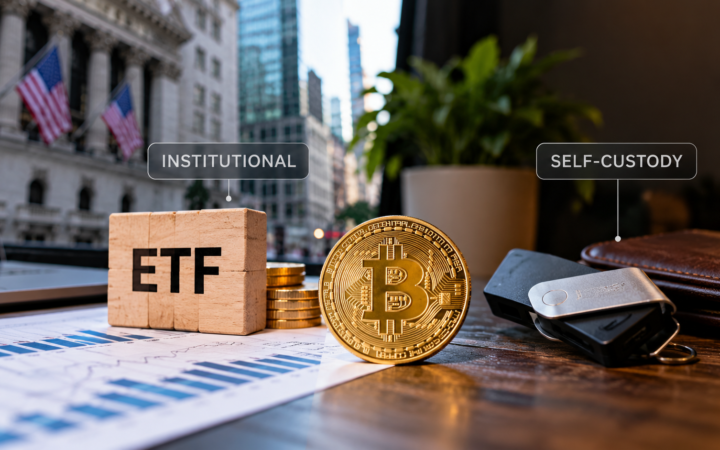
That last point is the single biggest lesson from the WazirX episode. If you’re holding Bitcoin for years, not weeks, it probably shouldn’t live on any exchange. Our comparison of Bitcoin ETFs versus self-custody explains the trade-offs of holding your own keys.
The Bottom Line
There’s no perfectly safe exchange, only ones that are safer for how you use them. For most Indian investors, an FIU-registered platform with INR deposits and automatic TDS, like CoinDCX or Mudrex, is the sensible starting point. WazirX is usable with caution. Kraken is excellent globally but tricky from India right now.
Run the seven checks, start small, and treat the exchange as a doorway, not a vault. Your future self will thank you.
This article is for information only and isn’t financial advice. Crypto is volatile and largely unregulated in India. Invest only what you can afford to lose.