Not every great trip needs a fat bank balance. Some of the most rewarding international holidays for Indian travelers cost less than a weekend getaway to Goa during peak season. The trick is knowing where your rupee stretches farthest, where visa hassles are minimal, and where the experiences go beyond the usual tourist brochure stuff.
This is not another list pulled from a travel agency pitch deck. These 7 countries have been picked because they genuinely deliver on the budget promise, and each one has at least one spot that most travel blogs skip over entirely.
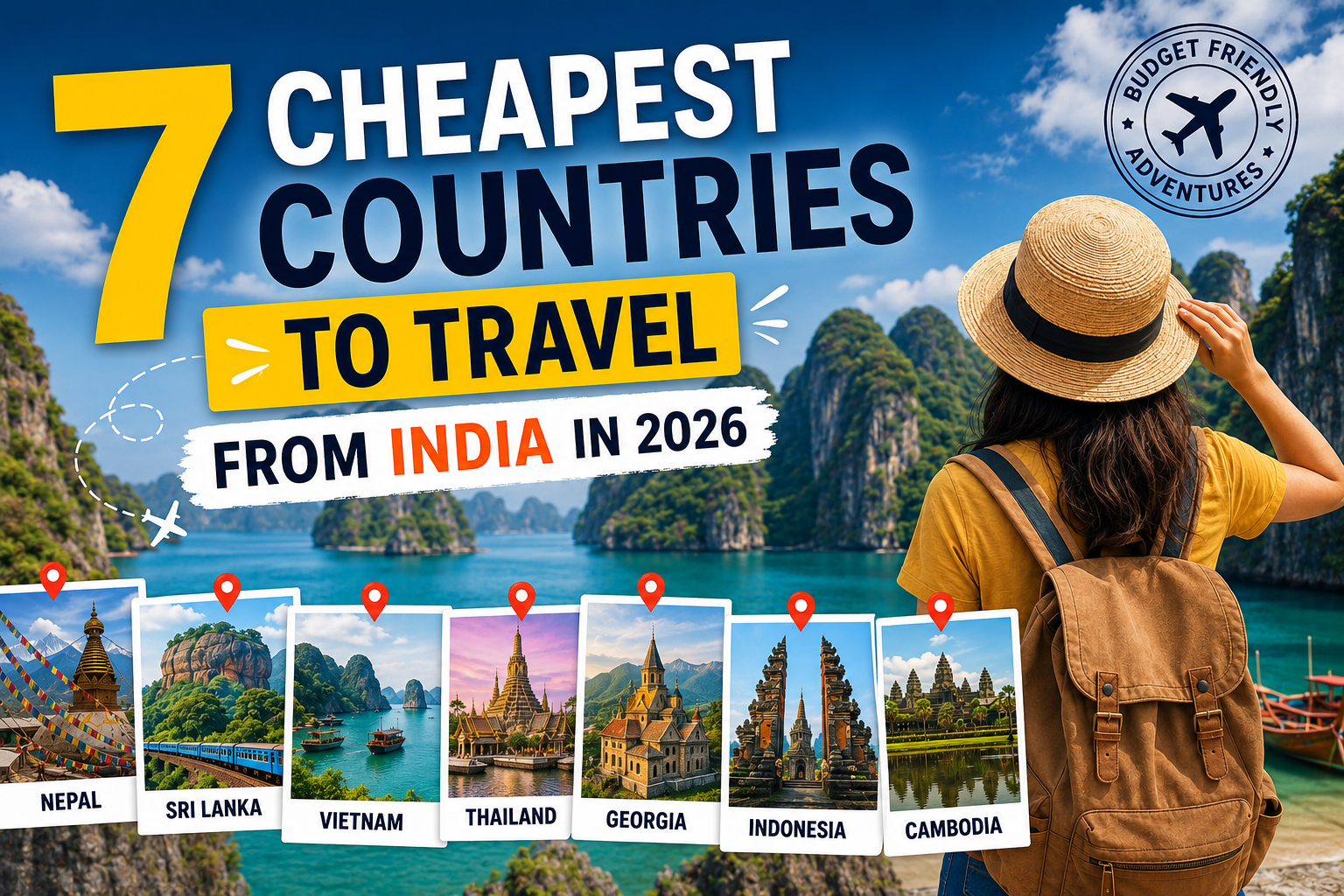
1. Nepal: The Obvious Pick That Still Surprises
Nepal sits right next door, no visa needed, no currency headaches (the Nepali Rupee is pegged at roughly 1.6 NPR per INR), and flights from Delhi land in Kathmandu in under 2 hours. Daily expenses here can sit comfortably between ₹1,200 and ₹2,500 depending on how much you enjoy dal bhat.
Most visitors stick to the Kathmandu-Pokhara-Chitwan triangle. Nothing wrong with that. But if you really want Nepal to surprise you, head to Bandipur, a hilltop settlement between Kathmandu and Pokhara that feels frozen somewhere around the 18th century. No honking, no tourist buses, just stone-paved streets, Newari architecture, and a ridgeline view of the Himalayas that puts most Instagram reels to shame. The Siddha Gufa cave nearby is one of the largest in South Asia, and you can explore it for practically nothing.
Another spot worth the detour is Lumbini, the birthplace of Gautama Buddha. The sacred garden area holds monasteries built by over 25 countries, each in its own architectural style. Walking through the Korean monastery and then stepping into the Myanmar one feels like jumping between continents without leaving a single compound.
2. Vietnam: Street Food Paradise With a Backpacker Soul
Vietnam hands you an e-visa online, takes about 3 working days, and costs around $25. Once you land, the math gets even better. A bowl of pho from a sidewalk stall in Hanoi costs ₹80 to ₹120. A decent hotel room in Da Nang sits around ₹1,500 a night. Local buses and trains connect the entire length of the country without needing a single domestic flight.
Everyone knows Ha Long Bay and Hoi An. Fewer people talk about Phong Nha-Ke Bang National Park in central Vietnam, home to Son Doong, the largest cave on earth. You do not need to book the full expedition (that one costs thousands of dollars and books out months ahead). Instead, explore the Paradise Cave or the Dark Cave, both open to regular tourists at very reasonable prices. The Dark Cave lets you zip-line over a river, swim through an underground passage, and roll around in a natural mud bath inside a cavern. It sounds made up, but it is very real and costs under ₹2,000 for the full experience.
For something completely off the radar, visit Quy Nhon on the south-central coast. This fishing city has beaches that rival anything in Thailand but without the crowds. The local seafood here, especially bun ca (fish noodle soup), has a seasoning style you will not find anywhere else in the country. Quy Nhon is starting to get attention, so the window to enjoy it before mass tourism arrives is closing.
3. Thailand: The Reliable Classic That Keeps Delivering
Thailand does not need an introduction to Indian travelers. Direct flights from multiple Indian cities, visa-free entry for stays up to 60 days, and a tourism infrastructure that can accommodate everything from shoestring backpackers to families looking for a comfortable holiday. Daily budgets of ₹2,500 to ₹4,000 cover food, transport, and accommodation in most areas outside central Bangkok.
Skip Pattaya this time. Instead, try Pai, a small valley town north of Chiang Mai that feels like it belongs in a Studio Ghibli film. Rice paddies, hot springs, a walking street market that smells like grilled sticky rice and coconut milk, and a canyon you can walk along at sunset. Pai draws a younger, more laid-back crowd and the vibe is infectious without being overwhelming.
If islands are more your thing, skip the overrun Phi Phi and look at Koh Lipe near the Malaysian border. The water here is absurdly clear, the coral reefs are among the healthiest in Thailand, and the island is small enough that you can walk from one end to the other in 20 minutes. No cars, no high-rises, just sand, water, and grilled fish for dinner.
4. Cambodia: Ancient Temples and ₹500 Hotel Rooms
Cambodia flies under the radar compared to its neighbors, which is exactly why it belongs on this list. Visa on arrival for Indians costs $30 (roughly ₹2,500), and the country runs almost entirely on US dollars, which makes budgeting simple. A clean guesthouse in Siem Reap goes for $8 to $15 a night. Street food meals rarely cross ₹200. Tuk-tuks are everywhere and dirt cheap.
Angkor Wat is the headline act, and it deserves every bit of its reputation. But most visitors never make it to Battambang, Cambodia’s second city, where the real charm lives. The Bamboo Train, a makeshift rail cart that rides along old French-era tracks through the countryside, is unlike any transport you have experienced. Battambang also has colonial-era architecture, a thriving arts scene, and a cave temple called Phnom Sampeau where thousands of bats pour out at sunset in a black river across the sky.
For beach lovers, Koh Rong Sanloem (not Koh Rong, the party island next door) offers white sand, bioluminescent plankton that glows electric blue when you swim at night, and bungalows that cost less than a pizza in Mumbai. It is one of Southeast Asia’s last genuinely quiet island escapes.
5. Sri Lanka: India’s Neighbor With a Completely Different Personality
A 2-hour flight from Chennai or a short hop from Trivandrum lands you in Colombo. Sri Lanka offers an ETA (Electronic Travel Authorization) for Indians at a reasonable fee, and the island packs a ridiculous amount of variety into a space smaller than Tamil Nadu. Beaches on the south coast, tea country in the hill stations, wildlife safaris in national parks, and 2,000-year-old ruins in the cultural triangle. Daily budgets of ₹2,000 to ₹4,000 work comfortably.
Everyone visits Ella for the Nine Arches Bridge and Sigiriya for the rock fortress. Fair enough, both are stunning. But carve out a day or two for Jaffna in the far north, a Tamil-speaking city with its own distinct cuisine, Hindu kovils, and a recent history shaped by decades of civil conflict. The Nallur Kandaswamy Temple here rivals the grandeur of temples in Tamil Nadu, and the local Jaffna crab curry is legendary. The city is rebuilding and evolving, and visiting now means seeing a place in transition rather than a polished tourist product.
Another underappreciated spot is Knuckles Mountain Range near Kandy. This UNESCO World Heritage Site has cloud forests, endemic wildlife, and hiking trails that see a fraction of the traffic that the popular Horton Plains receives. Local guides are affordable and the scenery competes with anything you would pay triple to see elsewhere.
6. Indonesia (Beyond Bali): Volcanoes, Temples, and Warungs
Bali gets all the love from Indian travelers, and it does deliver. But Indonesia has over 17,000 islands, and several of them offer experiences that make Bali look expensive by comparison. The visa on arrival costs $35, and once you step outside the Seminyak-Canggu corridor, prices drop sharply.
Yogyakarta on the island of Java is where you should go if temples, volcanoes, and street art interest you more than beach clubs. Borobudur, the world’s largest Buddhist temple, sits about an hour outside the city and watching sunrise from its upper terraces, with mist rolling over the surrounding jungle and Mount Merapi smoking in the distance, is a genuinely once-in-a-lifetime visual. The city itself runs on batik workshops, shadow puppet shows, and warungs (small family-run eateries) where a full meal costs ₹100 to ₹200.
If you want beaches without Bali’s crowds, Lombok delivers. The Gili Islands (Gili Air especially) offer turquoise water, no motorized vehicles, and accommodation starting at ₹800 a night. Mount Rinjani, Indonesia’s second tallest volcano, is also here for those who want a proper multi-day trek.
7. Georgia: Europe on an Asian Budget
Georgia might be the biggest surprise on this list. This small Caucasus nation sits at the crossroads of Europe and Asia, offers Indians an e-visa that is easy to obtain, and once you arrive, the cost of living is shockingly low for a country with European architecture, wine culture, and mountain scenery. Daily expenses of ₹2,500 to ₹4,500 cover food, transport, and solid accommodation.
Tbilisi, the capital, is a city where ancient sulfur baths sit below a medieval fortress, and the old town’s wooden balconies lean over cobblestone streets in a way that makes every corner feel photogenic. But the real magic is outside the capital. Kazbegi (now officially called Stepantsminda) is a 3-hour drive north from Tbilisi along the Georgian Military Highway, one of the most scenic road trips on the planet. At the end of it, you find the Gergeti Trinity Church perched at 2,170 meters with the snow-capped Mount Kazbek behind it. The image is dramatic enough to be a movie poster, and reaching it costs nothing beyond a pair of sturdy shoes.
For wine lovers, the Kakheti region east of Tbilisi is where winemaking was born, literally. Georgia has been producing wine for over 8,000 years using clay vessels called qvevri, buried underground. Tasting rooms here charge a fraction of what you would pay in Tuscany or Napa, and the amber-colored wines have a character you simply cannot find anywhere else on earth.
Quick Budget Comparison
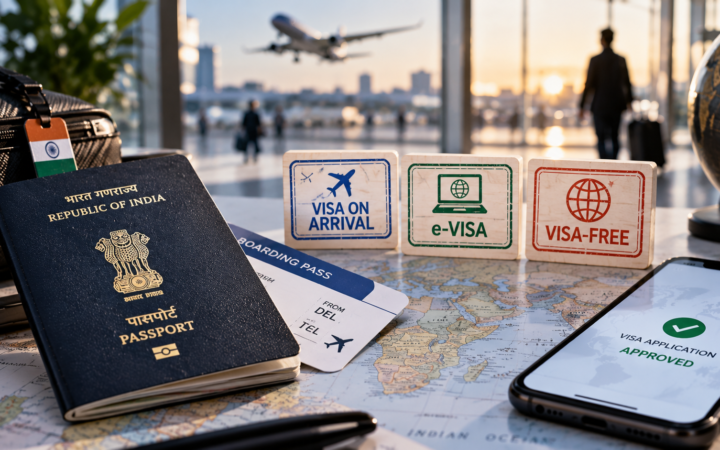
| Country | Visa for Indians | Daily Budget (₹) | Flight from Delhi (approx.) |
|---|---|---|---|
| Nepal | No visa needed | 1,200 – 2,500 | ₹4,000 – ₹8,000 |
| Vietnam | E-visa (~$25) | 1,500 – 3,500 | ₹12,000 – ₹20,000 |
| Thailand | Visa-free (60 days) | 2,500 – 4,000 | ₹8,000 – ₹15,000 |
| Cambodia | Visa on arrival ($30) | 1,200 – 3,000 | ₹12,000 – ₹22,000 |
| Sri Lanka | ETA online | 2,000 – 4,000 | ₹6,000 – ₹12,000 |
| Indonesia | Visa on arrival ($35) | 1,500 – 3,500 | ₹10,000 – ₹18,000 |
| Georgia | E-visa | 2,500 – 4,500 | ₹15,000 – ₹25,000 |
A Few Tips That Actually Save Money
Book flights 2 to 3 months ahead. This is not generic advice; fare trackers consistently show the sweet spot for international flights from India sits in that window. Flying on a Tuesday or Wednesday shaves another 10 to 15 percent off the price.
Travel during shoulder season. March-April and September-October work beautifully for most of these countries. You dodge peak tourist pricing, the weather cooperates, and you get a version of these places that feels more real because you are not constantly bumping into other tourists.
Eat where locals eat. This sounds obvious, but it is the single biggest money-saver in every country on this list. A warung in Yogyakarta, a street cart in Hanoi, a local canteen in Tbilisi: the food is better, the price is lower, and the experience is more memorable than any air-conditioned restaurant marketed at foreigners.
Skip internal flights when possible. Sleeper buses in Vietnam, trains in Sri Lanka, shared minivans in Thailand: ground transport is not just cheaper, it is often the highlight of the trip. Some of the best travel stories start on a local bus.
Final Thought
Budget travel from India in 2026 is not about cutting corners or staying in miserable hostels. It is about picking countries where your money naturally goes further, where the culture rewards curiosity over spending, and where the best experiences are often the ones that cost the least. These 7 countries prove that an Indian passport and a modest budget can still unlock some of the most extraordinary corners of the world.