If you hold an Indian passport and you have ever tried to plan a trip abroad, you already know the pain. One website says “visa-free,” another says “visa on arrival,” and a third one insists you need an “e-visa.” So which one is it? And more importantly — what does each of these actually mean when you are standing at an immigration counter in a foreign country at 2 a.m.?
Let me clear the fog. These three terms sound similar, but they are very different animals. Getting them mixed up can cost you a flight, a hotel booking, or even a full holiday. If you want the bigger picture on how Indian passport holders should plan trips in the current year, bookmark our complete visa and destination guide for 2026 — it pairs perfectly with this article.
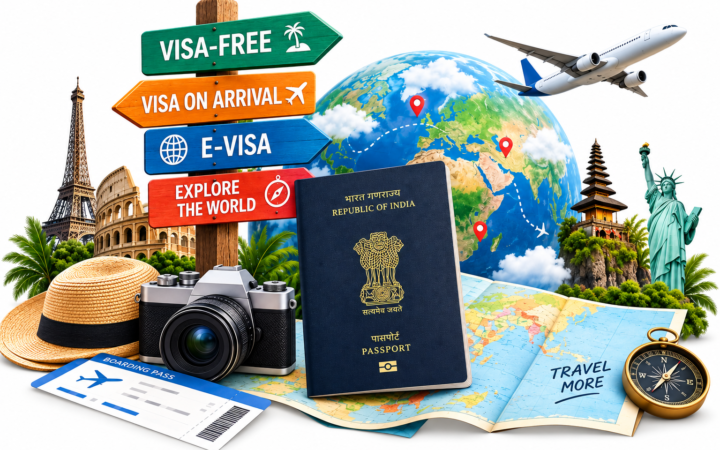
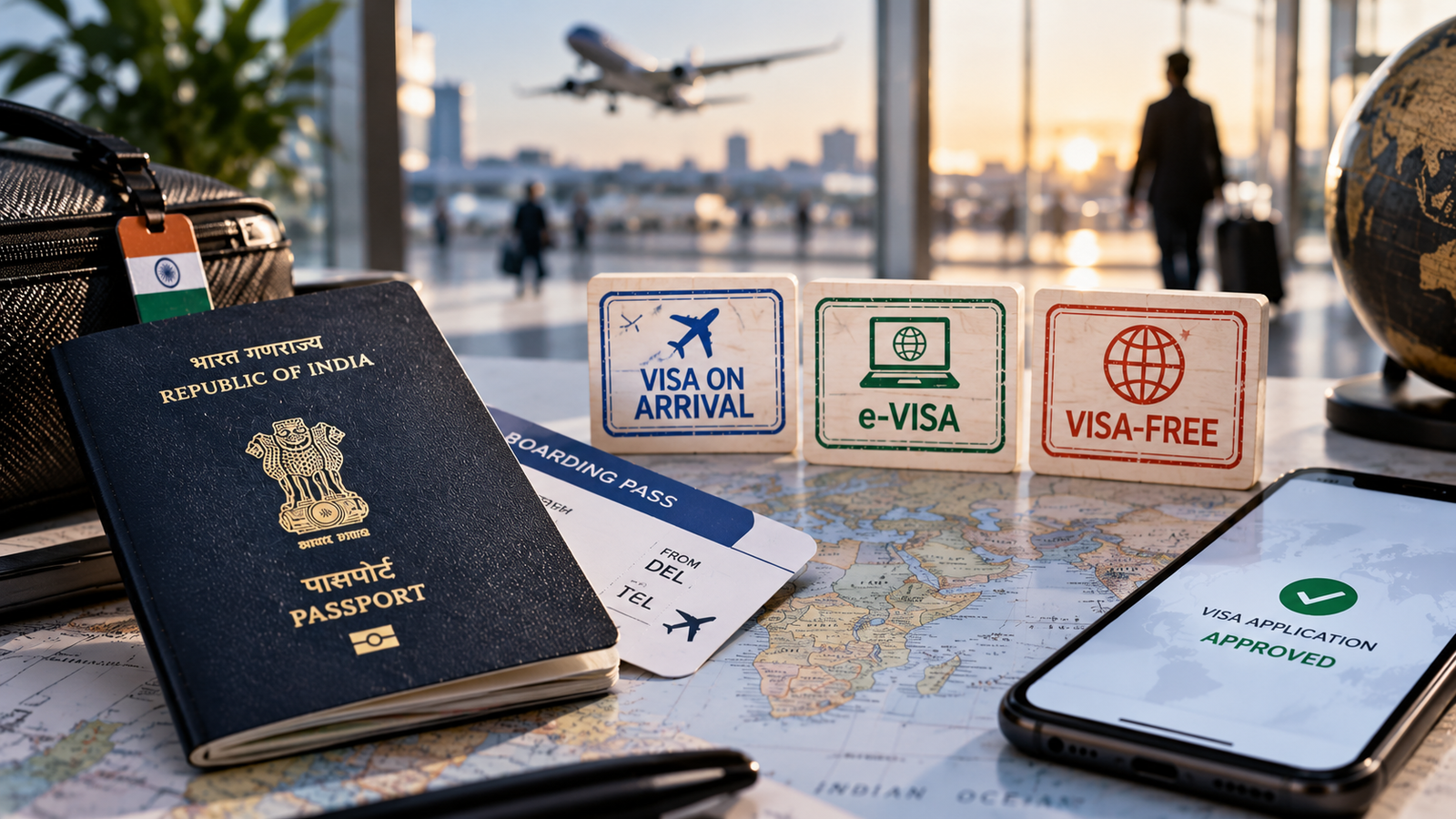
The Quick Answer (For People in a Hurry)
- Visa-Free: You just show up with your passport. No paperwork, no fees, no approval. Walk in, get stamped, leave.
- Visa on Arrival (VoA): You land first, then apply for the visa at the airport counter. Usually involves a fee, a form, and a short queue.
- e-Visa: You apply online before you fly. The visa is emailed to you. You must have it approved before boarding your flight.
Same result — you enter the country. But the process, the risk, and the paperwork are miles apart.
What “Visa-Free” Actually Means for Indian Passport Holders
Visa-free is the dream. It means the country you are visiting has decided that Indian citizens can walk in without any prior permission. You book your flight, pack your bag, land, and get a stamp.
Examples of visa-free destinations for Indians:
- Nepal — no visa, no stamp. Just carry a valid passport or voter ID.
- Bhutan — no visa, but you do need an entry permit (which is different).
- Maldives — a free 30-day permit is issued on arrival. Some call this VoA, but there is no fee, so it functionally works as visa-free.
- Mauritius, Barbados, Grenada, Dominica — visa-free for short stays.
What you still need to carry:
- Passport with 6 months validity
- Return ticket
- Proof of hotel or accommodation
- Sufficient funds (cash or card)
Immigration officers can still deny you entry even in a visa-free country if they feel your paperwork is weak. Visa-free does not mean “no questions asked.” It just means “no application.”
What “Visa on Arrival” Really Involves
Visa on Arrival is the middle ground. The country trusts Indian travelers enough to let them land, but still wants to issue a formal visa at the airport.
How VoA usually works:
- You land at the airport.
- You head to the VoA counter (often separate from regular immigration).
- You fill a form, hand over your passport, and pay the fee.
- They stamp your visa and you walk in.
Popular VoA destinations for Indians:
- Thailand — VoA for 15 days at select airports (rules shift often, so always check before flying).
- Indonesia (Bali) — VoA available for 30 days, extendable once.
- Cambodia — 30-day tourist VoA.
- Laos — VoA at major entry points.
- Jordan — VoA at Queen Alia Airport.
Things nobody tells you about VoA:
- The counter queue can be brutally long. Two hours is normal at peak times.
- The fee is almost always in USD or local currency cash. Cards often do not work.
- Some countries limit VoA to certain airports only. Land at the wrong one and you are flying back.
- Airlines can refuse to board you if they doubt your VoA eligibility.
My honest take? If a country offers both VoA and e-visa, always pick the e-visa. You save time, avoid airport chaos, and lock in approval before you fly.
What an e-Visa Actually Is
An e-visa is an electronic visa you apply for online, get approved before your trip, and print out (or store on your phone). You show it at check-in and again at immigration.
How the e-visa process usually goes:
- Visit the official government portal (never a third-party site).
- Fill out your details, upload a passport scan and a photo.
- Pay the fee online.
- Wait for approval — anywhere from 24 hours to 10 days.
- Receive the e-visa by email. Print it. Carry it.
Popular e-visa destinations for Indians:
- Vietnam — 30 to 90 day e-visas, single or multiple entry.
- Sri Lanka — ETA system, quick approval.
- Kenya — mandatory eTA for all visitors now.
- Turkey — quick e-visa for tourism.
- Australia — ETA/eVisitor system (though Indians usually apply for a full visitor visa).
- UAE — e-visa through airlines or tour operators.
The e-visa is often the safest option because you know before you board the plane whether you can enter. No surprises at the airport.
If you are still deciding where to go, take a look at our roundup of the best destinations Indian travelers can visit in 2026, sorted by visa type — it saves hours of comparison.
The Real Difference: A Side-by-Side Comparison
| Feature | Visa-Free | Visa on Arrival | e-Visa |
|---|---|---|---|
| Apply before travel? | No | No | Yes |
| Fee? | Usually none | Yes, at airport | Yes, online |
| Approval risk? | Very low | Moderate | Known before flight |
| Waiting time | None | Long airport queue | 1-10 days |
| Denial impact | Rare | Sent back from airport | Denied before flight |
| Best for | Last-minute trips | Flexible plans | Planned holidays |
Common Mistakes Indian Travelers Make
1. Assuming “visa-free” means “no documents”
You still need a valid passport, return ticket, hotel booking, and funds. Some countries also want travel insurance.
2. Confusing VoA with e-Visa
A country like Sri Lanka technically offers an ETA (electronic travel authorization). Many Indians assume it is VoA and just show up. That leads to boarding denial at Indian airports.
3. Applying on fake e-visa websites
Google is full of copycat portals that charge triple the fee and sometimes never deliver the visa. Always start from the official government tourism or immigration website.
4. Ignoring passport validity
Most countries need 6 months of validity from your entry date. A passport expiring in 5 months and 29 days can get you rejected.
5. Not carrying printouts
Immigration officers, especially in Southeast Asia and Africa, still want to see a printed e-visa. Do not rely only on your phone screen.
Which One Should You Choose?
You do not always get to choose — the country decides for you. But when you are picking a destination, think about your travel style:
- Spontaneous traveler? Stick to visa-free destinations. Nepal, Bhutan, Maldives, Mauritius.
- Comfortable with paperwork? e-Visa countries open up huge options — Vietnam, Turkey, Kenya, Sri Lanka.
- Want a beach trip and do not mind queues? VoA destinations like Thailand, Bali, or Cambodia work well.
Pro Tips Before You Book
- Always cross-check visa rules on the destination country’s official immigration website within a week of booking.
- Keep two printed copies of your visa or approval letter, plus a soft copy on email and cloud storage.
- Carry a couple of passport-sized photos. VoA counters love them.
- Have USD cash as backup — many VoA counters do not accept cards or local currency.
- Check if your travel insurance is mandatory for entry. Some Schengen and Gulf countries now require it.
Before your next international trip, spend 20 minutes going through our complete 2026 travel and visa guide for Indian passport holders. It covers document checklists, cost comparisons, and country-by-country entry rules that make the difference between a smooth trip and a nightmare at the airport.
Final Word
Visa-free, visa on arrival, and e-visa are not marketing labels — they decide whether you fly, whether you land, and whether you enter. Once you understand the difference, planning a trip abroad becomes ten times easier. Pick your destination first, then match the visa type to your travel style, then prep the paperwork before you book that non-refundable flight.
Travel smart, carry the right documents, and the Indian passport will take you further than you think.
FAQs
Q1. Is visa on arrival the same as e-visa?
No. VoA is issued at the airport after you land. An e-visa is approved online before you fly.
Q2. Which is safer — VoA or e-visa?
e-Visa is safer because you know your approval status before booking flights and boarding.
Q3. Do visa-free countries allow unlimited stay?
No. Every visa-free entry has a maximum permitted stay, usually 15 to 90 days.
Q4. Can I get VoA if I do not have a return ticket?
Most countries will deny VoA without proof of onward travel. Always carry a confirmed return or onward ticket.
Q5. What if my e-visa is rejected after booking flights?
You lose the flight cost unless you booked refundable tickets or have travel insurance covering visa denial.