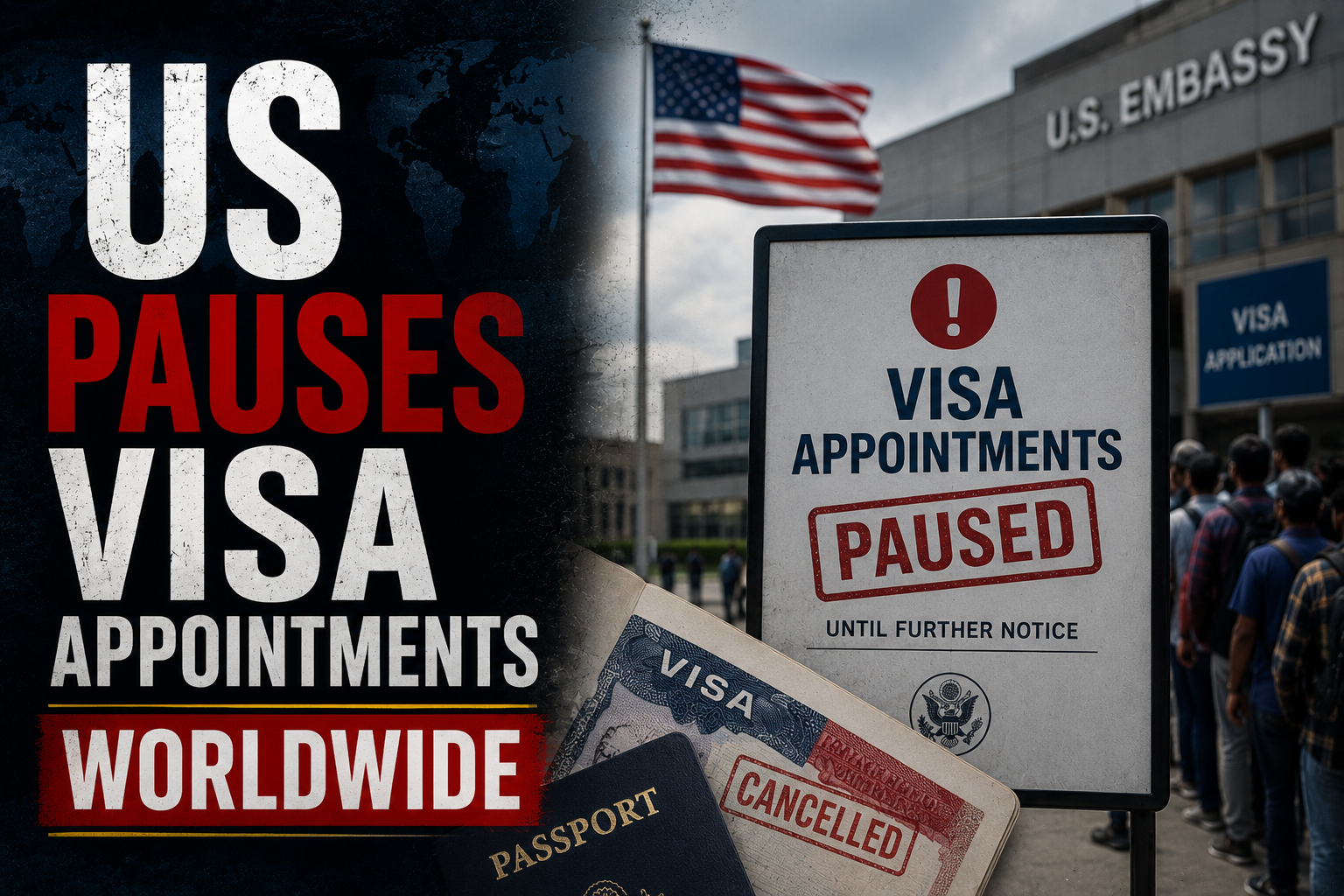
On August 26, 2026, the Trump administration issued a sweeping pause on visa appointments at every US embassy and consulate around the world. Applicants who had interviews scheduled received emails saying their appointments were canceled and would be rescheduled at some future date, with no timeline given.
The US State Department described this as a “global training initiative” for consular officers, meant to ensure visa applicants are evaluated “comprehensively and consistently.” But the timing, context, and pattern of decisions leading up to this freeze tell a much bigger story.
This is not an isolated policy tweak. It is the latest escalation in a series of immigration actions that have disrupted legal pathways for millions of people worldwide.
What Exactly Happened?
The pause affects both immigrant and nonimmigrant visa categories across all US diplomatic posts globally. Applicants with scheduled interviews at embassies and consulates have been told their appointments are being rescheduled. No new interview dates have been provided.
The State Department says the pause is needed so consular officers can undergo mandatory training. However, this announcement comes just days after a federal judge struck down a separate Trump administration policy that had suspended immigrant visa issuance for nationals of 75 countries since January 2026.
That earlier suspension, which affected applicants from Latin America, the Balkans, South Asia, Africa, the Middle East, and the Caribbean, was ruled “patently unlawful” by US District Judge Jeannette Vargas of the Southern District of New York. The judge found that Secretary of State Marco Rubio had exceeded his statutory authority and that the policy discriminated against applicants based on nationality, violating federal immigration law.
The Pattern Behind the Pause
To understand why this worldwide visa freeze matters, you have to look at the full timeline of immigration actions under this administration.
January 2026: The 75-Country Visa Suspension
The State Department halted immigrant visa processing for nationals of 75 countries, claiming applicants from those nations were at “high risk” of becoming a public charge. The list included countries like Brazil, Colombia, Pakistan, Bangladesh, Egypt, Somalia, Russia, and dozens more across Africa, the Caribbean, and Asia. Consular officers were instructed to refuse visas even when individual applicants demonstrated they could support themselves financially. A federal judge struck this policy down on August 22, 2026, calling it contrary to law.
Visa Revocations Based on Political Opinions
The administration has revoked more than 6,000 student visas, with the State Department directing diplomats to be vigilant against applicants with histories of political activism. Students at universities across the country have had their visas terminated for participating in pro-Palestinian protests, with some detained and others ordered deported. Multiple federal judges have intervened in individual cases, ordering the government to reinstate student visa statuses that were “abruptly and unlawfully” terminated.
The Largest Mass Visa Revocation in History
On August 25, 2026, just one day before the global appointment pause, the administration announced plans to revoke up to 200,000 visas from people who entered the US on tourist or business visas and subsequently filed asylum claims. The State Department called this the largest visa revocation effort in US history, targeting B-1 and B-2 visa holders from 2016 to 2026.
Continuous Vetting of 55 Million Visa Holders
The administration launched “continuous vetting” of more than 55 million existing US visa holders, screening for potential violations that could trigger revocation or deportation. This represents an unprecedented level of surveillance over the global pool of people who hold valid US travel documents.
The Real Impact on People
Behind the policy language and legal battles are real people whose lives have been thrown into uncertainty.
Workers with approved job offers waiting for visa interviews now have no timeline for when those interviews will be rescheduled. Families separated across borders, some of whom have waited years through the legal immigration process, face even longer delays. Students accepted to American universities cannot confirm whether their visa appointments will happen before their programs begin. Many students are already exploring alternatives to studying in the US as the environment grows increasingly hostile toward international education.
The financial toll is real too. Visa application fees, medical examination costs, document preparation expenses, and travel costs to reach embassy locations add up to significant amounts, especially for applicants in developing countries. With appointments canceled indefinitely, that money sits in limbo.
Tariff Wars and Global Disruption: The Bigger Picture
The visa freeze does not exist in a vacuum. It fits into a broader pattern of confrontation that the Trump administration has pursued with countries around the world.
The tariff war with Canada escalated to 50% duties on Canadian goods, with Canada retaliating with tariffs on $155 billion worth of American products. Mexico faced similar treatment. China was hit with tariffs as high as 145% on most goods. The European Union, India, Japan, and dozens of other trading partners were subjected to “Liberation Day” tariffs that sent stock markets tumbling globally.
The World Trade Organization slashed its forecast for global merchandise trade, projecting a decline of 0.2% in 2025 instead of the growth that had been expected. The WTO Director-General warned that “enduring uncertainty threatens to act as a brake on global growth, with severe negative consequences for the world, the most vulnerable economies in particular.”
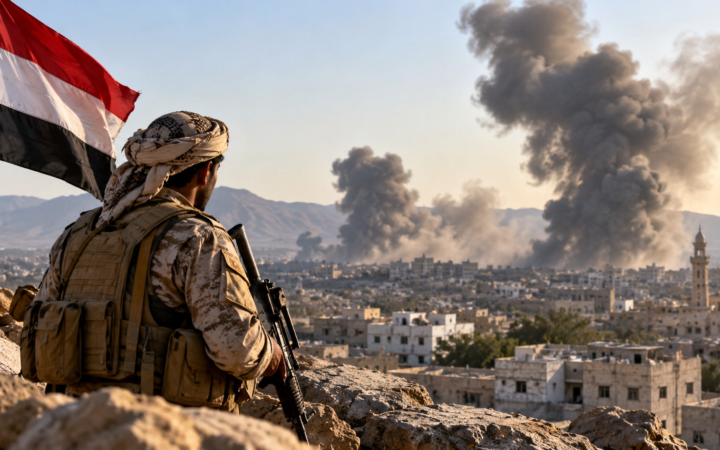
Meanwhile, the administration has pursued military actions across 7 countries, threatened tariffs against European nations over the Greenland dispute, and accused India and 40 other countries of participating in China’s shadow transshipment network. The result is a world where America’s relationships with allies and trading partners have been strained in ways not seen in decades.
Curbing Illegal Immigration Is Necessary, but This Is Not the Way
Here is what needs to be said clearly: curbing illegal immigration is a legitimate goal. Every sovereign nation has the right and responsibility to secure its borders, enforce its laws, and maintain an orderly immigration system. Illegal border crossings undermine the rule of law, create humanitarian crises, and make it harder for legal immigrants who follow the rules. No serious person disputes this.
But what this administration has done goes far beyond securing borders or stopping illegal entry. It has systematically dismantled legal immigration pathways: suspending visa processing for 75 countries, revoking student visas over political speech, planning the largest mass visa cancellation in history, and now freezing appointments at every embassy and consulate on the planet.
These are not actions aimed at illegal immigrants. These target people who are following the law, filling out applications, paying fees, attending interviews, and waiting in line. Punishing legal applicants does not stop a single person from crossing a border illegally. It just tells the world that playing by America’s rules gets you nowhere.
The broader picture is even more troubling. Picking fights with Canada, Mexico, the EU, China, India, and dozens of other countries simultaneously through tariffs, military threats, and diplomatic confrontations is not a strategy. It is ego-driven disruption that damages alliances built over decades. When you treat every country as an adversary, you end up with no partners when you actually need them.
Good immigration policy can be built through proper rules: streamlined vetting processes, clear eligibility criteria, consistent enforcement, and bilateral agreements with source countries. It requires diplomacy, not demolition. The global economy is deeply interconnected, and policies driven by ego rather than strategy create damage that takes years to repair.
The world is watching. And millions of people who simply wanted to visit, study, work, or reunite with family in the United States are paying the price for a political agenda that has confused strength with chaos.