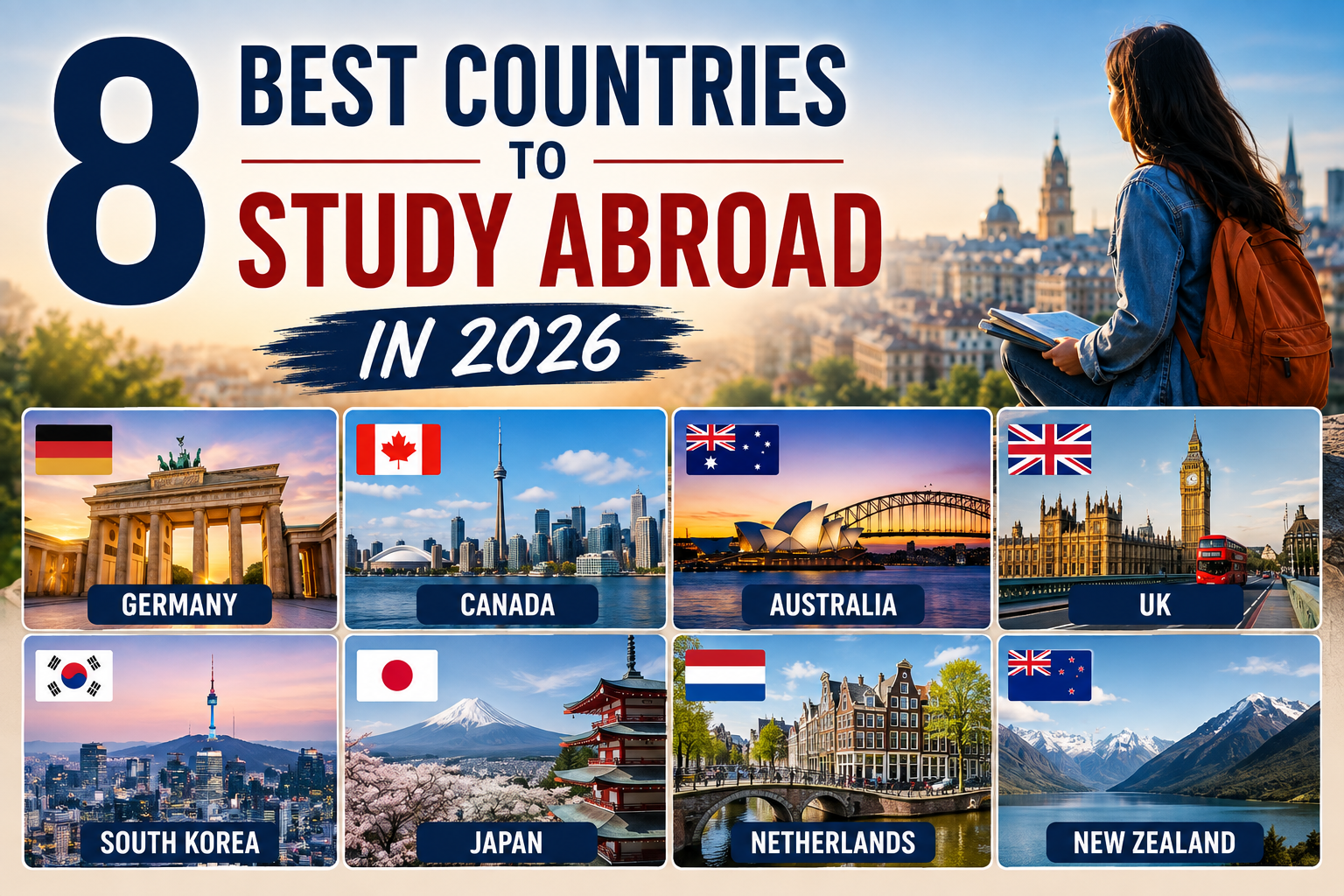
Picking a country to study in is no longer just about university rankings. Students today weigh tuition costs, post-graduation work permits, safety, cultural exposure, and long-term settlement pathways before making a decision. With global student mobility crossing 6.9 million in 2025 and projections pointing toward 8.5 million by 2030, the competition among countries to attract international talent has never been fiercer.
If you are planning to move abroad for higher education in 2026, this guide breaks down 8 destinations that stand out for very different reasons. No fluff, no recycled lists. Just verified details that matter when you are investing years of your life and your family’s savings.
1. Germany: World-Class Degrees Without the Tuition Bill
Germany remains one of the rare countries where public universities charge zero tuition for undergraduate and consecutive master’s programs, regardless of nationality. This applies across 15 of 16 federal states. The only exception is Baden-Württemberg, where non-EU students pay €1,500 per semester.
The country currently hosts over 420,000 international students, and that number keeps climbing. Institutions like RWTH Aachen, LMU Munich, TU Berlin, and Heidelberg University sit among the world’s top-ranked schools and remain completely free to attend.
There is a financial requirement, though. Germany mandates a blocked account deposit of €11,904 (as of 2026) before issuing a student visa. This amount is released monthly at €992 to cover living expenses. Students can also work up to 140 full days per year alongside their studies.
After graduation, an 18-month job-seeker residence permit allows graduates to stay and find employment related to their field. DAAD, the world’s largest academic exchange service, offers monthly stipends of €934 for master’s students and €1,200 for PhD candidates, along with travel and health insurance allowances.
2. Canada: The Settlement-Friendly Destination
Canada’s Post-Graduation Work Permit (PGWP) remains one of the most generous in the world, allowing graduates to work for up to 3 years after completing their studies. That work experience feeds directly into permanent residency applications through Express Entry and Provincial Nominee Programs.
However, the landscape has shifted. International enrollment dropped roughly 29% since 2023-24 after the government introduced visa caps and tightened study permit requirements. Current enrollment sits at around 300,000 students.
Despite the policy tightening, the fundamentals remain strong. Universities like Toronto, McGill, UBC, and Waterloo continue to produce globally competitive graduates. Tuition ranges from CAD 20,000 to CAD 55,000 per year depending on the program, but strong scholarship ecosystems and on-campus work options (up to 20 hours per week during semesters) help offset costs.
The real draw remains the pathway from student to permanent resident. Few countries make that transition as structured and transparent as Canada does.
3. Australia: Work Rights That Actually Work
Australia enrolled 565,601 international students as of January 2026, though that figure reflects a 9% decline as the government moves to cap numbers. Even so, the country’s post-study work visa remains highly attractive, offering 2 to 4 years of work rights depending on the qualification level.
Australian universities consistently rank among the global top 100. The Group of Eight (Go8) universities, including Melbourne, Sydney, ANU, and UNSW, are known for their research output and industry partnerships.
International students can work up to 48 hours per fortnight during the semester and full-time during breaks. The minimum wage in Australia is among the highest globally, making part-time work a meaningful source of income rather than a token gesture.
Living costs are higher than most Asian destinations, with students budgeting AUD 21,000 to AUD 25,000 annually for expenses outside tuition. Cities like Adelaide, Brisbane, and Perth offer a more affordable lifestyle compared to Sydney and Melbourne.
4. United Kingdom: Shorter Degrees, Faster Returns
One of the most overlooked advantages of studying in the UK is time. Undergraduate degrees typically take 3 years instead of 4, and most master’s programs wrap up in just 12 months. That means a full year saved in tuition, living costs, and opportunity cost compared to the same qualification in the US or Canada.
The UK currently offers a Graduate Route visa that permits 2 years of post-study work (3 years for PhD graduates), though this is set to be shortened to 18 months from January 2027. Students considering the UK should factor this upcoming change into their timeline.
Tuition for international students ranges from £15,000 to £40,000 per year. Scholarships like Chevening (fully funded by the UK government) and Commonwealth Scholarships provide strong financial support, but competition is intense.
The 2026 QS World University Rankings place several UK institutions in the top 10, including Oxford, Cambridge, Imperial College London, and UCL. For students targeting careers in finance, law, consulting, or creative industries, London alone offers unmatched access to employers.
5. South Korea: The Fast-Rising Asian Powerhouse
South Korea hit its “Study Korea 300K” target 2 years ahead of schedule, with 314,397 international students enrolled as of February 2026. The government has now shifted its focus from simply growing numbers to improving quality, integration, and post-study outcomes.
New visa reforms introduced in 2026 include a “growth ladder” system designed to help students transition smoothly from study to employment and eventual settlement. The part-time work limit during semesters has been raised from 30 to 35 hours per week, and post-study work pathways through E-7 and D-10 visas have been expanded.
Tuition at public universities runs between $1,500 and $4,500 per semester, which is significantly cheaper than Western alternatives. The Global Korea Scholarship (GKS) awards around 2,200 fully funded positions each year, covering tuition, airfare, a monthly stipend, and a 1-year Korean language training program.
Seoul now ranks as one of the top student cities globally. With South Korea investing over $20 billion in AI and semiconductors, graduates in tech-related fields are finding strong employment prospects right after completing their degrees.
6. Japan: Quietly Opening Doors for Global Talent
Japan enrolled 435,200 international students in the latest reporting period, an 8.2% year-over-year increase. The Ministry of Education (MEXT) raised enrollment caps at select universities by 5% from April 2026 and allocated ¥3.3 billion across 11 universities to attract overseas researchers.
The MEXT Scholarship is considered one of the most prestigious government-funded programs anywhere. It covers 100% tuition, round-trip airfare, and a monthly stipend equivalent to approximately $580 to $700 depending on the program level.
Japan’s appeal goes beyond the classroom. The country consistently ranks among the safest in the world, with low crime rates, efficient public transport, and a high standard of living. Many top universities now offer English-taught courses, especially at the postgraduate level, which has reduced the language barrier for incoming students.
For students interested in robotics, automotive engineering, materials science, or game design, Japan provides unmatched access to industries that lead the world in those fields. The country is also targeting over 15,000 students specifically from India over the next 5 years.
7. Netherlands: Small Country, Big Academic Punch
The Netherlands punches well above its weight in higher education. With over 2,100 English-taught programs across its universities, it is one of the most accessible non-English-speaking countries for international students.
Universities like Delft, Eindhoven, Amsterdam, and Leiden consistently rank in the global top 100. The country is particularly strong in engineering, sustainability, design, data science, and public policy.
After graduating, international students can apply for a 1-year Orientation Year visa (Zoekjaar) to find employment. Tuition for non-EU students ranges from €8,000 to €20,000 per year, which is competitive compared to the UK or Australia.
The Dutch lifestyle itself is a draw. Cycling infrastructure, a strong work-life balance culture, and proximity to major European cities (Brussels, Paris, and Berlin are all a short train ride away) make daily life comfortable and connected.
8. New Zealand: Quality of Life Meets Career Opportunity
New Zealand often gets overlooked in favor of its larger neighbor Australia, but it offers a compelling package in its own right. The country’s post-study work visa allows graduates to work for up to 3 years, depending on the qualification level and location of study.
Tuition ranges from NZD 22,000 to NZD 40,000 per year. Universities like Auckland, Otago, and Victoria University of Wellington carry strong international reputations, particularly in environmental science, agriculture, film production, and public health.
New Zealand is known for its welcoming culture and strong community support for international students. The country’s small population means students get more personalized attention in classrooms and stronger connections with faculty.
The trade-off is geographical remoteness. Flights home are expensive, and the job market is smaller than Australia’s or Canada’s. But for students who value quality of life, outdoor access, and a supportive academic environment, New Zealand delivers consistently.
How to Pick the Right Country for You
There is no universal “best” country. The right destination depends on what matters most to you. If cost is the primary concern, Germany and South Korea offer extraordinary value. If long-term settlement is the goal, Canada and Australia provide the clearest pathways. If speed and prestige matter, the UK’s shorter degree programs are hard to beat.
Before committing, research the specific visa rules for your nationality, compare total cost of attendance (not just tuition), and check whether the degree you are pursuing qualifies for post-study work rights in your target country. Over 70% of international students in 2026 report that the ability to work during or after their studies directly influenced their choice of destination.
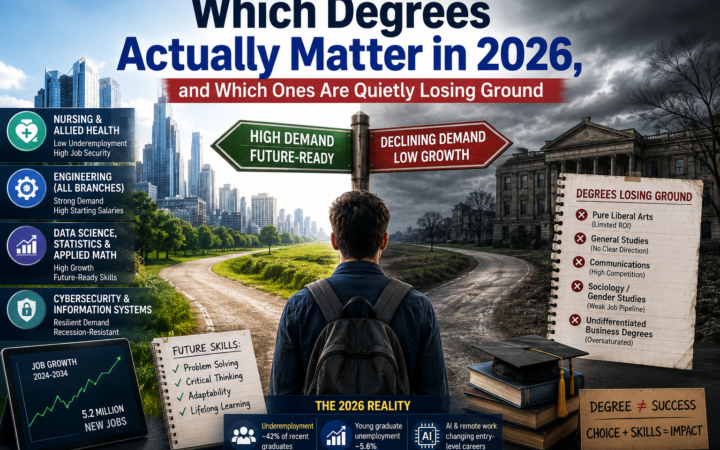
Your degree is an investment. Treat the country selection with the same seriousness you give to choosing a university or a major. And if you are still deciding what to study, read our breakdown of which degrees actually matter in 2026 before locking in your plans.