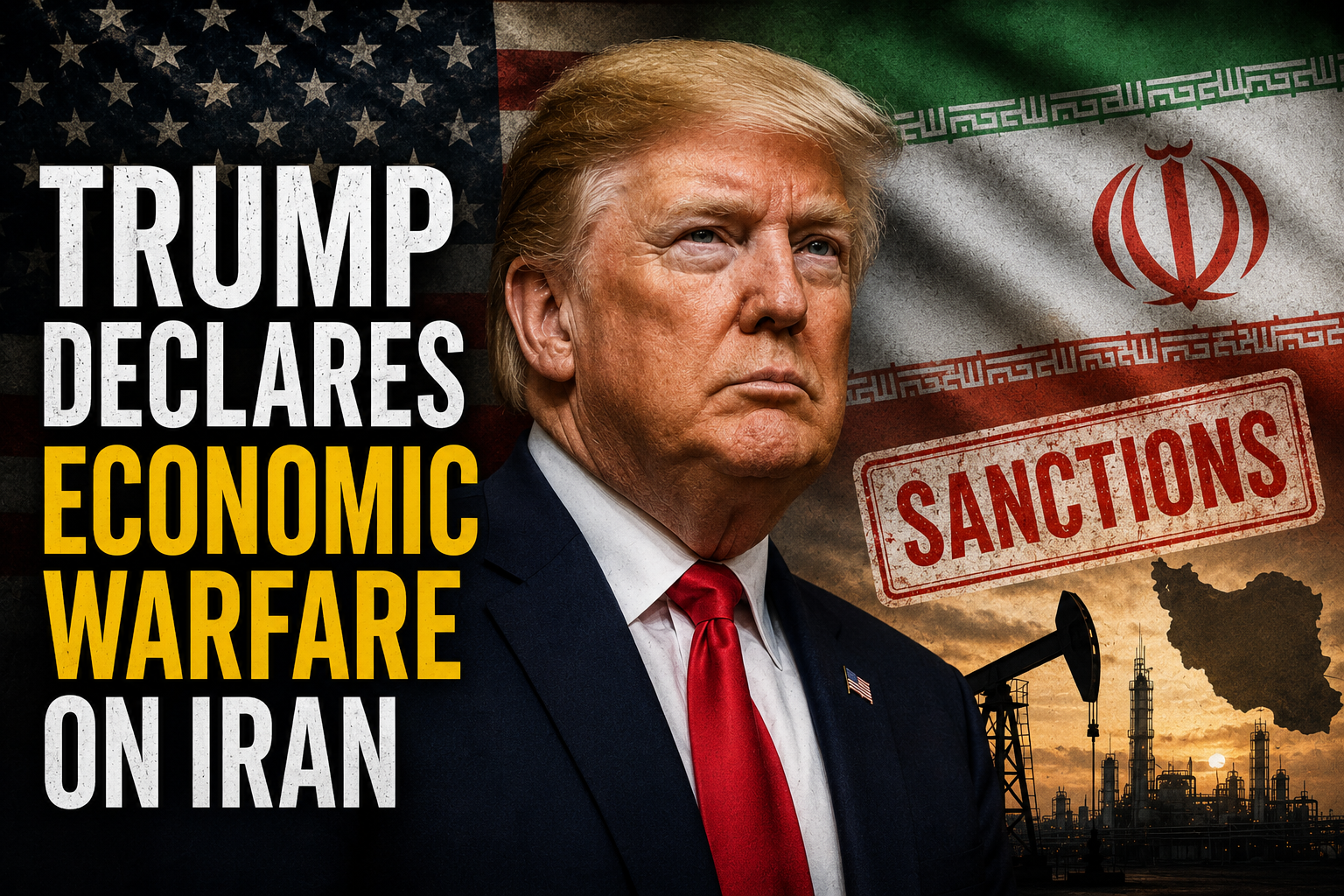
President Donald Trump announced on Wednesday what he described as the most devastating economic campaign ever directed at a single country, escalating pressure on Iran nearly 6 months into the ongoing conflict between Washington and Tehran.
In a post on Truth Social, Trump declared that Iran had squandered every opportunity to reach a deal and would now face economic isolation on a scale the world has never witnessed. He branded the announcement an “Economic D-Day” and urged American allies to join the effort to cut Tehran off from the global financial system entirely.
What Trump Actually Said
Trump stated that any country allowing its financial institutions, businesses, airports, or government bodies to offer Iran any form of support would itself face severe economic consequences from the United States. He singled out oil smuggling, currency swap lines, cash transfers, exchange houses, ship registries, and front companies as the specific channels Washington wants shut down immediately.
The president argued that Iran’s military capabilities have been gutted over the course of the war. He claimed the country’s navy and air force have been destroyed, its weapons factories reduced to rubble, and its currency rendered worthless. In Trump’s words, the regime is now “hanging by a thread.”
This announcement marks a clear pivot from the military posture Trump had taken just weeks earlier. After canceling a planned military offensive he had called the biggest since World War II, Trump appears to have shifted his strategy toward strangling Iran’s economy rather than returning to large-scale bombing campaigns.
Operation Economic Fury: The Backbone of the Pressure Campaign
The latest declaration builds on Operation Economic Fury, a sanctions campaign the Trump administration has been running since April 2026. Under this banner, the Treasury Department’s Office of Foreign Assets Control (OFAC) has sanctioned over 1,000 individuals, vessels, and aircraft connected to Iran since Trump began his second term.
The campaign has targeted nearly every artery of Iran’s financial system. Treasury officials have gone after shadow banking networks used by Iranian banks to access global markets, seized nearly half a billion dollars in cryptocurrency linked to the regime, and designated dozens of oil tankers operating as part of Iran’s “shadow fleet.” Earlier rounds also hit Chinese teapot refineries that remain among the last major buyers of Iranian crude, along with companies and brokers in the UAE, Turkey, and Iraq.
The U.S. State Department’s Iran Sanctions page lists over a dozen separate rounds of designations issued since January 2026, targeting everything from petroleum logistics and weapons procurement to digital asset exchanges used for terror financing.
Treasury Secretary Scott Bessent had previewed the latest escalation last Thursday, telling reporters that the administration was preparing “a combination of economic isolation like the world has never seen before,” paired with the continued naval blockade of Iranian ports. National Security Adviser Mike Waltz gave the effort its name: Operation Economic Fury.
The Strait of Hormuz Problem
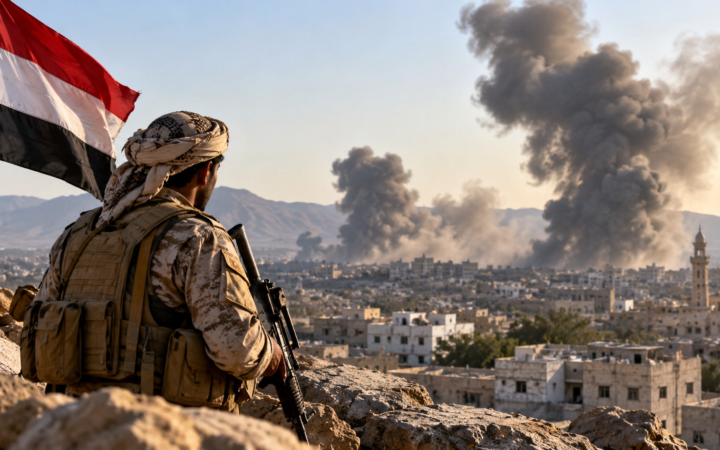
At the center of this economic tug-of-war sits the Strait of Hormuz, one of the world’s most critical oil chokepoints. Iran has effectively disrupted traffic through the waterway since early March, targeting commercial vessels and complicating global energy supply chains.
Shipping data paints a grim picture. Only 73 vessels transited the Strait during the week ending August 16, a sharp drop from 91 the previous week. Those numbers remain far below pre-war norms, with most operators avoiding the chokepoint entirely. Regional allies have already started taking sides. The UAE suspended all trade with Iran following a ballistic missile incident in Gulf waters, a move that further tightened the economic noose around Tehran.
Despite claiming the Strait is technically “open,” Trump acknowledged that traffic could slow further in the coming weeks. Brent crude futures climbed to $92.09 per barrel following the announcement, while U.S. West Texas Intermediate crude hit $86.07, reflecting continued market anxiety over supply disruptions.
Iran’s Response and the Skeptics
Tehran has pushed back sharply. Foreign Minister Abbas Araghchi dismissed Trump’s latest threats as a diversion from what he called America’s own economic problems, including record debt and rising interest costs. He accused Washington of doubling down on failed policies that would only generate more resentment among ordinary Iranians.
Deputy Foreign Minister Kazem Gharibabadi was even more blunt. He argued that the United States had turned to economic pressure precisely because its military campaign failed to deliver results. His message was clear: if Iran were truly on the verge of collapse, Washington would not need to beg its allies for help.
Analysts outside the government have also raised questions about whether the new measures can produce results fast enough. Brett Erickson, managing principal at Obsidian Risk Advisor, noted that targeting Chinese banks doing business with Iran would be the single most powerful lever Trump could pull. But he added a crucial caveat: the fact that these measures had not already been used suggests the risks involved are considerable. Beijing has warned Chinese companies not to cooperate with American sanctions, and enforcing restrictions on Iran’s overland trade with Turkey, Iraq, and Central Asia remains a major challenge.
What Comes Next
The big question now is whether economic pressure alone can force Iran to the negotiating table. Iran’s economy was already in severe distress before this latest round of threats. Inflation topped 48% in late 2025, poverty rates have surged, and the country has been rocked by waves of protests driven by economic hardship and public anger over governance failures.
But Iran has also spent decades learning how to survive under sanctions. Its trade relationships with China, its overland routes through neighboring countries, and its use of cryptocurrency and shadow banking networks give it options that did not exist during earlier rounds of isolation. NATO has signaled readiness to respond if Iran escalates by targeting American or allied assets in Europe, adding yet another layer of uncertainty to an already volatile situation.
Trump’s economic gambit is a high-stakes bet that financial pain can accomplish what months of military strikes could not. Whether it breaks Tehran’s resolve or simply deepens the suffering of ordinary Iranians without changing the regime’s calculations remains to be seen.