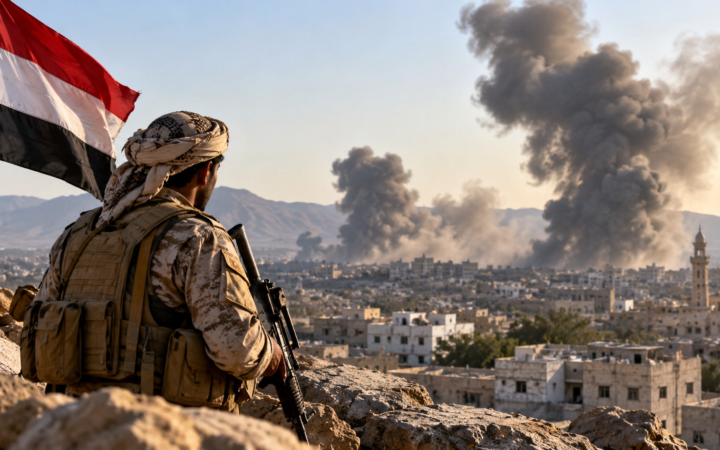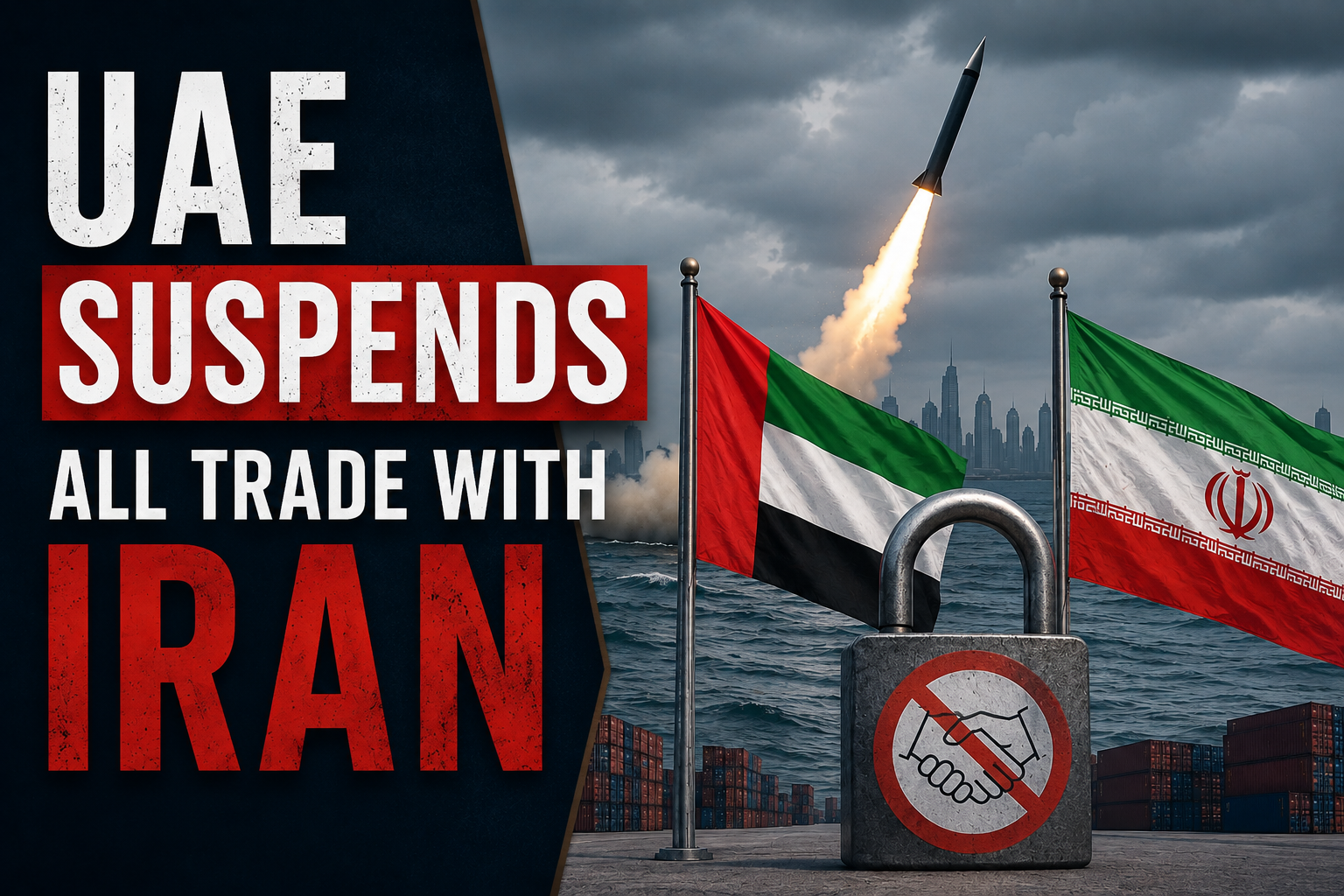
The United Arab Emirates has frozen all trade, commercial exchanges, and financial transactions with Iran until further notice, in what marks the most aggressive economic step Abu Dhabi has taken against Tehran since the Middle East conflict erupted in late February 2026.
The announcement came on August 18 through the UAE Ministry of Foreign Affairs, just hours after 2 Iranian ballistic missiles were detected heading toward the country. Afra Al Hameli, Director of the Strategic Communications Department at the ministry, confirmed the sweeping trade halt in a statement posted on the social media platform X.
What Triggered the Trade Suspension
The immediate catalyst was a missile incident that rattled residents across the Emirates on Tuesday evening. The UAE Defence Ministry said its air defense systems detected 2 ballistic missiles launched from Iranian territory toward the country. One missile fell outside UAE territorial waters, while the other landed within them.
Authorities later assessed that both projectiles were aimed at maritime navigation rather than land-based targets. No injuries or damage were reported. However, the incident triggered an emergency phone alert across the country, warning residents to seek shelter in the nearest secure building. The all-clear was issued shortly afterward.
This was the first confirmed missile threat directed at the UAE since early May, when a larger Iranian barrage struck an industrial petroleum complex in the eastern emirate of Fujairah. That May attack caused significant damage and injured 3 Indian nationals.
Official UAE Position on the Trade Freeze
Al Hameli stated that the decision was taken in light of regional escalations that continue to undermine regional and international peace and security. She also rejected allegations concerning the status of the UAE’s economic relationship with Iran, though she did not specify what those allegations were.
While suspending all economic engagement, the UAE was careful to frame the move as a security measure rather than a permanent diplomatic break. Al Hameli reaffirmed Abu Dhabi’s commitment to dialogue, cooperation, and regional integration as essential tools for advancing peace, stability, and prosperity. She also emphasized the UAE’s dedication to upholding international law and protecting the integrity of the global financial system.
Iran Denies Involvement
Tehran firmly rejected the missile accusation. Iranian Foreign Ministry spokesperson Esmaeil Baghaei described the UAE’s claim as unfounded and harmful to regional efforts to rebuild trust. He called on all parties in the region to refrain from making baseless accusations.
Iran’s position throughout the conflict has been that it publicly takes responsibility whenever it carries out military operations. Tehran has previously suggested that some reported attacks attributed to Iran could be false flag operations.
Why This Trade Suspension Carries Enormous Weight
The economic implications of this decision are significant. Dubai has long served as a critical commercial gateway for Iranian businesses and one of the most important financial corridors connecting Iran to the global economy. According to United Nations trade data, UAE exports to Iran reached $6.07 billion in 2024, with machinery, electronics, and food products among the largest categories.
Retired US General Mark Kimmitt, a former assistant secretary of state, told media outlets that this trade embargo could hit Iran harder than any sanctions Washington has imposed. He noted that Dubai has quietly become Iran’s most important trading partner, edging out both China and Turkiye to supply roughly a third of everything Iran imports each year.
A major concern is the impact on financial networks. Many of the smuggling and money-laundering operations that sustain parts of Iran’s economy conduct transactions within the UAE’s free trade zones. Cutting off these channels could starve Tehran of vital financial lifelines at a time when its economy is already under severe strain from US sanctions and a naval blockade.
A Pattern of Escalation
This trade suspension is not unprecedented. The UAE initially halted direct cargo shipping to Iran in early March, just days after the US-Israel war on Iran began on February 28. Cross-Gulf trade resumed at lower volumes in late June through Dubai’s Jebel Ali Port, but the latest decision reverses that partial recovery entirely.
In recent weeks, tensions had been climbing steadily. The Abu Dhabi National Oil Company (ADNOC) reported that 15 of its vessels had been attacked by missiles and drones while transiting the Strait of Hormuz since the conflict began. These attacks killed 1 crew member and injured 20 others. Iran has not claimed responsibility for the ADNOC attacks.
Since the onset of hostilities in February, the UAE has faced an extraordinary volume of Iranian firepower. By early April, the country’s air defenses had engaged more than 500 ballistic missiles, over 25 cruise missiles, and more than 2,200 drones. The attacks have killed 2 UAE armed forces members and 10 civilians of various nationalities, with over 220 people injured.
Diplomatic Context and the Bigger Picture
The trade freeze came shortly after a phone call between UAE President Sheikh Mohammed bin Zayed Al Nahyan and US President Donald Trump. According to the UAE’s state news agency WAM, the 2 leaders discussed bilateral cooperation and exchanged views on the latest developments in the Middle East.
The timing is significant. The 60-day memorandum of understanding signed between the US and Iran in mid-June, intended as a framework for broader peace negotiations, expired on August 17 without producing any agreement. Trump confirmed that no talks with Iran were underway or planned, while maintaining that the US naval blockade of Iranian ports remained in full effect.
Meanwhile, Iran continues to insist that the Strait of Hormuz will remain closed until Washington meets its conditions. The waterway, which carried roughly 20% of the world’s oil supply before the conflict, remains at the heart of the crisis. Brent crude climbed above $91 per barrel on Tuesday as supply concerns intensified.
What Comes Next
The UAE stated that the trade freeze would remain in effect until further notice, offering no timeline for a potential reversal. With diplomatic channels between the US and Iran frozen, the Strait of Hormuz effectively contested, and oil prices climbing, the suspension adds another layer of economic pressure on an already isolated Tehran.
For the UAE, the challenge will be balancing security imperatives against the commercial costs of cutting ties with a major regional trade partner. For Iran, losing access to Dubai’s financial infrastructure could prove more damaging than any military engagement.