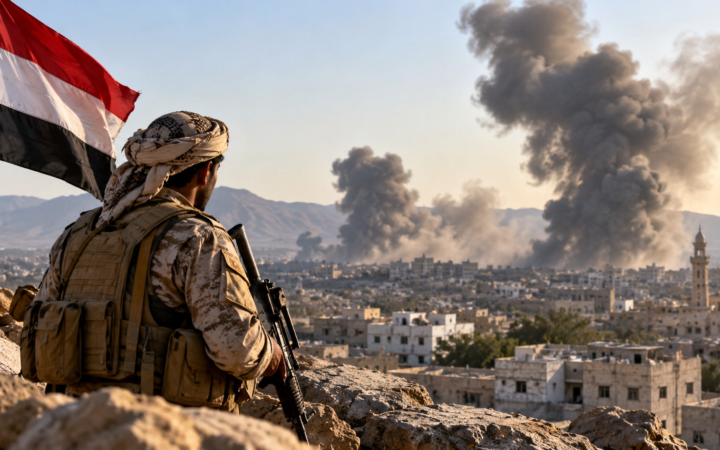
Late July 2026 — The war that the United States and Israel launched against Iran on February 28, 2026 has entered one of its most dangerous phases yet. After a short-lived ceasefire earlier in the year, US forces have carried out strikes on Iranian targets on more than a dozen consecutive nights this month, oil has climbed above $100 a barrel for the first time since May, and the Strait of Hormuz — the artery for roughly a fifth of the world’s oil — remains all but closed to normal traffic.
The conflict, which reference works including Encyclopaedia Britannica now catalogue as the “2026 Iran war” (and which some commentators call the Third Gulf War), began with coordinated US–Israeli airstrikes aimed, according to the UK House of Commons Library, at Iran’s nuclear and ballistic-missile programs and at regime change. Iran’s Supreme Leader, Ayatollah Ali Khamenei, was killed in the opening salvo along with dozens of senior officials, triggering a succession crisis that still shapes Tehran’s decision-making today.
How the fighting restarted
Fighting paused after the two sides agreed to a ceasefire on April 7–8, and in June they signed a memorandum of understanding intended to end hostilities within 60 days, reopen the Strait of Hormuz and open the way to a broader deal. That truce did not hold. According to Britannica, the conflict reignited in July after Iran struck three commercial vessels that had bypassed a route Tehran had pre-approved for shipping through the strait.
By early July, President Donald Trump had declared the ceasefire effectively over and, as of late July, signalled he was not yet ready to negotiate a new one. US Central Command has framed the renewed campaign as an effort to degrade Iran’s ability to threaten commercial shipping and to strike the Islamic Revolutionary Guard Corps.
A nightly bombing campaign
US forces have now struck Iran for well over a dozen nights running — CNN reported a 13th consecutive night on July 23. Iranian state media say recent US targeting has expanded beyond ports and storage sites to command centres, communications networks, bridges, roads, railways and power infrastructure, raising fears that the campaign is dismantling systems ordinary Iranians depend on. Trump has publicly threatened Iranian infrastructure, including bridges.
The cost to the United States has climbed far beyond early projections. Trump suggested in February that the war might wrap up in four to five weeks. Instead, according to NBC News, 18 US service members have died and hundreds have been injured, with Defense Secretary Pete Hegseth estimating spending at more than $37.5 billion to date. The Pentagon says more than 50,000 US troops are now operating across the Middle East.
The toll inside Iran and the wider region
Casualty figures inside Iran vary widely by source and remain contested. Iran’s Foundation of Martyrs has confirmed roughly 3,468 dead, while the rights monitor HRANA documents about 3,636; US and Israeli estimates put total Iranian deaths at 6,000 or more, with injured estimates ranging from about 15,000 to 26,500. Aid groups warn that strikes on water and power infrastructure, compounded by an intense summer heatwave, have pushed reservoirs supplying Tehran to record lows and left many provinces under water stress.
The war has spread across the region. In Lebanon, where Israel and the Iran-backed group Hezbollah continue to fight despite ceasefire arrangements, the Lebanese Health Ministry reports more than 4,000 killed. Israel has said it will keep forces in a southern Lebanese security zone until Hezbollah is disarmed. Gulf states have been drawn in too: Kuwait, Bahrain and Jordan have reported intercepting Iranian missiles or sustaining damage, and a Qatari civilian was among the first bystanders killed. Israeli deaths across the conflict total roughly 57, according to cross-source compilations, including nine civilians killed in a single March strike on Beit Shemesh.
Oil, Hormuz and the global economy
The economic shock has been felt worldwide. Daily traffic through the Strait of Hormuz has collapsed — CNN, citing MarineTraffic data, reported just nine vessels passing in one 24-hour window in late July, a fraction of normal volumes — contributing to fuel shortages in parts of Asia. On July 23, Brent crude topped $100 a barrel for the first time since May after Yemen’s Houthi rebels attacked Saudi ships in the Red Sea and announced a blockade, threatening a second major oil-export route.
A leadership vacuum in Tehran
Khamenei’s death left Iran without its central decision-maker. His son, Mojtaba Khamenei, officially succeeded him but has stayed almost entirely out of public view, reportedly injured in the February strike. That absence has deepened divisions: President Masoud Pezeshkian, parliament speaker Mohammad Bagher Ghalibaf and Foreign Minister Abbas Araghchi — the officials who negotiated with Washington — have been denounced as traitors by hardliners, with Araghchi forced to flee Khamenei’s funeral amid a hostile crowd, according to CNN.
Diplomacy and dissent
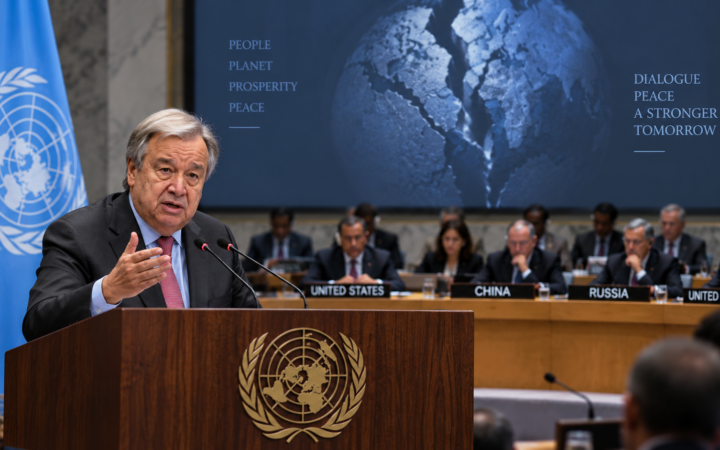
Behind the scenes, regional sources have told CNN that Pakistan and Qatar are trying to bring Washington and Tehran back to the table. Analysts at the Council on Foreign Relations argue the June memorandum, though dead for now, could be revived because both sides have an interest in reopening the strait. In Washington, unease is growing: the US House voted to bar further war-making without congressional approval, though a similar Senate measure failed — a sign of discontent among some Republicans over Trump’s use of his war powers.
For now, the pattern is grimly familiar: each US strike is met by an Iranian response, and each response by another strike. As Israeli analyst Danny Citrinowicz has warned, an equally plausible outcome to forcing Iran back to talks is a conflict that spirals into a much broader regional war.
Casualty and cost figures in this report are drawn from Al Jazeera, CNN, NBC News, Encyclopaedia Britannica, the UK House of Commons Library and independent casualty trackers; they are contested and change frequently. Figures are current as of publication on July 25, 2026.