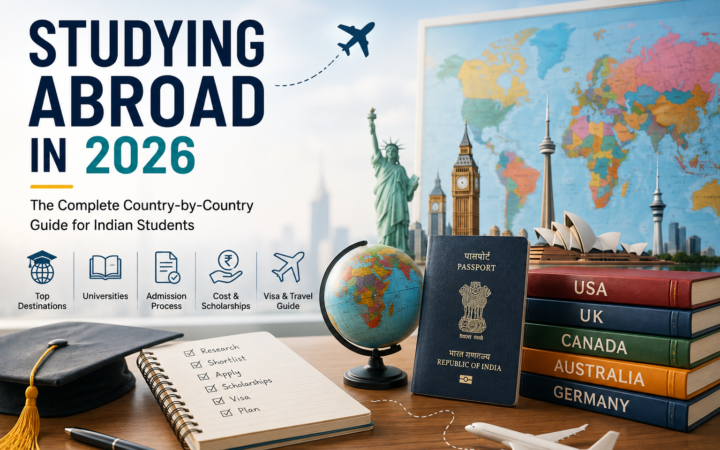
Most families in India plan a foreign degree around two numbers: tuition and living costs. Those are the figures on the university website, the ones the consultant circles in red, and the ones the loan officer asks about. If you have already used our complete country-by-country guide to studying abroad in 2026 to shortlist destinations, you know those numbers well.
Then the student lands, and a second budget quietly starts to appear.
A forex charge nobody explained. An insurance bill added to the first university invoice. A last-minute flight home for a family wedding. These are the hidden costs of studying abroad that families in India rarely plan for, and across a two-year master’s they can add up to several lakh rupees.
Here is where the money actually goes.
1. Health Insurance: Mandatory, Expensive, and Often Billed Separately
Almost every major study destination makes health cover compulsory. What changes is how much it costs and how it is charged.
- USA: Most universities auto-enrol international students in their own health plan. These commonly cost USD 2,000 to 4,500 a year, and some large universities charge more. You can apply for a waiver, but the rules are strict, and most Indian travel or student policies do not qualify.
- UK: Students pay the Immigration Health Surcharge of £776 per year, upfront, along with the visa application. For a course that runs a few months past a full year, you pay for the entire visa period.
- Australia: Overseas Student Health Cover (OSHC) is a visa condition and must cover your full stay. It is paid in advance, often for two or more years at once.
- Canada: It depends on the province. Some include international students in public healthcare after a waiting period, while others, like Ontario, require a university or private plan.
- Germany: Public health insurance for students under 30 runs roughly €130 to €150 a month, which is easy to overlook when you are focused on the blocked account.
What most plans do not cover
Dental and vision are usually excluded or capped. A single root canal in the US can cost more than USD 1,000.
Tip: Get dental and eye check-ups done in India before departure, and carry a year’s supply of any regular medication with a doctor’s prescription.
2. Visa Renewals, Extensions, and the Post-Study Work Visa
Families budget for the first student visa. Very few budget for the second, third, or fourth visa-related payment.
When the course runs longer than planned
A delayed thesis, a failed module, or a switch in programme can push a student past their visa end date. That means a fresh application and fresh fees:
- Canada: A study permit extension costs CAD 150, plus biometrics if required.
- UK: An extension means a new visa fee and another round of the health surcharge.
- Australia: The student visa application fee is now AUD 2,000, among the highest in the world, and it applies again for a new visa.
Re-stamping after a trip home
US students whose F-1 visa stamp expires while they are studying can stay legally, but the moment they fly home they need a new stamp to return. That means another visa fee, travel to a consulate city, and the risk of appointment delays eating into the semester.
The post-study work visa
For many students, the work period after graduation is the whole point. It is not free.
- USA: OPT requires a Form I-765 filing fee of around USD 470 to 520, and the STEM extension needs another filing.
- UK: The Graduate visa fee is around £880, plus the health surcharge at the full adult rate of £1,035 per year. For a two-year Graduate visa, that is close to £3,000 before a single payslip arrives.
Tip: Visa fees are usually revised every year. Always check the official government fee page, not a consultant’s old PDF, before finalising your budget.
3. Flights Are Not a One-Time Cost
Most budgets include one ticket: the flight out. Real life includes several more.
- A trip home for Diwali, summer break, or a sibling’s wedding
- An emergency flight when a grandparent falls ill
- Travel to an internship or job interview in another city
- Parents flying out for the convocation, which also means their visa fees and hotel stay
Rough return fares from India, booked in advance, sit around ₹80,000 to ₹1.5 lakh for the US, ₹50,000 to ₹1 lakh for the UK and Europe, and ₹50,000 to ₹90,000 for Australia. Peak months like August and December push these higher, and a last-minute emergency fare can easily be double.
Then there is excess baggage on the first trip, which can cost ₹5,000 to ₹15,000.
Tip: Look at student fares, which often include an extra checked bag and free date changes. And keep one emergency flight’s worth of money set aside at all times.
4. Forex Fees: The Cost Hiding Inside Every Transaction
This is the hidden cost that almost nobody tracks, because it never shows up as a separate bill. It sits inside the exchange rate. And since the rupee has a long history of weakening against the dollar and the pound, it is worth understanding why currencies rise and fall before you lock in a budget.
Where the money leaks
- Exchange rate markup: Banks typically charge 1% to 3.5% above the real mid-market rate on international transfers. Debit and credit cards used abroad often add around 3.5%, plus GST.
- Wire and intermediary charges: Your bank charges a transfer fee, and a correspondent bank in between may deduct USD 15 to 40 on its own. If that means your tuition arrives short, some universities add a late fee.
- GST on currency conversion: Small, but charged on every conversion.
- TCS under LRS: If the family is paying from its own funds, remittances for education above ₹10 lakh in a financial year attract 5% Tax Collected at Source. If the money comes from an education loan from a recognised lender, there is no TCS. TCS can be claimed back when you file your income tax return, but that cash is locked up for months.
A simple example
Say you send ₹30 lakh over a year for tuition and living costs through a regular bank transfer with a 2% markup. That is ₹60,000 lost to the rate alone, before transfer fees. Over two years, it can cross ₹1.2 lakh.
Add currency movement on top. If the rupee weakens by even 3% to 4% between the first and second year, a second-year budget made at last year’s rate falls short.
Tip: Compare the rate you are offered with the mid-market rate on the same day. Use remittance services built for education payments, carry a low-markup forex card for daily spending, and send fewer, larger transfers instead of many small ones.
5. Mental Health Support: The Budget Line Nobody Writes Down
Mental health rarely makes it onto a family spreadsheet. It should.
Moving abroad at 21 or 22 is hard. Loneliness, academic pressure, a part-time job, the weight of an education loan, and a new culture all land at the same time.
What support actually costs
- University counselling is usually free, but sessions are often limited, and waitlists can stretch to weeks during exam season.
- Private therapy can cost USD 100 to 250 per session in the US and £50 to £100 in the UK, and insurance may cover only part of it.
- Online therapy with an Indian therapist, in your own language and with someone who understands the family context, typically costs ₹1,500 to ₹3,500 per session.
There is also an indirect cost. A student who is burnt out is more likely to fail a module, repeat a semester, and need a visa extension.
Tip: Set aside a small monthly amount for wellbeing, check what mental health cover the insurance plan includes, and make it normal to talk about stress at home before it becomes a crisis.
The Smaller Leaks That Add Up
Beyond the big five, these costs catch almost every first-year student:
- Rental security deposit, often one to two months’ rent, plus basic furniture and kitchen items
- Winter clothing that actually works in minus temperatures, easily ₹20,000 to ₹50,000
- A local phone plan, textbooks, and software licences
- The semester contribution in Germany, roughly €150 to €400 each semester
Hidden Costs at a Glance
| Hidden cost | When it hits | Rough range |
|---|---|---|
| Health insurance | Before or at enrolment | ₹1 lakh to ₹4 lakh per year, depending on country |
| Visa extension or re-stamping | Mid-course | ₹15,000 to ₹1.3 lakh |
| Post-study work visa | After graduation | ₹40,000 to ₹3.5 lakh |
| Flights home | Every year | ₹50,000 to ₹1.5 lakh per trip |
| Forex markup and fees | Every transfer | 1% to 4% of the amount sent |
| TCS on self-funded remittance | Above ₹10 lakh a year | 5%, claimable later |
| Mental health support | Anytime | ₹1,500 to ₹20,000 per session |
| First-month setup | On arrival | ₹80,000 to ₹2 lakh |
Figures are approximate and based on publicly listed fees at the time of writing. Always confirm current rates with official sources.
How to Build a Budget That Survives Year Two
- Add a 15% to 20% buffer on top of tuition and living costs, and treat it as committed money, not a bonus.
- Plan with a weaker rupee. Budget the second year at a rate a few percent worse than today.
- Keep an emergency fund equal to one last-minute flight plus two months of rent.
- Talk to current students at the same university about real costs.
- Price the post-study visa now, not in the final semester.
Frequently Asked Questions
How much extra should Indian families budget for hidden costs of studying abroad?
A safe rule is 15% to 20% on top of tuition and living costs. For a two-year master’s in the US or UK, that often works out to ₹4 lakh to ₹8 lakh.
Can Indian health insurance replace a university health plan?
Sometimes, but not often. Universities, especially in the US, set strict minimum requirements, and most Indian policies do not meet them. Always check the waiver criteria before buying.
The Bottom Line
A foreign degree is still one of the best investments many Indian families make. The problem is rarely the big numbers. It is the dozens of smaller ones that nobody mentions until the bill arrives.
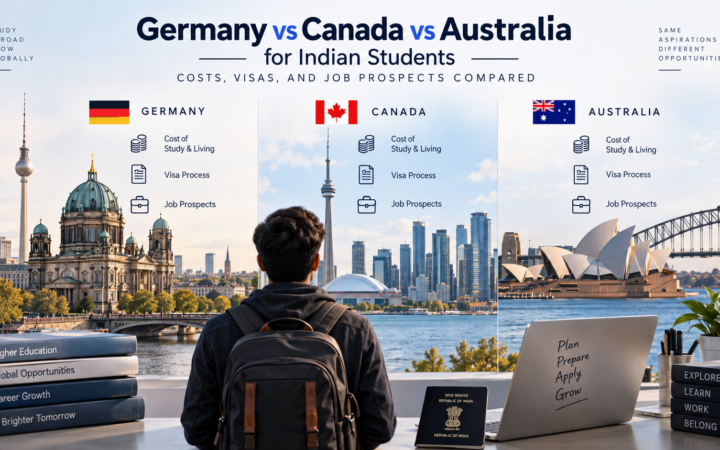
Plan for insurance, visa renewals, flights, forex fees, and mental health support from day one, and the degree stays an investment instead of becoming a financial strain. If total cost is still the deciding factor, our Germany vs Canada vs Australia comparison breaks down fees, visas, and job prospects side by side, so you can pick the country that fits both your goals and your budget.