Few names in modern business carry as much weight as Elon Musk. Born in Pretoria, South Africa, in 1971, Musk has grown from a young programmer selling video game code for $500 to the wealthiest individual on the planet, with an estimated net worth exceeding $830 billion as of mid-2026. His journey is a story of relentless ambition, calculated risk, and a willingness to bet everything on ideas that others dismissed as impossible.
Early Ventures: Zip2 and PayPal
Musk showed entrepreneurial instincts early. At age 12, he sold the source code for a video game called Blastar to a computer magazine. That small transaction hinted at what was coming.
In 1995, Musk and his brother Kimbal co-founded Zip2, an online business directory and publishing platform. The company was acquired in 1999 for over $300 million, earning Musk roughly $22 million from the deal. He immediately reinvested that capital into X.com, an online banking startup founded the same year. X.com eventually evolved into PayPal, which eBay acquired in 2002 for $1.5 billion. Musk walked away with approximately $176 million.
By the age of 31, Musk had earned nearly $198 million from companies he created and sold. Most entrepreneurs would have slowed down at that point. Musk did the opposite.
SpaceX: From Near Bankruptcy to Wall Street Record
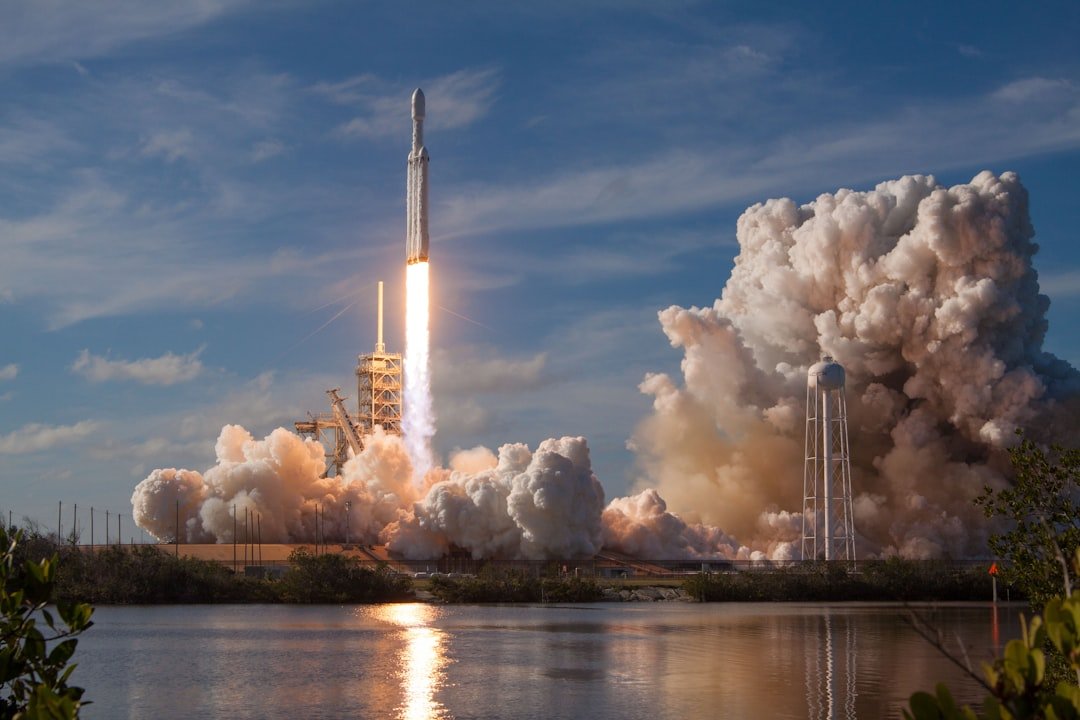
In 2002, Musk founded Space Exploration Technologies Corp., better known as SpaceX, with the goal of reducing the cost of space travel and eventually colonizing Mars. The early years were brutal. Multiple rocket failures nearly bankrupted the company before its Falcon 1 rocket finally reached orbit in 2008.
Fast forward to 2026, and SpaceX has become one of the most valuable companies on Earth. The company went public on June 12, 2026, listing on the Nasdaq under the ticker symbol SPCX at a price of $135 per share. The IPO became the largest in history, surpassing Saudi Aramco’s 2019 listing. In its second quarter of 2026, SpaceX reported revenue of $7.8 billion, a 92% increase compared to the same period the year before.
SpaceX’s Starlink subsidiary operates roughly 7,000 satellites in orbit, making up more than half of all active satellites globally. Starlink provides internet service to millions of subscribers worldwide and has become a massive revenue driver for the company. SpaceX is also developing Starshield, a hardened version of Starlink built for the United States military.
In February 2026, SpaceX completed the acquisition of xAI, Musk’s artificial intelligence company, in an all-stock deal that valued the combined entity at approximately $1.25 trillion. The merger was described as the largest in history.
Tesla: More Than Just Cars
Tesla, the electric vehicle company where Musk serves as CEO, remains the publicly traded company most closely tied to his personal wealth. He holds a significant stake in the company, which had a market valuation around $1.5 trillion in 2026.
While the Model 3 and Model Y remain Tesla’s highest-volume products, the company has expanded well beyond passenger vehicles. In its 2025 annual report filed with the SEC, Tesla reported $94.83 billion in total revenue. Automotive revenue declined that year, but energy generation and storage revenue rose to $12.77 billion. Tesla deployed 46.7 GWh of energy storage products in 2025 alone.
The company is also investing heavily in Full Self-Driving technology, robotaxi development, the Supercharger network, Megapack energy storage systems, and the Optimus humanoid robot. In the first quarter of 2026, Tesla produced more than 408,000 vehicles and delivered over 358,000.
Tesla also holds a significant Bitcoin position, reporting ownership of 11,509 Bitcoins as of March 2026.
xAI and Grok: Entering the AI Race
Musk launched xAI in 2023 to build a competitive artificial intelligence platform. The company’s flagship product, Grok, is a chatbot deeply integrated into the X social media platform and has grown to roughly 80 million active users. xAI raised more than $12 billion in outside funding and built a massive data center operation called Colossus before being acquired by SpaceX in February 2026.
X (Formerly Twitter): A Controversial Acquisition
In October 2022, Musk acquired Twitter for approximately $44 billion after a dramatic back-and-forth that included an attempt to back out of the deal and a subsequent lawsuit. After completing the purchase, he rebranded the platform as X, reduced the workforce significantly, introduced paid verification features, and adjusted the platform’s content moderation policies. The acquisition remains one of the most talked-about corporate deals in recent memory.
Neuralink: Connecting Brains to Computers
Neuralink, Musk’s neurotechnology company, is developing implantable brain-computer interfaces designed to help people with conditions such as spinal cord injuries interact directly with digital devices. The company began human trials in 2024 after resolving safety concerns raised by the FDA, which had initially rejected its application in 2022.
As of mid-2026, Neuralink has reached 26 patients in its ongoing clinical trials globally. The company has expanded trials to the United Kingdom, Canada, and the United Arab Emirates. Its first patient demonstrated the ability to play video games, browse the internet, and post on social media using only thought-based commands. Neuralink received FDA Breakthrough Device Designation for both its speech restoration technology and the Blindsight vision-restoration project, which aims to help people who are completely blind.
At the close of 2025, Musk announced plans for high-volume production of brain-computer interface devices and a transition to almost entirely automated surgical procedures in 2026.
The Boring Company: Underground Transit
Founded by Musk in 2017, The Boring Company is focused on building underground transportation tunnels to reduce surface traffic congestion. Its most prominent project, the Vegas Loop, operates in Las Vegas and uses Tesla vehicles to transport passengers through underground tunnels. The company has also been working on a Nashville Loop project connecting downtown Nashville, the Convention Center, and Nashville International Airport.
Government Role: DOGE
In early 2025, Musk took on a temporary role in the U.S. government, leading the Department of Government Efficiency (DOGE) under President Donald Trump. Designated as a special government employee, his tenure was legally capped at 130 days. Musk served in the role from January to May 2025 before stepping down. In a later interview, he reflected on the experience, saying he got “too involved” in politics and planned to scale back his political spending significantly.
A Business Empire Unlike Any Other
What makes Musk’s portfolio unique is not just its size but the way his companies increasingly overlap. Tesla vehicles operate in Boring Company tunnels. xAI’s artificial intelligence capabilities are now integrated with SpaceX’s space-based infrastructure. Neuralink fits into Musk’s broader argument that humans need enhanced cognitive tools to keep pace with advancing AI.
Musk became the first individual to exceed a net worth of $500 billion in October 2025, according to Forbes. His wealth is concentrated almost entirely in the companies he controls, rather than diversified across traditional stock portfolios. As he has stated, his most significant holdings outside of Tesla have always been SpaceX.
Whether one views him as a visionary or a polarizing figure, there is no denying that Elon Musk has reshaped multiple industries simultaneously. From electric vehicles and space travel to brain implants and artificial intelligence, his business empire in 2026 stands as one of the most ambitious and interconnected corporate structures the world has ever seen.