Donald John Trump, born on June 14, 1946, in Queens, New York City, is a figure who has shaped American business and politics in ways few others have. Before becoming the 45th and 47th President of the United States, he spent decades building a real estate empire, launching media ventures, and turning his own name into one of the most recognizable brands on the planet. Whether you admire his approach or question his methods, his business story is one of the most studied in modern entrepreneurial history.
Early Life and Education
Trump grew up in a family deeply rooted in real estate. His father, Fred Trump, was a successful property developer who built middle-income housing across Brooklyn and Queens. His mother, Mary Anne MacLeod Trump, was a Scottish immigrant. The fourth of 5 children, Donald showed an early interest in business and leadership, traits his father encouraged from a young age.
After attending the Kew-Forest School in Queens, Trump was sent to the New York Military Academy at age 13 after his parents learned he had been making unauthorized trips to Manhattan. He graduated from the academy in 1964 and went on to study economics at Fordham University for 2 years before transferring to the Wharton School of Business at the University of Pennsylvania, one of the most prestigious business schools in the country. He graduated in 1968 with a degree in economics.
Building the Trump Organization
After graduating, Trump joined his father’s company, Trump Management, working in Brooklyn for the next several years. By 1971, he had taken control of the family business and rebranded it as the Trump Organization in 1973. While his father’s empire focused on affordable housing in the outer boroughs, Donald had bigger ambitions. He wanted to build in Manhattan.
His first major deal came in 1976 when he purchased the aging Commodore Hotel near Grand Central Terminal in midtown Manhattan. He negotiated a 40-year tax abatement from the city and partnered with the Hyatt hotel chain to transform the property into the Grand Hyatt New York. The project was a commercial success and established Trump as a serious player in Manhattan real estate.
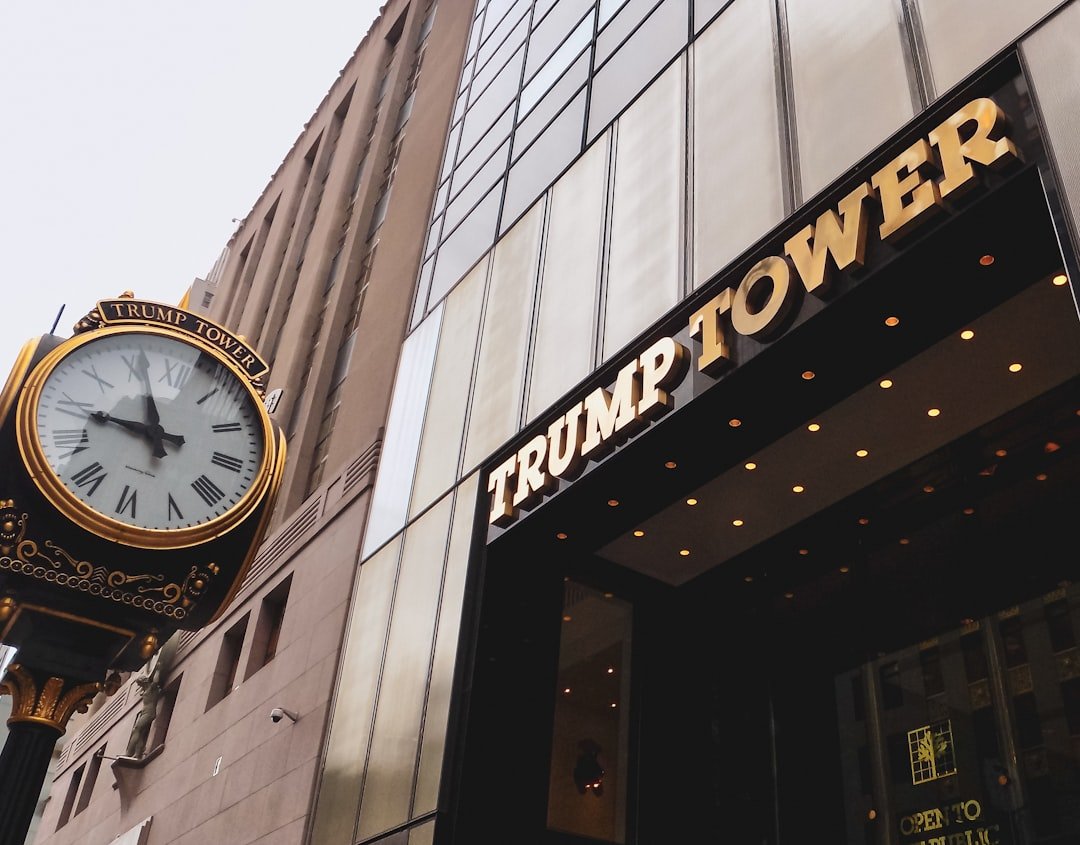
The flagship project that cemented his name in American business came next. Trump Tower, a 58-story mixed-use skyscraper on Fifth Avenue, opened in 1983. It became his personal headquarters, a luxury residential address, and a retail destination. The building’s pink marble atrium and gilded interiors became symbols of 1980s excess, and Trump leaned into that image deliberately.
Throughout the 1980s and early 1990s, the Trump Organization expanded aggressively into casinos, airlines, and various licensing deals. He opened the Trump Taj Mahal in Atlantic City in 1990, which was the largest casino in the world at the time. He also briefly operated the Trump Shuttle airline and purchased the Plaza Hotel in New York.
Bankruptcies and Comebacks
Despite the glamorous image, Trump’s business career has not been without serious setbacks. His casino ventures in Atlantic City ran into severe financial difficulties during the early 1990s. Between 1991 and 2009, companies under the Trump Organization filed for Chapter 11 bankruptcy protection 4 times. These were corporate bankruptcies, not personal ones, but they resulted in significant losses for investors, creditors, and vendors who had done business with those entities.
Trump himself has attributed the casino failures to the broader decline of Atlantic City as a gambling destination, though critics have pointed out that his casinos underperformed even during the city’s stronger years. By the time he announced his first presidential campaign in 2015, his gambling businesses had entirely ceased operations.
What Trump did successfully during this period was pivot. Rather than putting his own capital at risk in development projects, he increasingly turned to licensing deals. Developers around the world would pay to put the Trump name on their buildings, golf courses, and resorts without Trump having any ownership stake in the actual properties. This model allowed him to generate revenue from his brand alone, a strategy that echoed how modern startups leverage brand equity as a core business asset.
The Apprentice and Media Fame
Trump’s transition from regional real estate figure to national celebrity was accelerated by the NBC reality television show The Apprentice, which premiered in January 2004. The show, in which contestants competed for a position in the Trump Organization, ran for 14 seasons and made his catchphrase “You’re fired” part of American pop culture.
The show was enormously valuable to Trump’s brand. It positioned him not just as a wealthy businessman but as the ultimate authority on business success. Beyond television, Trump published several books, the most notable being The Art of the Deal (1987), which became a bestseller and remains one of the most widely recognized business books of the past 4 decades. He also owned the Miss Universe, Miss USA, and Miss Teen USA beauty pageants from 1996 to 2015.
The Trump Organization Today
The Trump Organization remains a privately held conglomerate. Its portfolio includes commercial and residential real estate, hotels, golf courses, and various licensing arrangements across multiple countries. Notable properties include Trump Tower in New York, Mar-a-Lago in Palm Beach (purchased in 1985 for $10 million), and over a dozen golf courses worldwide.
When Trump entered the White House for his first term in 2017, he placed the business in a revocable trust managed by his sons, Donald Jr. and Eric. Unlike previous presidents who divested from business interests or placed assets in blind trusts, Trump maintained the ability to access and benefit from the trust at any time. During his first administration, the Trump Organization said it would donate profits from foreign government bookings back to the U.S. Treasury and refrain from new foreign deals, though oversight of these commitments was limited.
Expansion Into Crypto, Media, and Beyond
Since returning to the White House for a second term in January 2025 and pursuing an aggressive foreign policy agenda including economic pressure campaigns against Iran, Trump’s business empire has expanded into entirely new sectors. Perhaps the most dramatic shift has been into cryptocurrency. World Liberty Financial, a Trump family-backed crypto venture, sold over $1 billion worth of tokens following the 2024 election. Trump also launched a branded meme coin shortly before taking office, and his 2025 financial disclosure reported roughly $1.4 billion in income tied to crypto-related ventures.
On the media front, Trump Media & Technology Group (TMTG), the parent company of the social media platform Truth Social, trades publicly on the Nasdaq under the ticker DJT. As of 2026, the company’s market capitalization sits around $2.8 billion, though it reported net losses of $712 million in 2025 on revenue of just $3.7 million. TMTG also announced a $6 billion merger with TAE Technologies, a firm working on nuclear fusion energy to power AI data centers.
In January 2026, the Trump family office announced a $7 billion real estate development project in Saudi Arabia, centered around a hotel, golf course, and luxury residences in the historic city of Diriyah. According to Forbes, ventures launched since Trump’s reelection have generated at least $4 billion in proceeds and paper wealth for the family.
Net Worth and Financial Standing
Forbes estimates Trump’s net worth at approximately $6.5 billion as of 2026, placing him at number 201 on the Forbes 400 list of the wealthiest Americans. That figure represents a jump of roughly $1.4 billion from the previous year and 118 spots on the list. His total assets are estimated at around $8.4 billion against $1.1 billion in liabilities.
The composition of Trump’s wealth has shifted considerably. While real estate and golf courses remain the foundation, crypto ventures and licensing deals have become major contributors. His international licensing business alone surged by an estimated $400 million as foreign developers sought business relationships with a sitting president.
Trump also still faces significant financial obligations from legal proceedings. A civil fraud judgment in New York and defamation verdicts related to lawsuits brought by E. Jean Carroll have resulted in combined liabilities exceeding $500 million, though Trump’s legal team has successfully reduced portions of these obligations through appeals.
Business Philosophy and Legacy
Trump’s approach to business has always centered on branding, negotiation, and leverage. He has described his strategy as “thinking big” and has consistently sought to attach his name to projects that convey luxury, exclusivity, and success. His willingness to take on debt, use bankruptcy protections strategically, and pivot between industries has drawn both admiration and criticism.
What cannot be debated is the scale of his commercial footprint. From Manhattan skyscrapers to golf courses in Scotland, from a publicly traded social media company to a cryptocurrency empire that has generated over a billion dollars in revenue, Trump’s business career spans more than 5 decades and touches nearly every major sector of the modern economy.
For business students, entrepreneurs, and market watchers, the Trump story offers a case study in brand-driven business strategy, the intersection of politics and commerce, and the risks and rewards of operating at the highest levels of visibility.