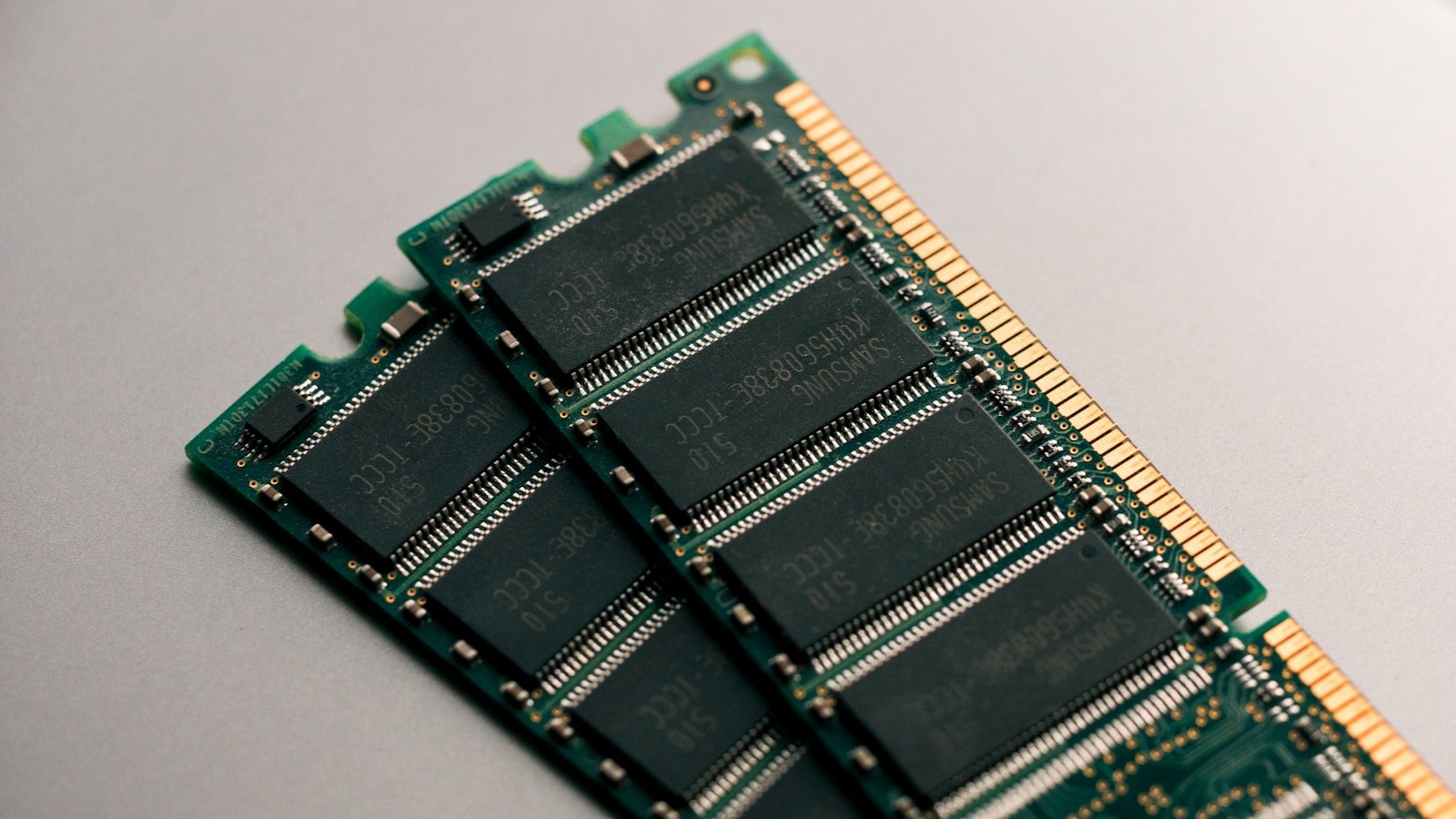
For anyone shopping for a new laptop, gaming rig, or even a phone this year, the sticker shock is real. Memory prices have jumped in a way the industry has not seen in over a decade, and the trend is not slowing down. Analysts, memory manufacturers, and PC brands are all pointing to the same set of forces, and the outlook stretches well past 2026.
The scale of the increase is what makes this cycle unusual. Market intelligence firm TrendForce reported that global DRAM contract prices rose between 90 and 95 percent quarter over quarter in Q1 2026, with a further 58 to 63 percent projected for Q2. DRAM prices climbed roughly 172 percent through 2025, and DDR5 spot prices are reported to have quadrupled since September 2025. NAND flash, used in solid state storage, is on a similar path, with contract prices tracking 55 to 60 percent quarterly jumps in early 2026.
AI Is Eating the World’s Memory Supply
The single biggest force behind the surge is the shift in wafer capacity toward AI hardware. Modern AI accelerators from Nvidia, AMD, Google, and others rely on High Bandwidth Memory, better known as HBM. The same AI wave that is reshaping how businesses use software at work is now pulling raw materials away from every other consumer product that needs memory. HBM is not a separate product line running on separate machines. It is made on the same fabrication capacity that manufacturers use for standard DDR5, LPDDR, and DRAM for consumer devices.
HBM sells for far more per wafer than conventional DRAM, with reported margins 3 to 5 times higher. Fortune reported that HBM will consume around 23 percent of total DRAM wafer output in 2026, up from about 19 percent the year before. Every wafer reassigned to HBM is one that no longer produces memory for a laptop, phone, or budget desktop.
Analyst firm Introl noted that HBM production capacity across all 3 major suppliers, SK Hynix, Samsung, and Micron, is already sold out through 2026. A Fortune report in February 2026 detailed how Apple chief executive Tim Cook warned the shortage would compress iPhone margins, while Tesla chief executive Elon Musk said the company may need to build its own memory fabrication plant. Micron’s own leadership described the bottleneck as unprecedented. SK Hynix currently holds around 50 to 55 percent of the HBM market, with Samsung at 35 to 40 percent and Micron accounting for the rest.
Three Companies Control Almost the Entire Market
Global DRAM is one of the most concentrated segments in tech. Samsung, SK Hynix, and Micron together account for roughly 95 percent of all DRAM manufactured worldwide. Chinese suppliers such as CXMT and YMTC are ramping up, but they currently produce mostly lower-end memory and cannot yet make HBM at the scale AI customers require.
That concentration matters. When 3 suppliers decide, together or independently, that AI infrastructure is the more profitable business, the rest of the market feels it immediately. Standard DDR4 and DDR5 modules no longer trend cheaper over time, which used to be the industry default.
Micron Walked Away From Consumers
In December 2025, Micron announced it was exiting its Crucial consumer memory and storage business to focus almost entirely on AI data center customers. Crucial had been one of the largest names in retail RAM and SSDs for years. Its departure took supply off the enthusiast and PC builder market at exactly the wrong time.
Around the same period, memory module makers including Transcend, Innodisk, and Apacer briefly paused new orders and outgoing shipments to reassess their pricing and customer commitments, according to reporting from Reuters and Tom’s Hardware. Samsung also halted new DDR5 orders to reassess pricing structures.
OpenAI and Hyperscalers Are Locking In Years of Capacity
In October 2025, Samsung and SK Hynix signed a letter of intent with OpenAI to eventually supply 900,000 DRAM wafers per month for the Stargate AI infrastructure project. That volume alone represents a large slice of global monthly DRAM output. Similar long-term contracts with hyperscalers like Microsoft, Google, and Amazon are pulling more capacity into multi-year commitments, leaving spot buyers exposed to whatever supply is left. According to Counterpoint Research data cited by TechRadar, data centers are expected to consume more than 70 percent of all high-end memory chips shipped in 2026, leaving the consumer market to fight over what remains.
What This Means for Consumers
PC brands are already passing costs through. Lenovo, Dell, HP, Acer, and ASUS have all signaled 15 to 20 percent higher prices on PCs in 2026 tied to DRAM and NAND shortages, according to Insight and TechRadar reporting. Lenovo chief financial officer Winston Cheng described the cost surge as unprecedented and disclosed that the company’s memory inventories were approximately 50 percent above normal levels in anticipation of further price increases.
Gaming platforms tell the same story. Sony raised the PlayStation 5 to 649 dollars, its second price hike, and cited the DRAM run-up. Microsoft increased the Xbox Series X to 799.99 dollars on August 1, 2026, up from a 499.99 dollar launch price. Nintendo confirmed a Switch 2 price increase to 499.99 dollars effective September 1, 2026. Valve’s Steam Machine launched at 1,049 dollars, reportedly hundreds above its internal target because of memory and NVMe storage costs.
Smartphones are also caught in the squeeze. Budget Android phones face the steepest impact because memory is a much larger share of their bill of materials. IDC’s outlook flagged smartphone market contraction scenarios of up to 5.2 percent in 2026 and up to 8.9 percent for PCs.
When Does This Normalize?
Not soon. Micron and SK Hynix have publicly stated that the shortage is unlikely to ease before 2028. Scenario models from Ram Exchange and other industry trackers expect the sharpest DRAM pricing to peak in Q1 2026, then continue at elevated levels through 2027, with meaningful normalization only in late 2027 or early 2028. Even that timing assumes AI demand cools somewhat, which is not visible in current order books.
Manufacturers are expanding capacity. Samsung is targeting a roughly 50 percent increase in HBM production capacity in 2026, and SK Hynix is scaling up its 1c DRAM node aggressively. But new fab capacity takes 18 to 24 months to come online, so the near-term picture stays tight.
What Buyers Can Do Right Now
There is no clever trick to get around a global shortage, but a few practical steps help. Consumers planning a PC or laptop upgrade in 2026 are better off buying sooner than later, since every quarter is expected to add price pressure. Enterprise buyers should lock down multi-quarter contracts where possible, and consider extending the life of existing hardware. For anyone eyeing a new phone, going one tier down on storage and RAM will save more this year than in any year in recent memory.
The larger takeaway is a shift in how memory pricing works. For decades, DRAM followed a predictable boom and bust cycle, with prices falling more often than they rose. AI has broken that pattern. Memory is no longer a slowly cheapening commodity. It has become a strategic input that a handful of companies are choosing to allocate to the highest bidder, and for the foreseeable future, the highest bidder sits inside a data center.