Spain has just recorded the largest single day illegal border crossing ever seen inside European Union territory. What happened on the beaches of Ceuta at the end of July is not a local emergency. It is a signal about how the next decade of European migration policy is likely to unfold, and about how fragile some of the union’s founding arrangements have become.
A single night that rewrote the numbers
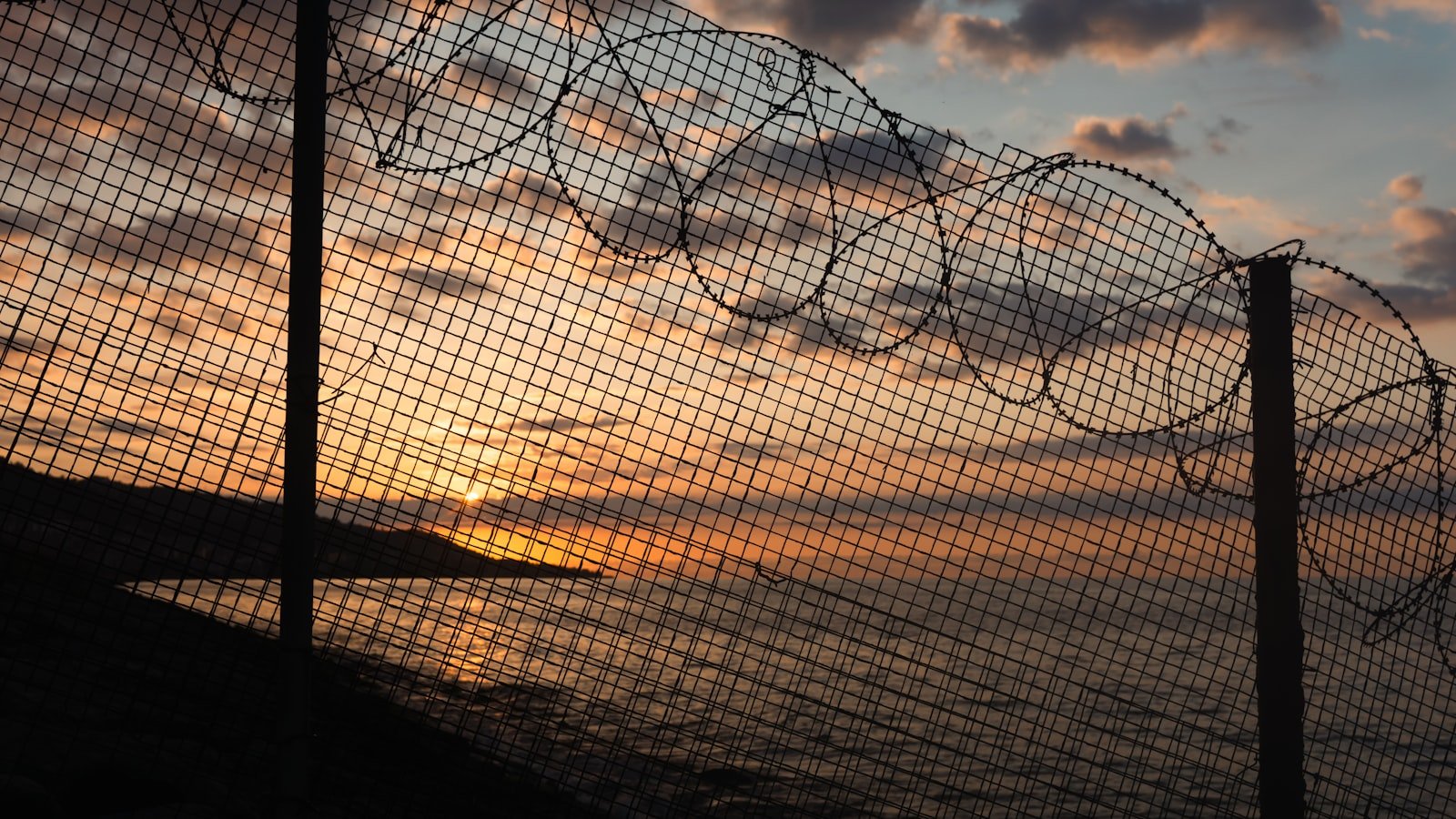
Spanish authorities recorded roughly 60,000 people crossing into the North African enclave of Ceuta from Morocco between the evening of 30 July and the morning of 31 July 2026. At least 57 people died in the water, most while trying to swim around the concrete breakwaters that separate the two territories. By Friday afternoon the Interior Ministry reported that 48,300 of the arrivals had already been returned to Morocco, yet thousands remained inside a city of about 85,000 residents that has no operational capacity to house or feed them. The Ceuta government publicly called the situation absolutely unsustainable.
For scale, this single 24 hour surge was several times larger than any comparable event in the union’s recorded history. It also produced one of the fastest political chain reactions the bloc has seen in a decade.
The court ruling that opened the door
The immediate trigger was not a diplomatic quarrel with Rabat. It was a decision handed down by Spain’s Supreme Court in late June, formally recorded as Judgment 814/2026. The ruling stripped the Civil Guard of its long standing power to conduct summary maritime returns, a practice that had operated at Ceuta for roughly 3 decades. Officers had previously handed adults intercepted in the water back to Moroccan authorities on the spot, without identification checks, without legal counsel and without an asylum interview.
The court accepted that migrants who climb the physical fence could still be turned around, but it decided that the sea was different. Adults reaching the beach by swimming or by boat now have to be identified and processed inside Spain. Smuggling networks reacted almost immediately. The Interior Ministry itself acknowledged that criminal groups appear to have exploited the ruling to push young men toward the water in far larger numbers.
Between 1 January and 15 July 2026, land arrivals in Ceuta reached 2,826, compared with 1,133 in the same period of 2025. That is a 149 percent year on year increase, and the curve was already climbing steeply before the July surge added tens of thousands of people in one night.
Routes shift, but the pressure does not disappear
The Ceuta story sits against a strange backdrop. Overall irregular arrivals in Spain actually fell in the first half of 2026, dropping from 17,990 to 12,138 compared with the same period a year earlier, according to Interior Ministry figures. Arrivals to the Canary Islands, once the dominant Atlantic corridor, collapsed by 82 percent in the first quarter thanks to bilateral agreements with Senegal, Mauritania and Morocco that intercept boats before they set off.
What looked like progress on paper turned into geographic redistribution on the ground. Pressure has moved from open ocean to the narrow strip of land and water at Ceuta and Melilla. The Balearic Islands are also recording heavier flows. Every closed route pushes people toward a new one, and the two Spanish enclaves in North Africa remain permanent chokepoints because they are the union’s only physical land border with Africa. Broader European Union tracking of these movements is available through the European Council briefing on the western routes.
Europe’s fractured reply
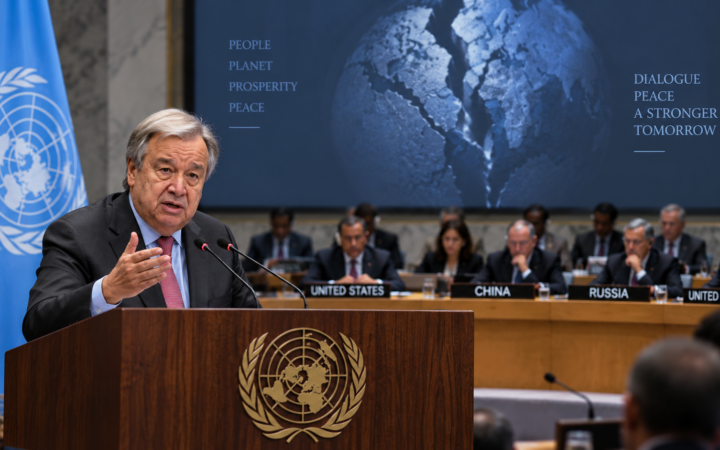
The political fallout arrived faster than the return flights. Italian Prime Minister Giorgia Meloni proposed the suspension of Spain from the Schengen area, arguing that Madrid had failed the basic obligation of an external border state. Danish Prime Minister Mette Frederiksen and Finnish Interior Minister Mari Rantanen backed the same demand within hours. Austrian Chancellor Christian Stocker threatened to shut his country’s borders. Polish Prime Minister Donald Tusk warned that Schengen would not survive if flows of this scale continued unchecked. French President Emmanuel Macron announced preparations to reinforce internal checks on the border with Spain. Swedish Prime Minister Ulf Kristersson and Czech Prime Minister Andrej Babis joined the chorus. Slovakia’s Robert Fico took the opposite line and called for full solidarity with Madrid.
European Commission President Ursula von der Leyen was more careful. She described the images from Ceuta as unacceptable and promised faster returns, but she avoided assigning blame to Spain or Morocco directly. Behind the diplomatic language sits a serious problem for the union. If 7 or more national capitals openly discuss removing a founding member from the Schengen area, the political taboo that has held for 30 years is already broken, whether the suspension ever formally happens or not.
What the crisis says about Europe’s future
3 deeper lessons stand out from the wreckage of the past week.
First, external partnerships have limits. Spain’s cooperation with West African governments produced real reductions in Canary Islands arrivals, but flow did not disappear. It moved. Every closed route creates pressure somewhere else, and Ceuta will remain exposed as long as land borders inside Africa exist. Continent wide sea arrival data compiled by the UN Refugee Agency shows the same pattern of displacement across the Mediterranean.
Second, court rulings can override political strategy overnight. A single Supreme Court decision undid an operational tool that had been used for 3 decades. Governments that build migration policy on informal practices rather than on clear law will keep running into this problem, and not only in Spain.
Third, Schengen has become a live political question rather than an untouchable achievement. For years the free movement zone was treated as settled. This week national leaders in 6 capitals treated it as leverage. Even if no country is formally excluded, the willingness to say the words in public marks a shift in what European politics will now accept.
The choice ahead
The people who reached Ceuta are being returned, processed or transferred to the Spanish mainland. The situation that pushed them across the water has not changed. Youth unemployment across parts of West and North Africa remains high, climate pressures on rural livelihoods are growing, and demand for undocumented labour in parts of the southern European economy continues to exist. None of the responses currently on the table addresses the demand side of that equation.
What the crisis has done is close the space for ambiguity. European voters can see the numbers, the images and the political responses in real time, and they will judge governments accordingly. Elections across the continent in the next 18 months will almost certainly be shaped by what happened on those beaches. Whether the outcome is a stronger common asylum system, a network of tightened internal borders, or a slow unwinding of Schengen itself will depend on decisions taken in the very near term.
For Spain the immediate task is rebuilding operational control at Ceuta and Melilla within the constraints of the new legal framework. For the European Union the task is deciding whether the word solidarity still means anything when the pressure is concentrated in one place. The answer to that question will define the union long after the current news cycle passes.