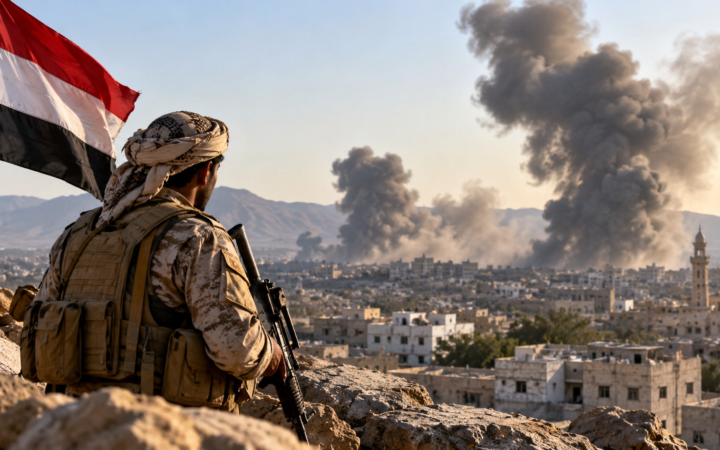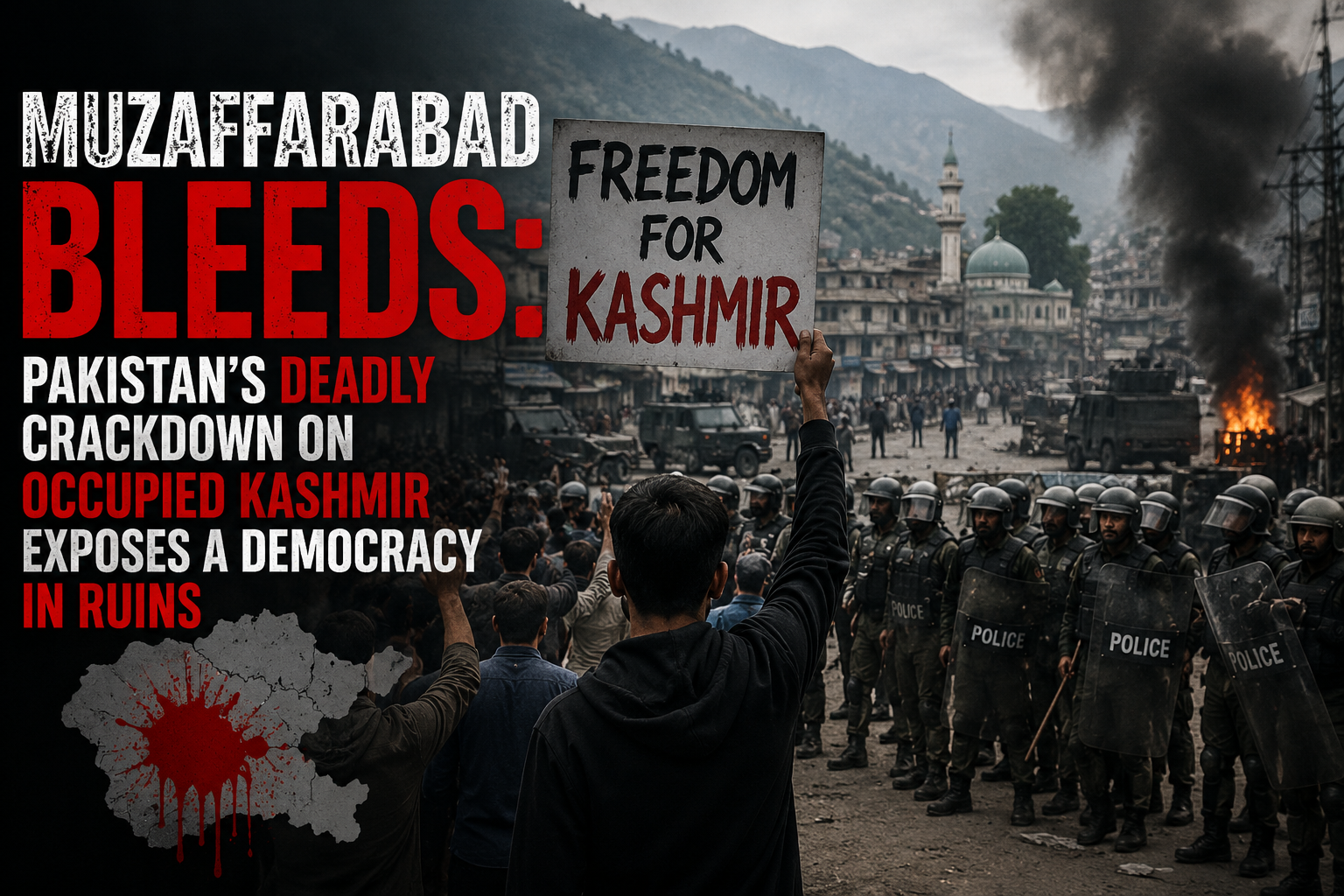
The mountain roads leading into Muzaffarabad, the capital of Pakistan-occupied Kashmir, tell a grim story this summer. Burned vehicles. Blood-stained pavements. Homes with bullet marks where families were eating breakfast. And silence, imposed by a blackout of mobile networks and internet lines.
For the past 10 days, security forces answering to Islamabad have opened fire on unarmed civilians marching for basic rights. The Joint Awami Action Committee, the civic body leading the protests, says at least 37 people have been killed in the July 2026 crackdown. India’s Ministry of External Affairs puts the toll at over 40. Independent trackers estimate the number is still climbing.
A Protest March Met With Bullets
The trigger came from months of accumulated anger. In late July, the Joint Awami Action Committee, known locally as JAAC, launched a long march from Rawalakot to Muzaffarabad. It carried a 38-point charter of demands, among them the abolition of 12 legislative assembly seats reserved for refugees living outside the region, and an end to the tax and electricity privileges of Pakistan’s political elite.
Roughly 5,000 protesters set out on foot. According to JAAC, security personnel opened unprovoked fire on the marchers. Among the dead was Usman Nazir, the younger brother of JAAC founding member Umar Nazir. Videos verified by multiple outlets show Pakistani security forces firing directly at civilians in Mirpur and Rawalakot.
Reuters interviewed an elderly resident who described how a 35-year-old man was shot in the chest on his own porch while eating breakfast, when personnel entered the neighbourhood and opened fire indiscriminately. In Bagh district, locals reportedly detained Punjab Police officers after clashes in Drikot, where 4 people died. Two each were killed in Muzaffarabad and Mirpur on a single day. On September 29, 2025, in an earlier round of protests, 2 civilians were killed and 22 injured when police opened fire on demonstrators at Lal Chowk. This year’s toll dwarfs that.
The Minister Who Called His Own People “Enemies”
The most chilling response came from the top of Pakistan’s government. Defence Minister Khawaja Asif, in a televised interview, was asked to justify the shootings.
I put the protesters of Azad Kashmir in the same category as India, and consider them also as enemies like India.
Khawaja Asif, Defence Minister of Pakistan
He then ruled out any negotiation. “There will be no dialogue with the protesters. I bracket them with India. I put them in the same category as India and consider them as enemies of Pakistan,” he told reporters.
The statement, from a sitting cabinet minister, effectively branded Pakistan’s own citizens in a territory Islamabad claims as its own as foreign enemies. The Human Rights Commission of Pakistan has expressed concern over the reported deaths, but no minister has apologised, resigned, or ordered an independent inquiry.
The Pattern Is Not New
The 2026 killings are the deadliest in recent memory, but they follow a well-worn pattern.
- In May 2024, protests over wheat and electricity prices ended with at least 5 people dead, including one police officer, and more than 100 policemen injured.
- In September and October 2025, at least 12 civilians were killed across Muzaffarabad, Mirpur, Poonch, Neelum, Bhimber and Palandri. Islamabad rushed an additional 1,000 personnel from the capital and rerouted thousands of troops from Punjab province.
- The unrest of 2026 is the fourth consecutive year of major protest and armed crackdown, a rhythm going back at least to the 2011 Gilgit-Baltistan protests.
Each cycle ends the same way. Islamabad promises subsidies. Prices come down temporarily. And when the next round of anger builds, security forces come back with weapons.
What Democracy Looks Like From Muzaffarabad
Pakistan formally calls the region “Azad Jammu and Kashmir”, literally, free Jammu and Kashmir. But residents have described a system that treats them as subjects rather than citizens. The most recent elections, held in phases through August 2026, drew widespread allegations of rigging and violence. Pakistan Tehreek-e-Insaf, the party of imprisoned former Prime Minister Imran Khan, boycotted the polls entirely, calling them a mockery. JAAC-backed independent candidates were barred from contesting.
Beyond the ballot, the crackdown on dissent has taken quieter forms. In late July 2026, Pakistani authorities revoked the registration of 13 private schools in the region over their alleged links to the protest movement. Internet and mobile services were suspended across large parts of PoK. JAAC itself was banned by the government.
Pakistan’s own democratic institutions offer little check on any of this. The country’s civilian governments have long operated under the shadow of the military establishment, which retains decisive influence over Kashmir policy, defence, and internal security. The Defence Minister’s public branding of protesters as enemies drew no rebuke from Prime Minister Shehbaz Sharif’s office. Parliament was not convened for a debate on the killings. No senior official from the Pakistan Peoples Party, the coalition partner in the federal government, has publicly condemned the violence in PoK.
The result is a self-reinforcing collapse. Civilians die in the streets. Ministers call them foreign agents. Elections are held under a security umbrella. Journalists cannot enter the region freely. The people who should be the beneficiaries of Pakistan’s Kashmir stance, in Islamabad’s own telling, are the ones being buried.
Voices From the Ground
India’s Ministry of External Affairs, in a blunt statement, said Pakistan’s actions revealed its absolute disdain for the innocent people of Pakistan-occupied Jammu and Kashmir. The United Kashmir People’s National Party has petitioned the United Nations to intervene. Rights groups outside the region continue to document the deaths.
Inside PoK, ordinary residents on camera keep saying the same words with weary force. It is tragic, one participant said, that people are being killed just for raising their voices. Another described how the sitting MNA of Kotli tried for days to derail the movement but failed.
For the families of the dead, the numbers matter less than the names. Usman Nazir. The 35-year-old shot on his porch. The four killed in Drikot. The dozens whose names have not yet reached the outside world through the internet blackout.
Pakistan’s Kashmir problem was never really about India. It was always about what happens to a country when its own citizens become the enemy of the state.