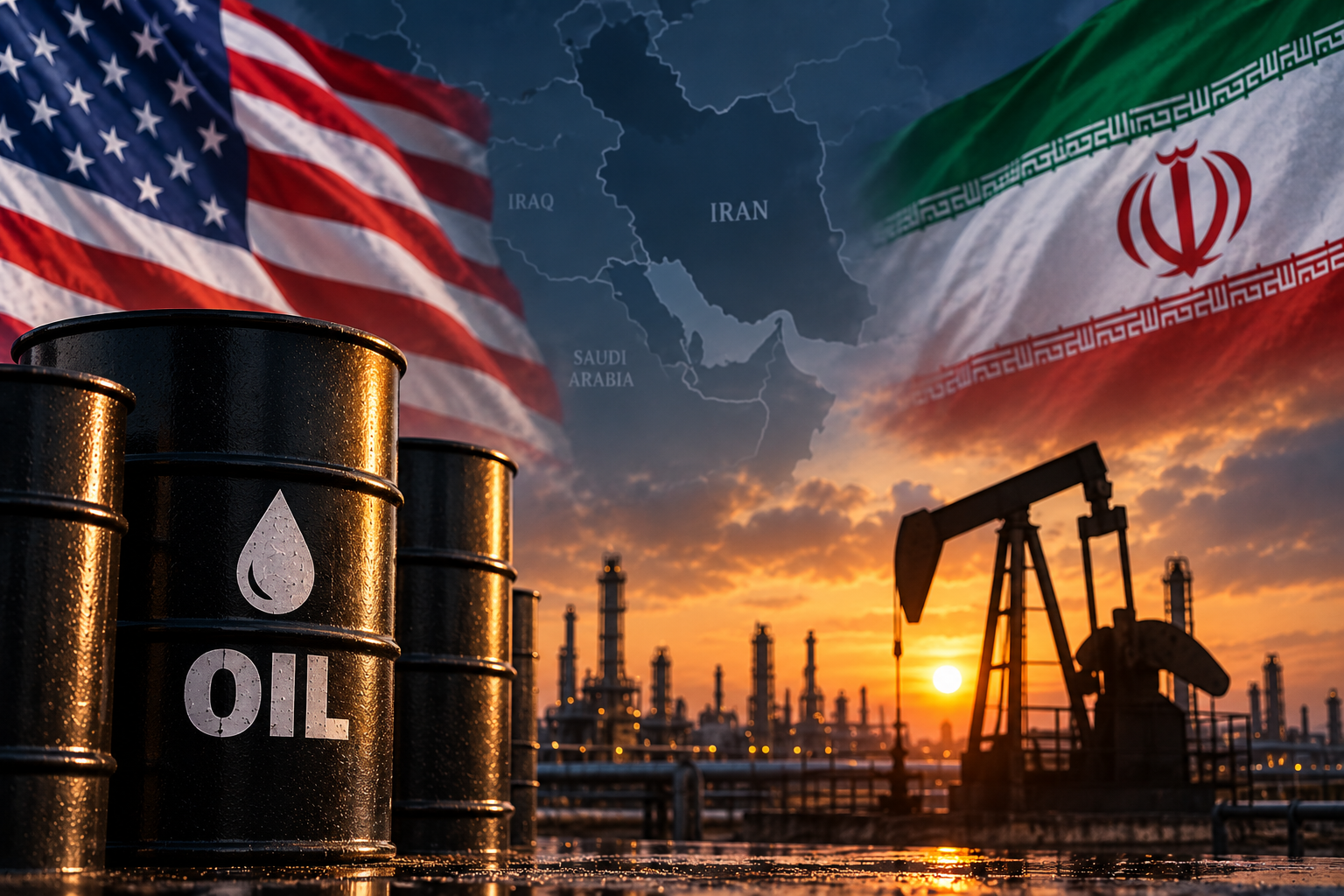
Oil prices roared to a 6-week high on Monday as a sharp escalation between the United States and Iran sent traders scrambling and rattled global energy markets. Brent crude climbed to $97.73 a barrel, while US West Texas Intermediate (WTI) rose to $93.10, as fears of a wider conflict in the Gulf tightened their grip on the market.
The surge followed a dramatic overnight flare-up. US forces struck 3 Iranian oil tankers, and Tehran responded by firing ballistic missiles at two US Navy warships. Adding to the alarm, a Saudi Aramco refinery in Jizan was also reportedly hit — a development that, if confirmed, would drag one of the world’s biggest oil exporters directly into the crossfire.
Why traders are on edge
Energy markets hate uncertainty, and right now there is plenty of it. The Gulf region sits at the heart of the world’s oil supply, and any threat to the tankers, ports, and refineries scattered across it tends to move prices fast. When the news of the strikes broke, that is exactly what happened — buyers piled in, and prices spiked within hours.
What worries analysts most is not just the damage already done, but what could come next. A big chunk of the world’s crude passes through the Strait of Hormuz, a narrow waterway bordered by Iran. Even a hint that shipping through the strait could be disrupted is enough to add a hefty “risk premium” to every barrel traded. Monday’s move suggests that premium is already being priced in.
The reported hit on the Aramco refinery in Jizan raises the stakes further. Saudi Arabia is the swing producer that markets rely on to plug supply gaps. If its own infrastructure is now a target, the cushion that usually calms nervous traders suddenly looks a lot thinner.
What it means for your wallet
Here is the part that hits home for ordinary people: when crude climbs, the pain usually shows up at the pump within days. Higher oil prices ripple through petrol and diesel costs, and from there into almost everything that has to be shipped, flown, or trucked — groceries, airfares, delivery charges, you name it.
For central banks still fighting to keep inflation in check, that is unwelcome news. A sustained spike in energy costs can undo months of careful progress and force policymakers into tougher decisions on interest rates. Households already stretched by high living costs could feel the squeeze all over again if prices stay elevated.
Businesses are watching just as closely. Airlines, logistics firms, and manufacturers all run on fuel, and a jump of this size eats straight into their margins. Many will be dusting off contingency plans and hedging strategies to ride out the volatility.
How high could oil go?
That is the question on every trader’s mind. With Brent knocking on the door of $100, some market watchers warn that triple-digit oil is firmly back on the table if the fighting drags on or spreads. Others caution against panic, noting that global inventories are healthier than they were during past crises and that producers still have spare capacity to lean on.
Much depends on whether this proves to be a short, sharp shock or the start of something longer. A quick de-escalation could see prices cool almost as fast as they climbed. A prolonged standoff, however, would keep a floor under the market — and keep drivers wincing at the pump. You can follow the latest benchmark moves through the US Energy Information Administration, which tracks crude and fuel prices in real time.
For now, the message from markets is clear: geopolitics is back in the driver’s seat, and it is steering oil sharply higher. Whether $97 crude becomes the new normal or a brief scare will depend on decisions made in Washington, Tehran, and Riyadh over the coming days.
We will keep updating this story as it develops. For more on how global events are shaping prices, see our coverage of the latest market news, and read our explainer on how oil prices affect everyday costs to understand what a spike like this really means for you.