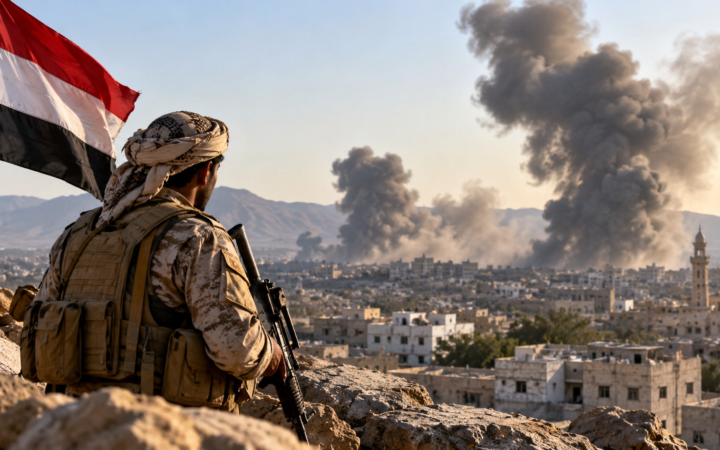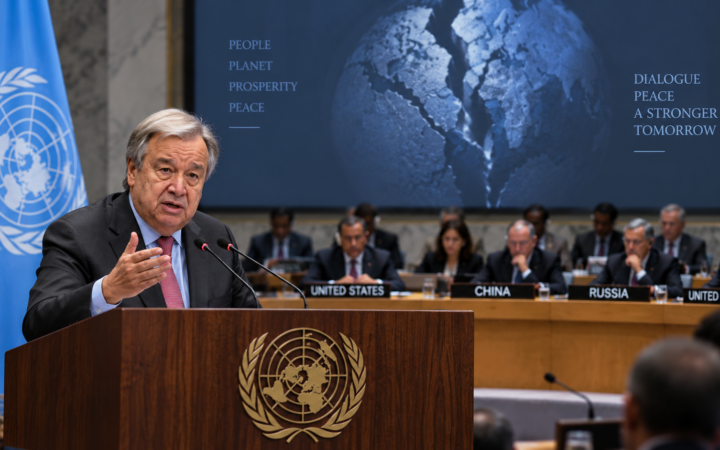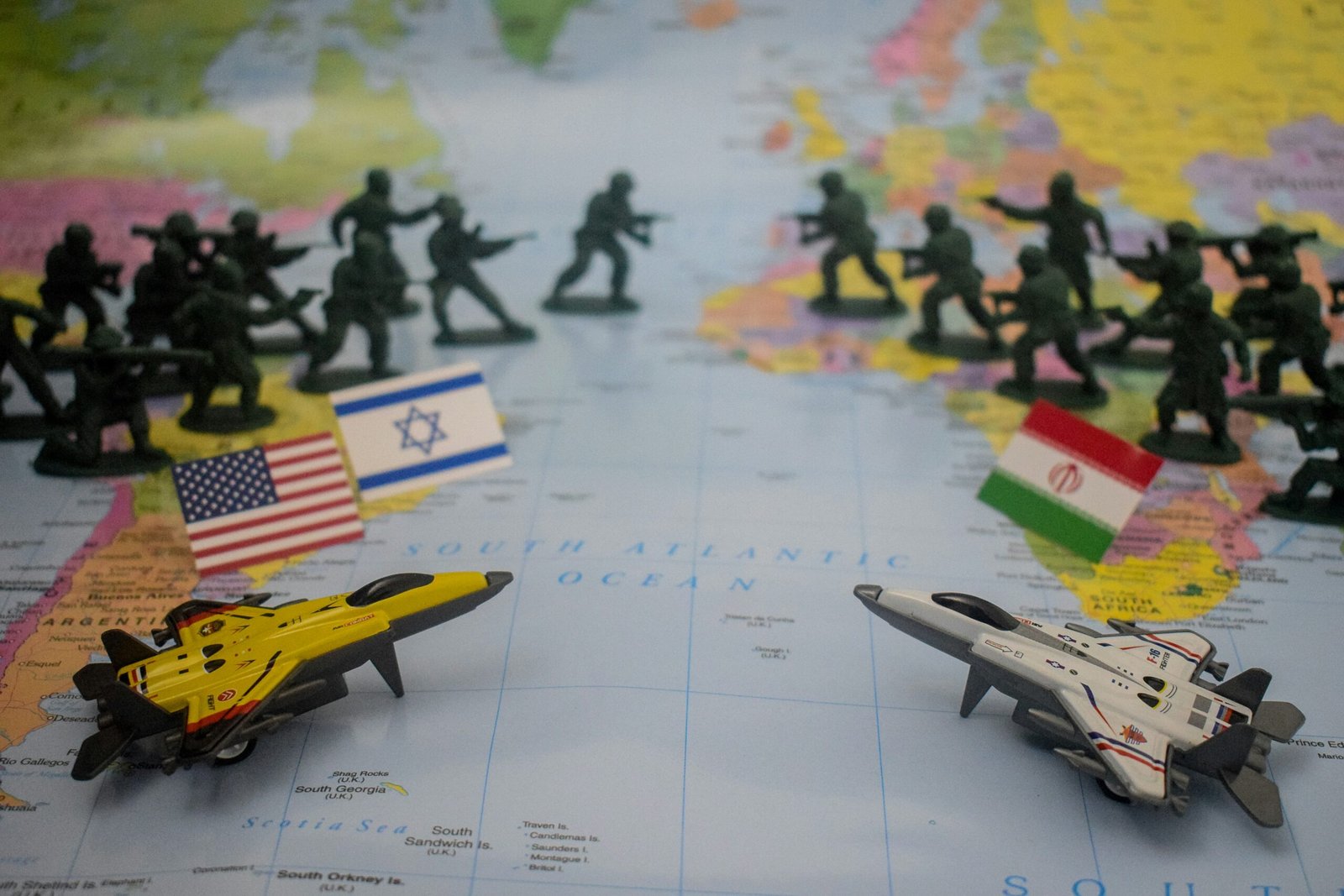
Since returning to the White House on January 20, 2025, President Donald Trump has overseen a dramatic escalation in U.S. military activity across 3 continents while simultaneously waging trade wars that have rattled the global economy. Despite campaigning as the “peace president” who would keep America out of foreign entanglements, data compiled by the Armed Conflict Location and Event Data Project (ACLED) shows that Trump authorized at least 626 air strikes during his first year alone, spanning 7 countries from Africa to the Middle East to Latin America.
His actions, ranging from bunker-buster bombs dropped on Iranian nuclear facilities to the unprecedented capture and removal of a sitting head of state in Venezuela, have left allies questioning Washington’s reliability and adversaries recalibrating their strategies. Here is a fact-based look at how the Trump presidency has reshaped America’s role in the world, and why so many nations are watching with deep unease.
Military Strikes Across 7 Countries
The Pentagon, renamed the “Department of War” under Trump, has carried out strikes in Somalia, Iraq, Yemen, Iran, Syria, Nigeria, Venezuela, and across the Caribbean and Eastern Pacific. Each campaign has carried its own set of consequences and controversies.
Somalia: The Largest Counterterrorism Campaign in U.S. History
Trump’s first military action of his second term came on February 1, 2025, when U.S. forces launched air strikes targeting Islamic State-affiliated militants in Somalia’s Golis Mountains. Since then, the U.S. has deployed more than 130 strikes on Somali soil, surpassing the combined totals of the Bush, Obama, and Biden administrations. Between 115 and 292 people have been killed in these operations, the majority described as militants by U.S. officials.
Yemen: Hundreds of Strikes, Civilian Casualties, and a Signal Chat Scandal
From March to May 2025, the U.S. launched hundreds of strikes against Iran-backed Houthi rebels in Yemen in response to attacks on Israel and commercial ships in the Red Sea. The campaign ended with a ceasefire brokered by Oman in May 2025, but not before serious collateral damage. Human Rights Watch reported in June 2025 that a U.S. strike on Yemen’s Ras Isa port in Hodeidah in April killed more than 80 civilians and called for the incident to be investigated as a potential war crime. Defense Secretary Pete Hegseth drew further criticism after it emerged that he had shared sensitive operational details about the Yemen strikes in 2 unsecured Signal group chats.
Iraq and Syria: Targeting ISIS Leadership
In March 2025, U.S. forces conducted air strikes in Iraq in coordination with Iraqi intelligence, killing Abdallah “Abu Khadijah” Malli Musiha al-Rifai, the 2nd-highest-ranking leader of ISIS. In December 2025, the U.S. struck ISIS targets in Syria after 2 U.S. soldiers and a translator were killed in an attack in Palmyra.
Iran: Bunker-Busters Hit Nuclear Facilities
The most consequential military action came on June 22, 2025, when the United States attacked 3 Iranian nuclear facilities with “bunker buster” bombs and Tomahawk missiles. The strike targeted the heavily fortified Fordo nuclear site, buried roughly 300 feet under a mountain, as well as facilities at Natanz and Isfahan.
U.S. B-2 stealth bombers dropped 14 GBU-57 Massive Ordnance Penetrators, each weighing 30,000 pounds, marking the first combat use of the weapon in history. More than 2 dozen Tomahawk cruise missiles were launched from submarines at Isfahan. Trump declared that Iran’s nuclear enrichment capabilities had been “completely and totally obliterated,” though the Defense Intelligence Agency later assessed the damage had set back Iran’s program by only 1 to 2 years. The IAEA estimated that roughly 972 pounds of highly enriched uranium remained unaccounted for after the bombing.
Both U.S. strikes on Iran have been widely described as illegal under international law by legal scholars and international observers.
Nigeria: Christmas Day Strikes
On December 25, 2025, Trump ordered strikes against alleged Islamic State-affiliated militants in northwestern Nigeria’s Sokoto State. The strikes involved Tomahawk missiles and resulted in an estimated 155 to 200 militants killed. Trump framed the operation as a defense of persecuted Christians, though Nigeria’s Foreign Minister clarified that the joint operation had “nothing to do with a particular religion.” Experts and local officials noted that the violence in the region targets Nigerians of all faiths, and questions emerged about whether the actual targets were genuinely affiliated with ISIS.
Venezuela: Regime Change and the Capture of a President
Perhaps the most stunning military action of the Trump presidency occurred on January 3, 2026, when U.S. forces bombed the Venezuelan capital of Caracas and captured President Nicolas Maduro and his wife. The operation, dubbed “Operation Absolute Resolve,” involved more than 150 aircraft launching from 20 bases across the Western Hemisphere. CIA operatives had infiltrated the country beforehand, tracking Maduro’s movements for months while U.S. troops trained on a replica of his compound.
At least 7 explosions rocked Caracas in the early morning hours. Venezuelan officials reported that 83 people were killed, including civilians. Maduro was flown to New York, where he was indicted on charges of “narcoterrorism” and conspiracy to import cocaine. Trump declared that the U.S. would “run” Venezuela for an unspecified period, prompting UN Secretary-General Antonio Guterres to warn that the action set “a dangerous precedent.”
The operation drew condemnation from multiple nations and international organizations, with few parallels in modern history outside the U.S. captures of Panama’s Manuel Noriega and Iraq’s Saddam Hussein.
Caribbean Drug War
Since September 2025, the U.S. military has waged a sustained campaign of lethal maritime strikes in the Caribbean Sea and Eastern Pacific, targeting alleged drug-smuggling vessels connected to Venezuelan narcotics networks. Trump described the naval deployment as the “largest armada ever assembled in the history of South America.” More than 45 strikes have been carried out, killing at least 106 people.
Trade Wars That Shook the Global Economy
Military action tells only part of the story. Trump’s tariff campaign has fundamentally disrupted the international trade order, affecting virtually every country on the planet.
In his first months back in office, Trump imposed tariffs on America’s 3 largest trading partners: Canada, Mexico, and China. Steel and aluminum tariffs were raised to 25% globally. Then came “Liberation Day” on April 2, 2025, when Trump unveiled sweeping tariffs on almost every country in the world. The S&P 500 dropped nearly 5% the following day, its worst single-day fall since 2020.
According to the Yale Budget Lab, the average U.S. tariff rate surged from less than 3% at the end of 2024 to nearly 17% in 2025, the highest level since the Great Depression. The Tax Foundation estimates the remaining tariffs will increase taxes per U.S. household by $900 in 2026. A bipartisan letter from U.S. senators warned the tariffs could cost the average American household $2,800 per year and push inflation as high as 5.5%.
Framework trade deals were eventually struck with the European Union, the United Kingdom, Japan, South Korea, and others, but a final agreement with China remains elusive. The EU accepted a 15% tariff rate on its exports, a deal that France’s then-Prime Minister Francois Bayrou called an act of “submission” and a “sombre day” for Europe.
In early 2026, Trump imposed new 10% tariffs on 8 NATO allies, threatening to raise them to 25% unless a deal was reached for the “complete and total purchase of Greenland.”
NATO Under Strain: Greenland, Iran, and Broken Trust
The NATO alliance, the cornerstone of Western security since 1949, has faced some of its greatest internal tensions under Trump’s second term.
At the July 2026 NATO summit in Ankara, Turkey, Trump threw the gathering into disarray. He renewed demands that the United States acquire Greenland, a semi-autonomous territory of NATO member Denmark. Danish Prime Minister Mette Frederiksen responded firmly that Greenland was “not for sale” and expected allies to respect Danish sovereignty.
Trump expressed frustration that European allies had refused to allow U.S. forces to use their airspace and bases during the war on Iran. He publicly called Spain a “terrible partner” and ordered Treasury Secretary Scott Bessent to halt all trade with the country. He openly questioned whether the U.S. should remain in NATO.
Former U.S. Ambassador to NATO Ivo Daalder summarized the mood: “Something fundamental has broken.” Trump’s decision to launch strikes on Iran without consulting NATO allies, followed by demands that the alliance help reopen the Strait of Hormuz, deepened the rift. European leaders left the summit uncertain about America’s commitment to collective defense.
Meanwhile, Trump has initiated troop withdrawals from Europe, raising concerns that U.S. military reductions will outpace Europe’s ability to shoulder its own defense burden.
Withdrawal from Global Institutions
Beyond military strikes and trade wars, the Trump administration has pulled the United States out of several major multilateral agreements and institutions. The U.S. formally withdrew from the World Health Organization (WHO) and the Paris Climate Accords. The United States Agency for International Development (USAID) was effectively shut down, and funding to numerous UN agencies was slashed.
These withdrawals have left a leadership vacuum that analysts warn Russia and China are eager to fill. According to the Atlantic Council, both Moscow and Beijing have emerged from 2025 “more confident that they can achieve their geopolitical goals.” Russia seeks to expand its sphere of influence starting with Ukraine, while China continues positioning itself for potential action on Taiwan by 2027.
Why the World Is Nervous
The cumulative effect of these actions has been a dramatic rise in global uncertainty. The Chicago Council on Global Affairs described 2025 as “a highly disruptive, tumultuous, and chaotic year that injected a massive amount of uncertainty into the international order,” with the United States being “a major, if not the only, driver in this global disruption.”
Several factors are fueling international anxiety:
Unpredictability as policy. Trump’s on-again, off-again tariffs, abrupt military strikes without consulting allies, and shifting diplomatic positions have made it nearly impossible for governments and businesses to plan ahead. Markets have experienced extreme volatility, with companies pausing shipments, delaying investments, and laying off workers.
Erosion of alliances. The U.S. has historically anchored its global influence through a network of alliances, particularly NATO. By threatening allies with tariffs, demanding territorial concessions like Greenland, and launching military operations without consultation, the administration has strained these relationships to a breaking point.
Expansion of executive military power. The Venezuela operation, which removed a sitting head of state without Congressional approval, raised profound questions about the boundaries of presidential war powers. The UN Security Council convened an emergency session, and international legal experts warned of the dangerous precedent set by unilateral regime change.
Emboldened adversaries. Analysts at the Stimson Center and Atlantic Council have noted that Russia and China are carefully watching Trump’s handling of alliances and may use this period to test U.S. resolve. Trump speaks frequently with Russian President Vladimir Putin and is scheduled to meet Chinese President Xi Jinping at least twice in 2026, interactions that could either stabilize or further destabilize the global order.
Domestic disconnect. While Trump focuses on foreign policy legacy-building, polls consistently show American voters are more concerned about the cost of living, housing, and everyday affordability. Republican strategists have warned that the emphasis on overseas conflicts may come at the expense of addressing the pocketbook issues that dominate voter priorities heading into the 2026 midterm elections.
Looking Ahead
As 2026 unfolds, the fundamental question, as framed by the Atlantic Council, is: “What sticks?” Will the disruptions of the past 18 months become permanent features of American foreign policy, or will they prove to be a temporary shock that the global system absorbs and recovers from?
For now, the world is watching and waiting. U.S. intelligence assessments indicate that China may be building the military capacity to invade Taiwan by 2027, adding another layer of urgency to an already volatile landscape. The war in Ukraine continues without resolution. Iran is recalibrating after the strikes on its nuclear facilities. Venezuela remains in political limbo.
What is clear is that the gap between Trump’s “peace president” self-image and the reality of 626-plus air strikes, a captured foreign leader, trade wars with nearly every nation on earth, and fraying alliances represents one of the most consequential and controversial periods in modern American foreign policy.
The facts and events described in this article are drawn from reporting by Reuters, Military Times, The Washington Post, NPR, CBS News, NBC News, ABC News, Al Jazeera, the Atlantic Council, the Stimson Center, the Chicago Council on Global Affairs, and the Tax Foundation.