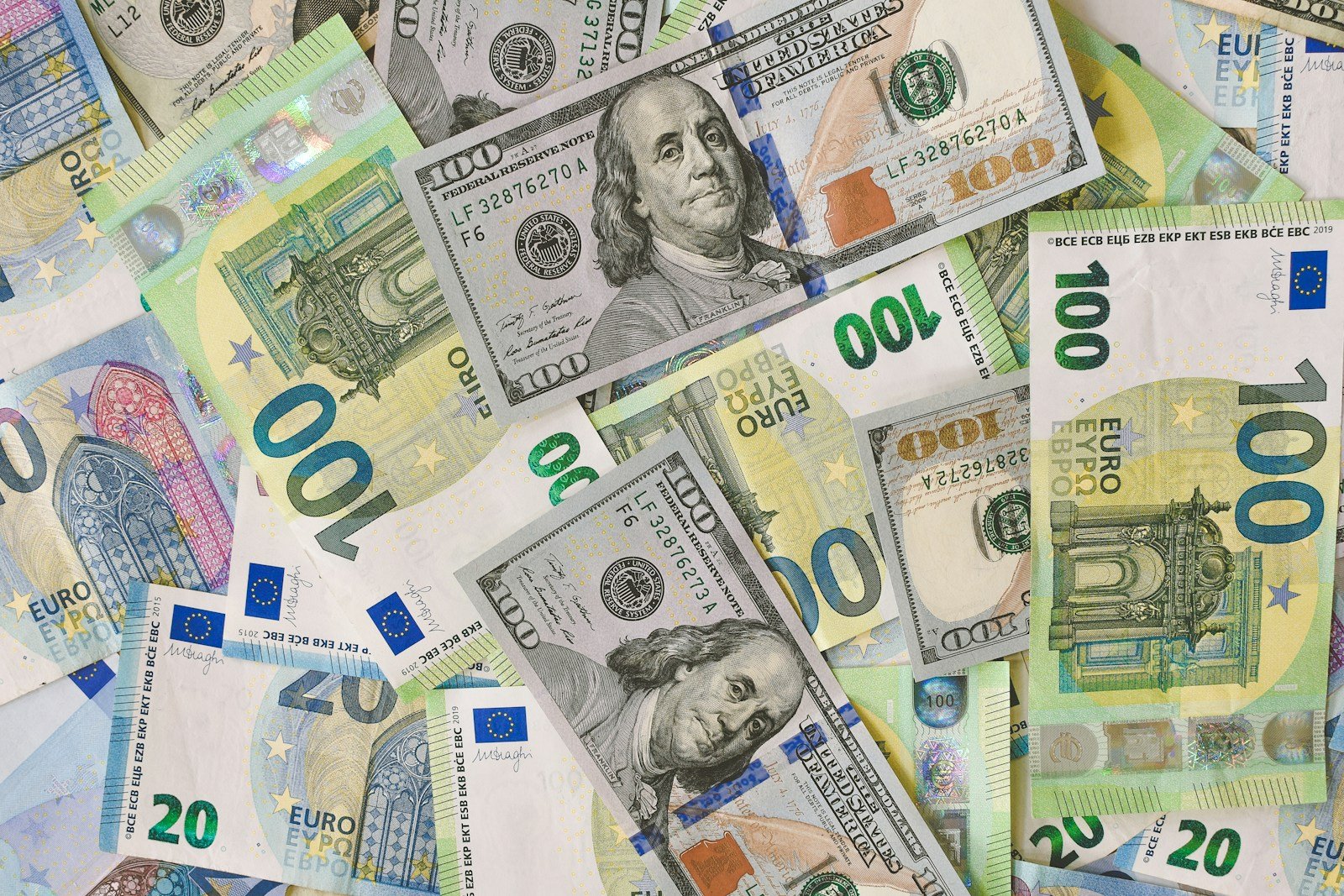
Every time someone travels abroad, buys an imported gadget, or fills up on fuel, currency values are quietly shaping the final price. Exchange rates move all day, every day, and those shifts ripple through household budgets, corporate profits, and entire national economies. The foreign exchange market is the largest and most liquid market on the planet. According to the Bank for International Settlements, global currency trading averaged about $9.6 trillion per day in April 2025, a scale that dwarfs the daily turnover of any stock market. With that much money in motion, it helps to understand what actually pushes a currency up or down.
It Starts With Supply and Demand
A currency is a price, and like any price it is set by supply and demand. When more people want to hold a currency than to sell it, its value rises. When more want to offload it, its value falls. One detail sets currencies apart from most other assets: their value is always relative. A currency never moves on its own. It rises or falls against another currency, which is why exchange rates are quoted in pairs, such as the US dollar against the euro. Every force described below works by tilting that balance of buyers and sellers one way or the other.
Interest Rates and Central Bank Policy
Interest rates are among the most powerful drivers of currency movements. When a central bank raises rates, savings and bonds denominated in that currency start paying more, which draws in foreign money. That inflow lifts demand for the currency and tends to push its value higher. When a central bank cuts rates, the reverse often happens, as investors chase better returns elsewhere. Markets also trade on expectations, so a hint about future policy can move a currency well before any rate actually changes.
Inflation and Purchasing Power
Inflation measures how fast a currency loses buying power at home, and that erosion shows up in its international value too. A country with low, steady inflation tends to see its currency hold firm, because each unit keeps its worth over time. A country with high inflation usually watches its currency weaken, since money that buys less each year is less appealing to hold. Over long stretches, a persistent inflation gap between two countries is one of the clearest reasons their exchange rate drifts steadily in one direction.
Economic Growth and Data
Currencies reflect confidence in an economy, and hard data shapes that confidence. Reports on gross domestic product, employment, retail sales, and manufacturing all feed into how investors judge a country’s health. Strong figures point to expanding activity and attractive returns, which can lift a currency. Weak figures can drag it down. Because these numbers also shape what markets expect central banks to do next, a surprising jobs report or growth reading can move a currency within minutes of its release.
Trade Balances and the Current Account
Trade shapes currency demand in a direct way. When a country exports more than it imports, foreign buyers must acquire its currency to pay for those goods, which supports demand. When a country imports more than it exports, it sends more of its own currency abroad to pay for foreign products, which can weigh on the value. A large and lasting trade deficit can gradually pull a currency lower, while a steady surplus can give it support.
Government Debt and Fiscal Health
The state of a government’s finances affects how safe investors feel holding its money. Heavy borrowing can raise fears of future inflation, or in extreme cases default, and both discourage foreign investment and can weaken a currency. Sound public finances tend to do the opposite, reassuring investors and helping a currency keep its footing. This is one reason budget announcements and credit rating changes can trigger noticeable moves in the currency market.
Political Stability and Safe Haven Demand
Money prefers predictability. Countries with stable governments, dependable legal systems, and steady policy tend to attract lasting investment, which strengthens their currencies. Political turmoil, conflict, or abrupt policy shifts can send investors rushing for the exit. During periods of global stress, capital often flows toward a small group of currencies seen as reliable stores of value, including the US dollar, the Swiss franc, and the Japanese yen. This flight to safety can lift those currencies even when the trouble started somewhere else entirely.
Market Sentiment and Speculation
Not every move traces back to fundamentals. A large share of daily trading is driven by traders reacting to news, headlines, and one another. Expectations can turn self reinforcing, with a rising currency drawing in more buyers simply because it is rising. Speculation can push a currency away from what the underlying economy might justify, at least for a time, which is part of why short term swings can look unpredictable even when the longer trend makes sense.
When Governments Step In
Not all currencies float freely. The International Monetary Fund broadly splits exchange rate systems into fixed and floating types. A floating currency, such as the US dollar or the euro, is set mainly by market forces. A fixed or pegged currency is tied to another currency or a basket of them, and the government works to keep it there. Even nations with floating currencies sometimes step into the market, buying or selling to smooth out sharp swings. You can read more about how these systems differ in this IMF overview of fixed and floating regimes. These choices shape how freely a currency can rise or fall in the first place.
The Bottom Line
Currencies rise and fall because millions of people and institutions are constantly reassessing what a country’s money is worth. Interest rates, inflation, growth, trade, debt, politics, and raw sentiment all feed into that judgment at once, and they often pull in different directions. No single factor explains every move, which is why even seasoned professionals treat currency forecasting with caution. Understanding these forces will not let you predict the next swing, but it will help you see why the numbers on the exchange board never stop changing.