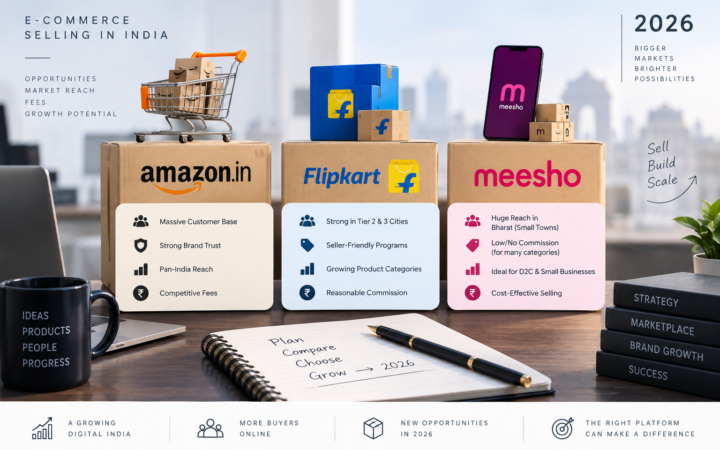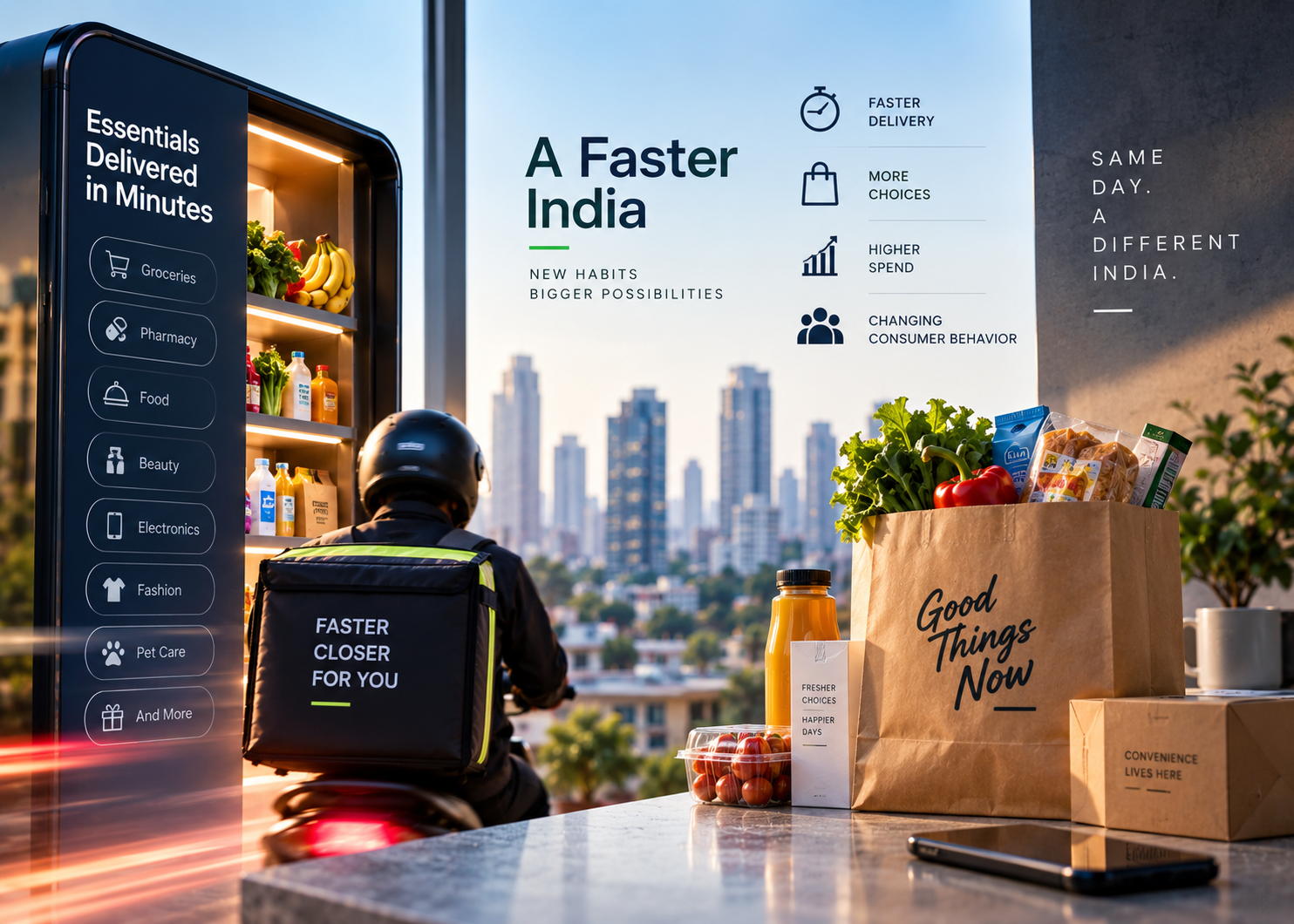
Ten minutes. That is the promise Zepto, Blinkit, and Swiggy Instamart have sold to millions of Indian households, and honestly, it has worked better than anyone in retail expected. What began as a covid era experiment in a few Mumbai and Delhi pincodes has turned into a habit that quietly reshapes grocery lists, weekend plans, and even monthly budgets. If you sell anything in this country, understanding this shift is no longer optional. For a wider view of where this fits in the online retail story, our complete guide to selling online in India in 2026 is a good companion read.
This piece looks at the real behaviour change on the ground. What people actually buy on quick commerce apps, how their spending patterns have shifted, which categories are winning, and why the dark store model behind it all is such a fragile piece of magic.
The 10 Minute Habit Is Now a Default, Not a Novelty
Ask anyone in a metro city today when they last walked to a kirana store for milk or bread. You will hear a pause. Not because the kirana is gone, it is not, but because the mental default has shifted. Opening Blinkit or Zepto has become as automatic as opening WhatsApp.
The numbers back this up. Quick commerce order volumes in India have grown many times over in the last three years, with Blinkit, Zepto, and Swiggy Instamart together processing several million orders every day. Average order values sit somewhere between 400 and 600 rupees in metros, a bit lower in tier 2 cities that are getting their first dark stores now.
Why Speed Beats Price for Everyday Buys
Here is the interesting part. Most quick commerce items are not cheaper than Big Basket, DMart, or the local shop. Sometimes they cost 10 to 15 percent more. Yet people happily pay. The reason is simple. When you need coriander at 8 pm, or a phone charger before a meeting, or paracetamol at midnight, the calculation is not rupees per gram. It is minutes and mental load.
That is the real behaviour change. Convenience has been repriced. And once a customer accepts that convenience is worth a small premium, their entire shopping pattern starts to reorganise around it.
Category Winners: What Indians Are Really Ordering
Not every product works on a 10 minute app. Dark stores are small, usually 2,000 to 4,000 square feet, holding a curated 2,000 to 5,000 SKUs. So the assortment tells you exactly what habits are shifting.
Groceries and Fresh Produce
This is still the biggest slice of the pie. Milk, eggs, bread, fruits, vegetables, atta, and dals are ordered again and again. What is new is that people are no longer doing a big monthly grocery haul. They are running four or five small orders a week. The freezer is emptier, the fridge fresher, and the household budget is spread thinner across the month.
Snacks, Beverages, and Impulse Buys
Chips, chocolates, ice cream, soft drinks, and instant noodles are the true impulse category. A friend drops in unexpectedly, a cricket match is starting, or the kids are bored, and a 200 rupee order lands in 12 minutes. This is where quick commerce is stealing wallet share from modern trade and even from food delivery.
Personal Care and Beauty
Shampoo, deodorants, sanitary pads, razors, and increasingly, mid range beauty brands, are becoming staple quick commerce buys. Shoppers no longer wait for a monthly online order or a supermarket trip. They restock the moment something runs out.
Electronics Accessories and Small Gadgets
Chargers, cables, earphones, power banks, memory cards, mice, and even small speakers are now available in 10 minutes in metros. This is a category that Amazon and Flipkart used to own with next day delivery. Quick commerce has quietly chipped away at it.
Pharmacy, Baby Care, and Pet Food
Panadol at midnight, diapers when you are down to the last three, cat food when the bag is nearly empty. These urgent, emotional purchases are perfect for the 10 minute window. Blinkit especially has leaned hard into pharmacy.
How Spending Behaviour Has Actually Changed
The average urban household today spends money on groceries and daily essentials in a very different rhythm from five years ago. Three patterns stand out.
- Smaller basket, higher frequency. Instead of one 3,000 rupee monthly bill, you see six to eight orders of 400 to 700 rupees each. Total spend often ends up higher, not lower.
- Premium creep. When you are buying one bottle of shampoo instead of stocking up, spending 350 rupees on a nicer brand feels easier than committing to a 900 rupee family pack. Premium and imported SKUs sell surprisingly well on quick commerce.
- Impulse spend is the new normal. A late night ice cream tub, a last minute gifting bouquet, a bottle of wine before guests arrive. Categories that never featured in weekly grocery runs are now regular line items.
If you are a brand or a seller trying to figure out where these buyers come from, the honest answer is that they are a different audience from the classic ecommerce shopper. We compared the big platforms in detail in this piece on Amazon India vs Flipkart vs Meesho, and the quick commerce buyer sits somewhere in between an Amazon Prime user and a Swiggy diner, price aware but time poor.
The Dark Store Economics Nobody Talks About Enough
Behind every 10 minute delivery is a dark store, a tiny warehouse tucked into a residential lane, stocked and staffed to serve a 2 to 3 kilometre radius. This model is what makes quick commerce possible, and also what makes it economically brutal.
What a Dark Store Really Costs
A typical Indian dark store carries these monthly costs:
- Rent, usually 1.5 to 4 lakh rupees depending on the city and micro market
- Staff, about 15 to 25 pickers, packers, and store managers, plus a fleet of riders
- Cold chain and refrigeration for fresh produce and dairy
- Inventory holding, spoilage on fruits, vegetables, and dairy is a real line item
- Utilities, packaging, and shrinkage
To break even, most dark stores need to hit 1,000 to 1,500 orders a day at a healthy average order value. In mature Mumbai and Bangalore pincodes, the best stores clear this comfortably. In new tier 2 launches, many stores are still burning money for the first 12 to 18 months.
Why Zepto, Blinkit, and Instamart Fight Over the Same Streets
You will notice all three players opening dark stores on the same road, sometimes within 500 metres of each other. That is not a coincidence. Dense, high income neighbourhoods with a young working population deliver the order frequency and basket size needed to hit break even. Nobody wants to concede that turf.
The trade off is real. Aggressive expansion into low density areas hurts unit economics, but going slow means giving rivals a head start on habit formation. This is why you are seeing consolidation talk in the sector and why every quarter’s investor call comes back to the same question. When does profitability really arrive.
What This Means for Kirana Stores and Modern Trade
Kirana stores are not dying. That headline gets written every year and every year it turns out to be wrong. What is happening instead is more subtle. The kirana still gets your credit line, your festival buys, and your emergency chai patti at 11 pm when even Zepto is delayed. But the routine restock is slipping away.
Modern trade, meaning DMart, Reliance Smart, and Big Bazaar style stores, is feeling the pinch differently. The weekly bulk shopper is thinning out in metros. DMart’s response has been price, price, and more price, which still works for the value seeker. Reliance is fighting back with its own quick commerce arm.
What Sellers and Brands Should Do About It
If you are a brand or a D2C founder, the quick commerce shelf is a very different beast from an Amazon listing. A few things worth remembering.
- Pack sizes matter more than variants. A 200 gram SKU will outsell a 1 kilogram one on quick commerce.
- Visual identity has to work on a phone thumbnail in 2 seconds.
- Discovery is category driven, not search driven. If you are not in the top 4 of your category tile, you may as well not exist.
- Margins to the platform are steep. Build pricing that survives 20 to 30 percent take rates and still leaves room for promos.
For quick reference on what individual buyers are stocking up on and what brands are winning shelf space, our roundup of the top electronics gadgets worth buying in 2026 is a useful sense check, especially for the accessories side of the quick commerce cart.
The Bottom Line
Quick commerce in India has moved from being a novelty to being a habit, and habits are much harder to unwind than trends. Zepto, Blinkit, and Swiggy Instamart have not just changed delivery timings, they have changed how families budget, how often they shop, what they stock at home, and what they consider a fair price for convenience. The dark store model that powers all of this is still finding its economic footing, but the behavioural shift on the customer side is already baked in. For anyone selling in India today, planning around a 10 minute expectation is no longer futuristic. It is table stakes.