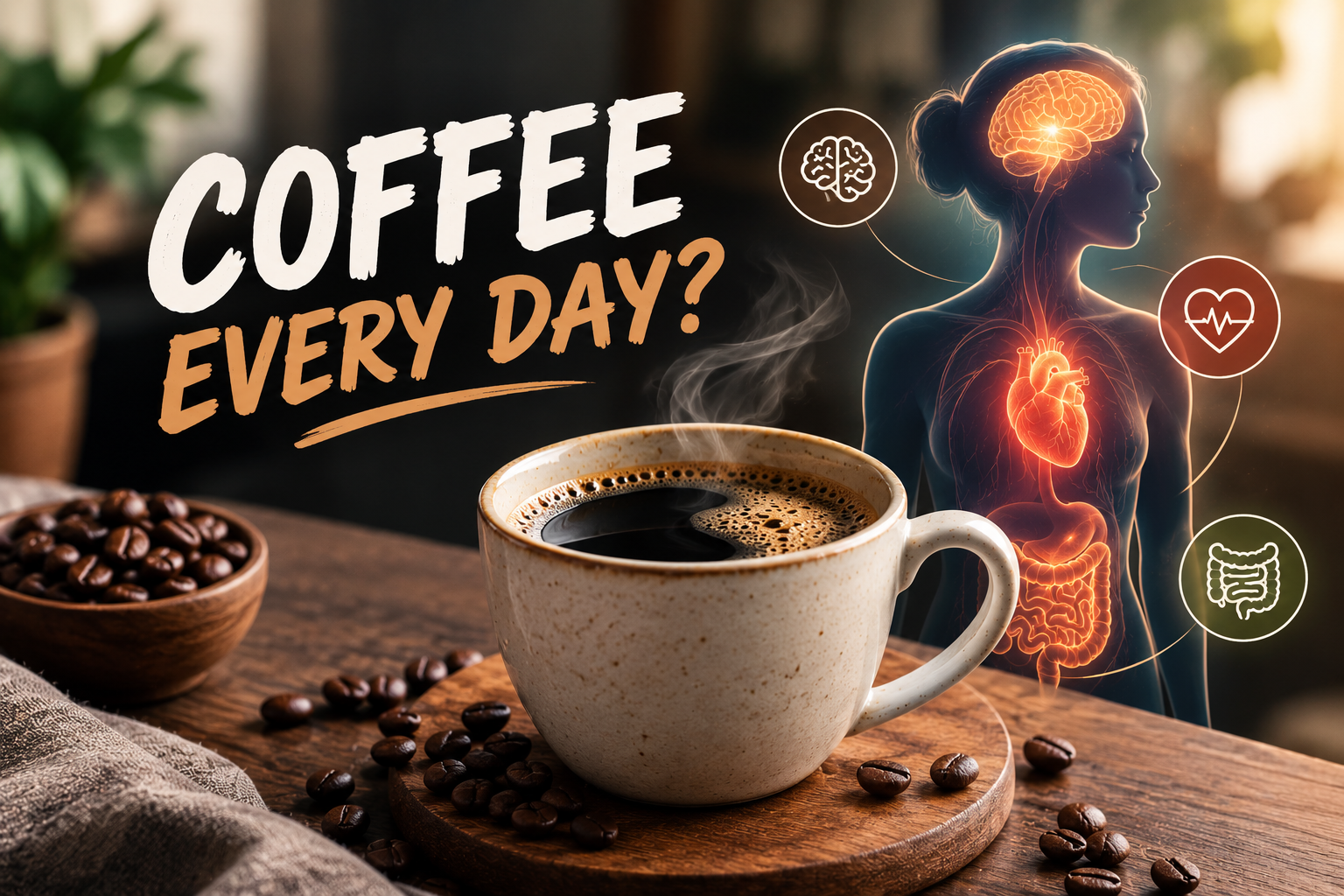
Coffee is one of the most consumed beverages on the planet. Over 60% of Americans drink it daily, and billions of cups are poured around the world every morning. But beyond the familiar energy boost, what is your daily cup actually doing inside your body?
In 2025, the U.S. Food and Drug Administration officially classified plain black coffee as a “healthy” beverage for the first time, a move backed by decades of independent research. Since then, a wave of new studies has made the case even stronger. Here is what science says happens when you drink coffee every day.
Your Brain Gets a Long-Term Shield
That morning cup does more than wake you up. A 43-year study published in JAMA in 2026, conducted by researchers at Mass General Brigham, tracked thousands of participants and found that moderate consumption of caffeinated coffee was linked to an 18% lower risk of dementia. The same study showed improved cognitive performance over time among regular coffee drinkers compared to those who avoided it.
Caffeine works by blocking adenosine receptors in the brain, which not only keeps you alert but may also reduce the buildup of toxic proteins associated with Alzheimer’s disease. Separate research from Zhejiang University, tracking over 6,000 older adults, found that coffee drinkers had a 38% lower risk of dementia, with both caffeinated and decaffeinated coffee showing protective effects.
Your Heart Does Not Suffer, It May Actually Benefit
For years, doctors warned that coffee could raise blood pressure and put strain on the heart. The evidence now tells a different story. A 2025 study found that daily coffee consumption may cut the risk of atrial fibrillation (irregular heartbeat) by up to 39%, contradicting decades of medical caution.
Large-scale research has consistently shown that moderate coffee intake, around 3 to 5 cups a day, is associated with a lower risk of cardiovascular disease, stroke, and heart failure. The key word is moderate. Going beyond 5 cups can reverse some of these benefits, particularly in people who are sensitive to caffeine.
Your Gut Gets a Makeover
A 2026 study published in Nature Communications revealed something surprising: coffee actively reshapes the bacteria living in your gut. Researchers at University College Cork found that both caffeinated and decaffeinated coffee changed the composition of gut microbiota in ways linked to better mood and lower stress levels.
Earlier research also showed that moderate coffee consumption (fewer than 4 cups a day) increased beneficial bacterial groups like Firmicutes and Actinobacteria while decreasing Bacteroidetes. These shifts are associated with improved digestion, stronger immune response, and even better mental health through the gut-brain axis.
Your Liver Gets Serious Protection
The liver may be the organ that benefits most from your coffee habit. A major study found that coffee drinkers of all types had a 21% reduced risk of chronic liver disease, a 20% reduced risk of fatty liver disease, and a 49% lower risk of dying from chronic liver disease compared to non-coffee drinkers.
Coffee contains compounds like chlorogenic acid, kahweol, and cafestol that help reduce DNA damage, lower chronic inflammation, and support the liver’s ability to repair itself. Ground coffee showed the strongest protective effect because it retains higher concentrations of these compounds compared to instant varieties.
Your Blood Sugar and Metabolism Respond
Multiple large-scale studies have linked regular coffee consumption to a lower risk of developing type 2 diabetes. Coffee improves how your body handles glucose and increases insulin sensitivity over time. One review covering more than 100 studies concluded that moderate coffee intake is more beneficial than harmful across a wide range of metabolic outcomes.
This puts coffee in interesting company alongside other metabolic health interventions. While medications like GLP-1 drugs such as Ozempic and Wegovy are changing how doctors approach weight and blood sugar management, coffee remains one of the simplest daily habits linked to better metabolic health.
Caffeine also temporarily boosts your metabolic rate and increases fat oxidation, which is why it appears in many fitness supplements. However, these effects are modest and should not be treated as a weight-loss strategy on their own.
The Downsides You Should Know About
Coffee is not without risks, and the same compound that gives it power, caffeine, can also cause problems. Drinking too much can trigger anxiety, restlessness, and disrupted sleep. Consuming coffee late in the day interferes with your circadian rhythm and reduces overall sleep quality, which negates many of its health benefits.
Pregnant women should limit their daily caffeine intake to no more than 200 milligrams, roughly 1 to 2 small cups. High caffeine consumption during pregnancy has been linked to complications.
What you add to your coffee also matters. Sugar, flavored syrups, and heavy cream can quickly turn a healthy beverage into a calorie-dense drink that works against your body instead of for it. The FDA’s “healthy” label only applies to black coffee with fewer than 5 calories per serving.
How Much Coffee Is the Right Amount?
According to a 2025 review published in the journal Nutrients, the sweet spot for most adults is 3 to 5 cups per day, which amounts to about 400 milligrams of caffeine. At this level, the research consistently shows reduced mortality, lower disease risk, and improved cognitive function.
Going beyond 5 cups a day can lead to diminishing returns. Heavy coffee intake (more than 5 cups daily) has been linked to weaker bone density in older women and increased anxiety in sensitive individuals.
The Bottom Line
Your daily coffee is not just a habit. It is a beverage backed by serious science. From protecting your brain against dementia to shielding your liver from disease, moderate coffee consumption is one of the simplest things you can do for your long-term health. Keep it black or close to it, stay within 3 to 5 cups, and let the science do the talking.