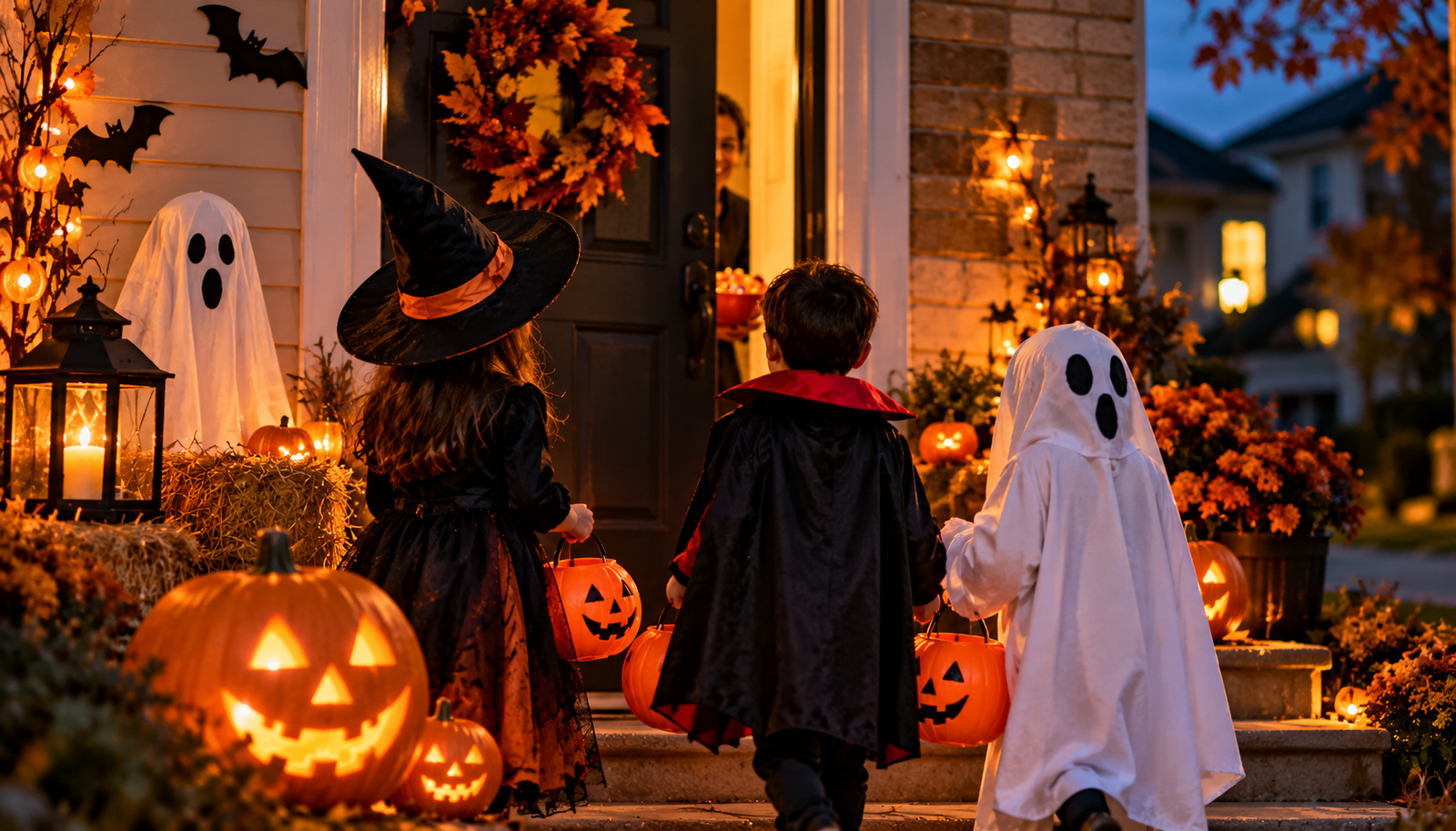
Halloween is the night when streets fill with glowing pumpkins, children in costume knock on doors for sweets and friends gather for parties. Celebrated every year on 31 October, it began as a blend of ancient Celtic harvest customs and Christian observance, and it is now one of the most recognisable festivals in the world. In 2026, Halloween falls on a Saturday, so expect plenty of weekend parties. This guide covers Halloween history, traditions, activities, safety tips and a few fun facts.
What Is Halloween?
Halloween is an annual festival held on the evening of 31 October. Its name comes from “All Hallows’ Eve”, the night before the Christian feast of All Saints’ Day. Over many centuries it was shaped by Celtic seasonal customs, Christian holy days and folk traditions from Ireland, Scotland and England.
Today, Halloween is mostly a playful, community-centred celebration. For most people it is about dressing up, telling spooky stories and sharing treats rather than anything religious. That is one reason it has travelled so easily across countries, with each place adding its own twist.
History and Origins of Halloween
From Samhain to All Hallows’ Eve
The roots of Halloween lie in Samhain (pronounced “SOW-in”), a Gaelic festival held around 31 October to 1 November in Ireland, Scotland and the Isle of Man. It marked the end of the harvest and the start of winter, the darker half of the year. People believed the boundary between the living and the dead grew thin at this time, so they lit bonfires and held feasts.
Later, the Christian Church observed All Saints’ Day on 1 November, and the evening before became “All Hallows’ Eve”, eventually shortened to Halloween. Historians still debate how directly Samhain led to Halloween, but both festivals share themes of remembering the dead and the turn of the season. In medieval Britain and Ireland, poorer people went “souling”, offering prayers for the dead in return for small soul cakes.
How Halloween Reached North America
Irish and Scottish immigrants carried these customs across the Atlantic in the 19th century, especially after the Irish famine of the 1840s. Halloween became a community celebration in the United States and Canada, and trick-or-treating spread widely in the early 20th century, becoming the child-friendly tradition we know today.
When Is Halloween Celebrated?
The Halloween date is 31 October every year, the evening before All Saints’ Day on 1 November. Many celebrations start earlier: school events, office parties, haunted attractions and pumpkin patches often run for days, or even through the whole of October.
Popular Halloween Traditions and Activities
Some Halloween traditions are centuries old, while others are modern additions. These are the most popular Halloween activities:
- Trick-or-treating: Children in costume go door to door, saying “trick or treat!” to receive sweets. It grew from older customs such as souling and guising (dressing up to perform in exchange for treats). The “trick” is only a playful threat and is rarely carried out.
- Costumes: Ghosts, witches and vampires remain classics, alongside superheroes and fictional characters. One traditional explanation is that people once wore disguises to avoid wandering spirits, though today it is mainly about fun and creativity.
- Jack-o’-lanterns: An Irish folktale about a man called Stingy Jack explains the name. People in Ireland and Britain first carved turnips; in North America, pumpkins were larger, easier to carve and plentiful, so they became the symbol.
- Decorations: Homes are decked with spooky lights, skeletons, cobwebs and paper bats.
- Parties and movies: Costume contests, apple bobbing, party games and horror-movie nights are firm favourites.
- Festive food: Think pumpkin soup, caramel apples, themed cookies and sweets in spooky shapes.
How Is Halloween Celebrated Around the World?
Halloween is not celebrated the same way everywhere. It is especially popular in the United States, Canada and Ireland, where trick-or-treating, parades and large public events are common. In the United Kingdom, children trick-or-treat or go “guising”, and Halloween falls just before Bonfire Night on 5 November. In Mexico, Día de Muertos (1–2 November) is a separate tradition honouring ancestors, not a version of Halloween.
In India, Halloween is not a traditional festival, but its popularity is growing in big cities, where cafés, malls, schools and clubs host themed parties and decorate for the season. Participation varies widely by city, community and personal choice.
Halloween Safety Tips
- Choose comfortable costumes that allow easy movement and clear vision.
- Wear reflective clothing or carry a light when walking at night.
- Accompany young children while trick-or-treating.
- Check sweets and packaged treats before children eat them.
- Use battery-operated candles inside pumpkins when possible.
- Be considerate of neighbours and respect private property.
Frequently Asked Questions About Halloween
What is Halloween, and why is it celebrated?
Halloween is an annual festival on 31 October with costumes, treats and spooky fun. People celebrate it as a seasonal, community tradition with Celtic and Christian roots.
When is Halloween celebrated?
Every year on 31 October, the night before All Saints’ Day.
What are the origins of Halloween?
Halloween developed from the Gaelic festival Samhain and the Christian All Hallows’ Eve, blended over centuries.
Why do people wear costumes on Halloween?
A traditional explanation is that disguises protected people from spirits. Today, costumes are mostly for fun and creativity.
Why are pumpkins associated with Halloween?
Irish jack-o’-lanterns were first carved from turnips. In North America, pumpkins were bigger, easier to carve and plentiful in autumn.
What does trick-or-treating mean?
It means visiting homes in costume to ask for sweets. The “trick” is a playful threat of a prank if no treat is given.
Is Halloween a religious holiday?
Not officially. It has religious roots, but it is now largely a cultural celebration, and views vary among communities.
How is Halloween celebrated in India?
It is not a traditional festival, but cities host Halloween parties, themed events and decorations in cafés, malls and schools.
Why Halloween Still Brings People Together
Halloween has travelled a long way, from Samhain bonfires and All Hallows’ Eve prayers to today’s pumpkins, costumes and street parties. Its customs have changed, but the idea of marking the turning season and gathering with others remains. Whether you carve a jack-o’-lantern, host a party or simply hand out sweets, Halloween is a chance to connect with friends, family and neighbours. Choose a costume, stay safe and enjoy a happy Halloween!