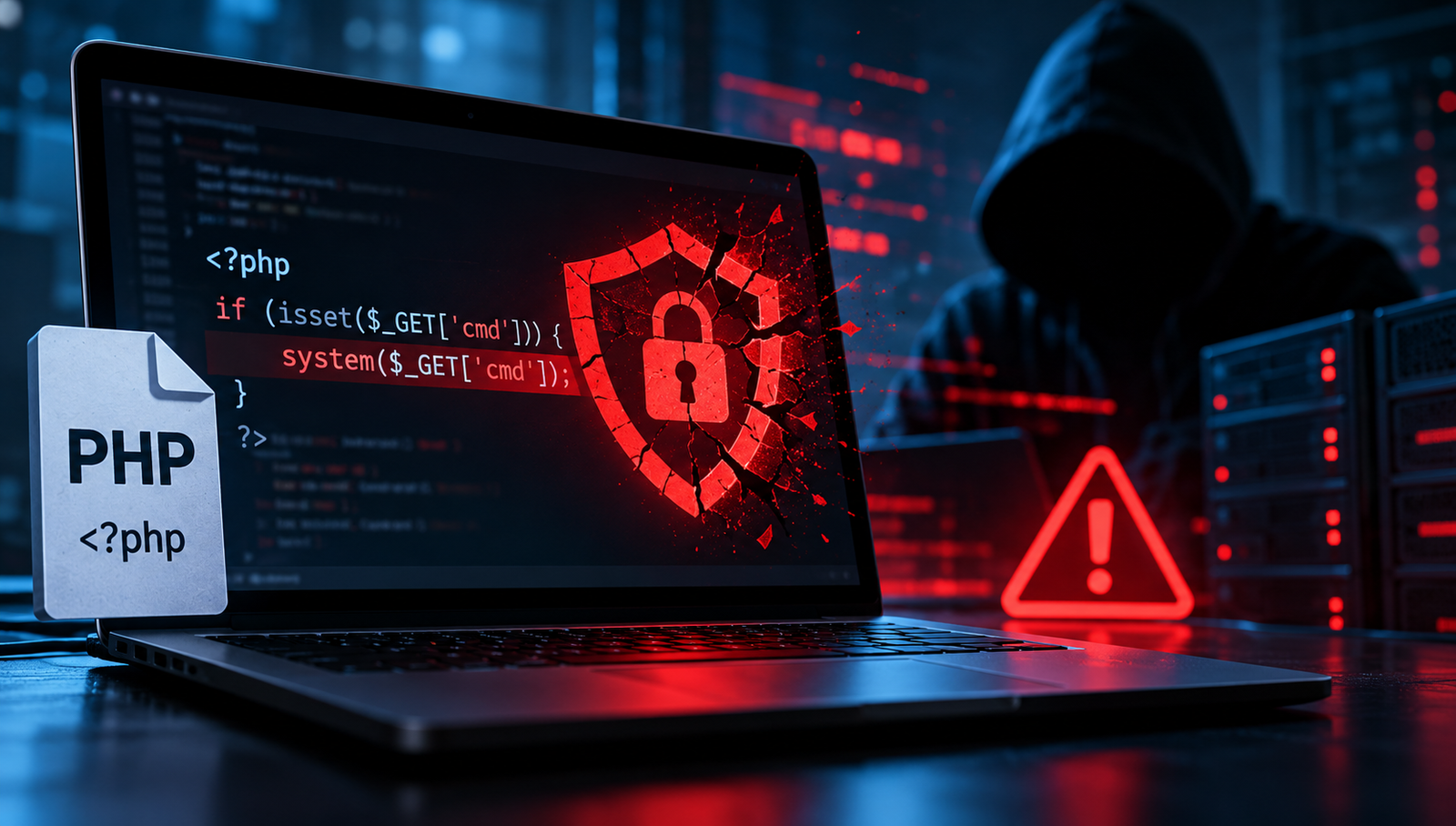
The web runs on PHP — and in October 2026, that foundation cracked. A pair of critical flaws nicknamed PHP2Shell sent system administrators, governments, and hosting providers scrambling. Here is what the PHP2Shell vulnerability is, why security teams are calling it one of the most serious PHP crises in years, and exactly how to protect your servers.
What Is the PHP2Shell Vulnerability?
PHP2Shell is the nickname for two critical PHP vulnerabilities tracked as CVE-2026-109618 and CVE-2026-109619. Both carry a CVSS score of 9.2 and allow unauthenticated remote code execution (RCE) — meaning an attacker can run malicious commands on a server without ever logging in. The name says it all: a single crafted request can turn an ordinary PHP web request into a shell on your machine.
The PHP security team shipped emergency patches on October 21, 2026, but technical details leaked before the planned coordinated disclosure, sharply raising the risk of mass exploitation.
Why the PHP2Shell Crisis Is So Dangerous
PHP powers roughly three-quarters of all websites, so the blast radius is enormous. The flaws affect virtually every way PHP serves web traffic: PHP-FPM, Apache with mod_php, php-cgi, FrankenPHP, and LiteSpeed. PHP’s maintainers flagged mod_php as the highest risk, because an attacker can trigger the exploit before any of your application code even runs.
The fallout was immediate. Several European government websites went offline for emergency updates, and the U.S. National Security Agency urged organizations to patch at once or take vulnerable servers offline.
The AI Angle Behind the Discovery
What makes PHP2Shell a landmark moment isn’t only its severity — it’s how it was found. Researchers from Calif, OpenAI, and Wiz uncovered the flaws. According to Wiz, the underlying weaknesses had existed for decades, but proving they were exploitable required an extraordinarily complex chain of steps. Frontier AI models dramatically lowered that barrier, signaling a new era in which AI accelerates both offensive and defensive security research.
Which PHP Versions Are Patched?
Fixes are available in the following PHP releases:
- PHP 8.5.12
- PHP 8.4.27
- PHP 8.3.36
- PHP 8.2.35
Everything older — including PHP 8.1, 8.0, 7.x, and 5.x — is end of life and receives no official fix. The PHP team did publish minimal source backports for 7.4, 8.0, and 8.1, but sites stuck on legacy versions remain the most exposed, especially forgotten and unmaintained websites.
How to Protect Your Servers From PHP2Shell Now
1. Patch immediately
Update to a patched PHP release today. This is the single most effective defense against the PHP2Shell vulnerability.
2. Isolate what you can’t patch
If an immediate upgrade isn’t possible, CERT-EU recommends isolating internet-facing PHP applications from public networks until they are fixed.
3. Inventory every PHP install
Identify all PHP-based applications, including staging sites, old subdomains, and abandoned projects. Attackers target the installs nobody is watching.
The Bigger Lesson for Website Owners
As of this writing, no active exploitation has been confirmed, but security experts expect a wave of incidents soon. PHP2Shell is a stark reminder that decades-old code can hide critical risks — and that keeping software current is no longer optional. Patch now, audit your stack, and treat PHP updates as a core part of your security routine.